
Are house centipedes dangerous?
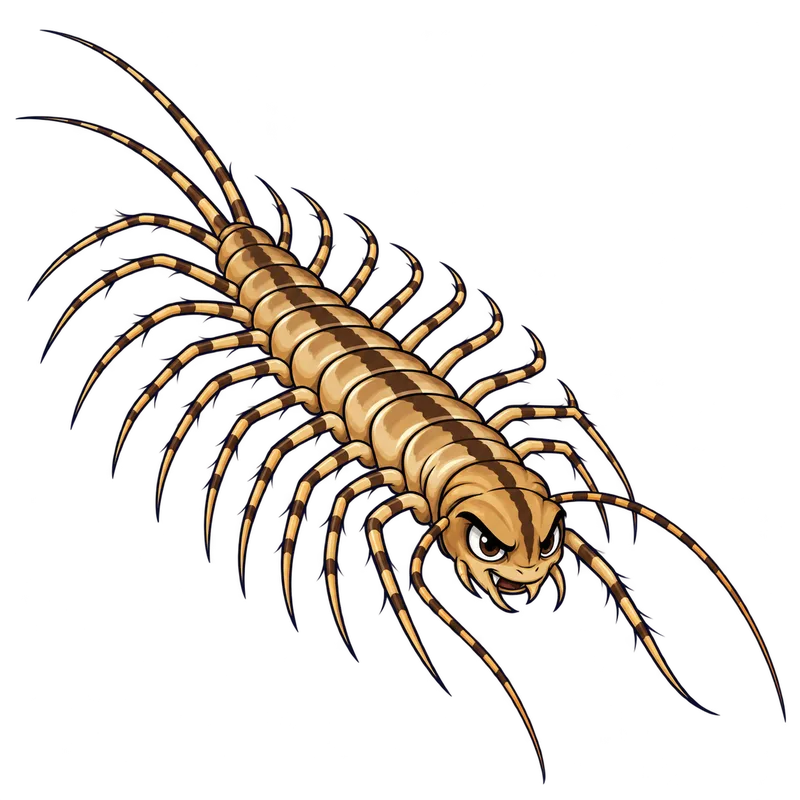
No, house centipedes are not dangerous to people or pets, and their bites feel like a mild bee sting. These timid, nocturnal hunters measure about an inch long in the body with fifteen pairs of long legs. Bites happen only if you accidentally crush one against your skin, and the discomfort fades on its own.
What is actually going on
You pad into the bathroom at two in the morning in your bare feet, flip on the overhead light, and freeze. There in the middle of the porcelain sink sits something straight out of a low budget horror movie, a yellowish-gray creature with a flattened body and fifteen pairs of impossibly long, striped legs that make it look like a feather duster on frantic springs. Before you can even grab a rolled-up magazine, it darts across the tile with the speed of a startled shadow and vanishes under the baseboard. Your heart is hammering, and the immediate question racing through your head is whether you need to worry about being bitten, poisoned, or overrun.
To answer it straight away: no, house centipedes are not dangerous to you, your kids, your pets, or your house. Despite their intimidating appearance and the venom-injecting claws tucked near their head, they are actually harmless, timid creatures that want nothing to do with human beings. When people panic over a house centipede, they usually picture some sort of venomous monster lurking in the dark to attack sleeping homeowners. In reality, these bugs are nocturnal hunters that actively flee from light and human presence. If one happens to bite you, it is usually because you accidentally crushed it against your skin while rolling over in bed or picking up a towel off the floor.
Even if you manage to provoke one into biting, the medical result is remarkably minor. Public health authorities and university extension entomologists compare the sensation to a mild bee sting or a quick pinprick, resulting in some localized redness and temporary discomfort that fades on its own. They do not carry diseases, they do not bite people in their sleep, and they cannot chew through wood, drywall, fabrics, or food packaging. In fact, house centipedes are strictly carnivorous and spend their nights acting as unpaid, chemical-free security guards that hunt down actual household pests like silverfish, spiders, crickets, and cockroaches.
Spotting a house centipede usually comes down to its unmistakable silhouette. Mature adults measure about an inch long in the actual body, but their fifteen pairs of long, banded legs stretch the overall visual footprint out to several inches, giving them that chaotic, spider-like span. Their coloration typically runs from yellowish-gray to light brown, marked with dark longitudinal stripes down the back. If you catch one moving, the giveaway is the speed, which is a lightning-fast, darting sprint rather than the slow crawl of a beetle or the steady march of an ant.
People often confuse them with millipedes, but the rule of thumb is simple. Centipedes have one pair of legs per body segment, look flattened, and move like grease lightning. Millipedes have two pairs of legs per segment, have rounded bodies, move sluggishly, and usually curl up into a tight spiral when disturbed. You will also usually find house centipedes out in the open on walls or stranded in bathtubs and sinks because their long legs make it tough for them to climb back up smooth, vertical porcelain once they slip inside.
One important boundary to keep in mind is that positive identification usually requires an intact specimen. If you smash one with a heavy boot or vacuum it into a mangled pulp, telling it apart from other crawling bugs becomes nearly impossible with the naked eye. Also, if you happen to live in warmer southern climates or tropical regions, you might occasionally cross paths with outdoor centipedes belonging to other families that wandered inside. Those larger cousins possess much stronger jaws and deliver genuinely painful bites, which is why a quick glance at those long, delicate legs and slender body is usually necessary to confirm you are dealing with the standard indoor house centipede rather than a heavy-duty outdoor visitor.
How to tell for sure
When you spot a house centipede darting across your basement floor, your first instinct is usually to grab a can of chemical spray or a bug bomb to wipe them out completely. Before you spend your hard-earned money on harsh insecticides, it helps to realize that seeing one of these runners is really just a sign of an environmental condition rather than a traditional infestation. House centipedes do not build nests, raise colonies inside your walls, or multiply by the hundreds out of sight. If one is roaming through your living space, it simply means your indoor air is too humid and you have enough silverfish, spiders, or roaches hiding in the dark to feed a hungry hunter.
Your smartest move is to focus entirely on drying out the space and cutting off their food supply instead of waging chemical warfare. Setting off an aerosol fogger in the living room will never fix the damp crawl space or the sweating water heater pipe that brought the centipedes and their meals indoors in the first place. You want to drop the relative humidity in your basement or bathroom below fifty percent by running a dehumidifier, repairing plumbing leaks, and making sure your bathroom exhaust fans actually vent outside. Once you dry out those damp hiding spots and vacuum up the organic debris that keeps silverfish and spiders alive, the centipedes will either pack up and leave or starve out on their own.
What usually comes next
While house centipede bites are exceptionally rare and medically mild, you should still talk to a doctor, urgent care clinic, or regional poison control center if a bite area develops worsening swelling, severe pain that will not quit, or signs of a secondary bacterial infection from scratching. Anyone with severe insect allergies or compromised immune systems should also keep a close eye on a bite reaction and seek professional medical advice if weird symptoms pop up.
On the home front, you can easily deal with solitary centipedes by trapping them under a drinking glass and carrying them outside, or by sucking them up with a vacuum cleaner. Still, you should call in a licensed pest control professional if you keep seeing multiple centipedes day after day, which usually hints at a hidden, thriving population of secondary pests like cockroaches or silverfish that demand an integrated pest management strategy. A professional assessment also makes sense if your house suffers from chronic moisture intrusion in crawl spaces or foundations that calls for structural drainage work or professional vapor barrier installation instead of simple do-it-yourself fixes.
When to get help
When dealing with stubborn or strange pest problems, knowing when to step back from DIY efforts is pretty important. If centipedes show up in large numbers or stick around despite your best humidity control efforts, a professional evaluation helps uncover hidden structural troubles or secondary pest invasions that need licensed intervention. For any suspected bite reaction that acts weird or shows unusual symptoms, always consult a qualified healthcare professional promptly.