
Do house centipedes eat ants?
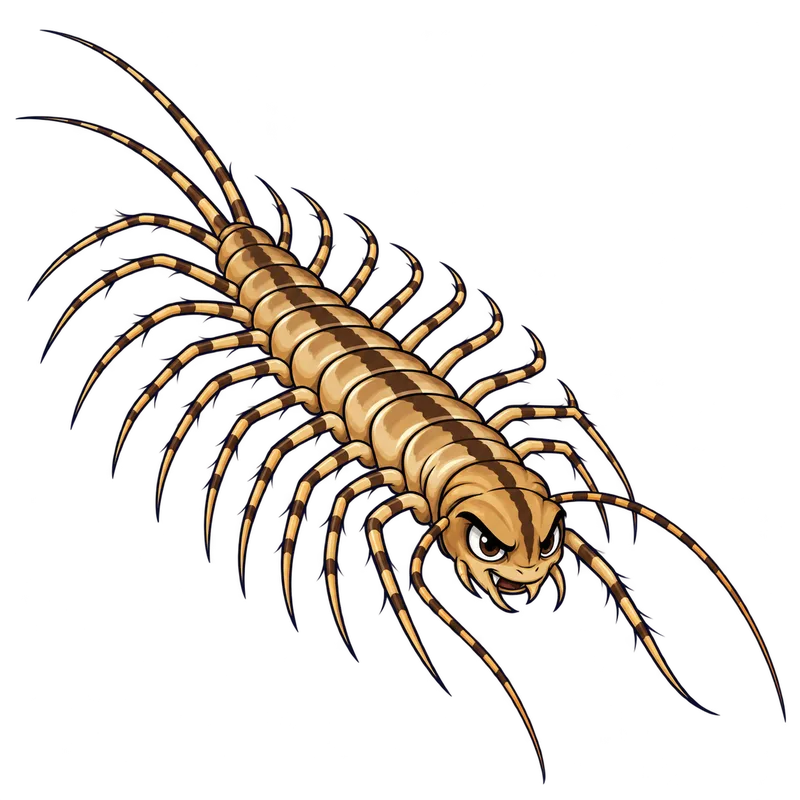
Yes, house centipedes eat ants, along with cockroach nymphs, bed bugs, flies, silverfish and spiders. But a house centipede hunts alone and only catches the occasional forager, while an ant colony can run to thousands of workers with queens replacing them, so centipedes will never clear out an ant problem.
What is actually going on
Picture the classic basement scene: you flip on the light, a house centipede unspools from behind the water heater like a feather with legs, and two feet away a line of ants is commuting toward a sticky ring left by a soda bottle. It is tempting to look at the centipede and think, good, nature sent a tiny security guard.
Here is the straight answer. Yes, house centipedes eat ants. House centipedes actively hunt the small creatures that share your house: cockroach nymphs, bed bugs, flies, silverfish, spiders, termites and, yes, ants. So the centipede by the water heater may well eat an ant that wanders into its path tonight.
What it will not do is get rid of your ant problem. A house centipede is a generalist. It eats whatever small arthropod it can catch, and it hunts alone, at night, mostly in cool, damp, dark places like basements, cellars and first-floor bathrooms. Ants, on the other hand, live in colonies that can number in the thousands, sometimes with several queens. A trail on the counter is only the visible tip of a hidden workforce. Workers recruit nestmates to food, queens keep producing replacements, and some species defend themselves with biting jaws or chemical sprays such as formic acid. One centipede catching a few foragers barely registers against that math. It is like expecting one barn cat to empty a whole cornfield of mice. It might catch a wanderer. The factory keeps running.
The way a house centipede hunts is worth knowing, because it explains both its reputation and its limits. It has 15 pairs of long, striped legs on a body 1 to 2 inches long, and it runs down its prey rather than waiting in a web. It finds food with its long antennae, which pick up scent and touch, then pounces and wraps its legs around the victim, a move often described as lassoing. It can hold several small insects at once. The kill comes from a pair of modified front legs called forcipules, which inject venom. That same equipment is why people fear them, though a house centipede stinging a person is very rare and usually happens only when someone handles one roughly.
There is also a reason you may see both animals in the same week. Centipedes are moisture lovers. They drift toward damp basements, crawlspaces, bathrooms and leaf litter, and they settle where there is prey to eat. Ants usually come in for food, water or shelter during heat, drought or heavy rain. So seeing both can mean the house is offering two invitations at once: damp spaces for the centipede and an easy meal for the ants. That is useful information, but it is not a predator rescue story.
How to tell for sure
Start with the easy field marks, because most mix-ups happen at ankle height and bad lighting. Ants usually read as insects even from a few feet away: six legs, a pinched waist, and purposeful trailing behavior once a scout finds food. Centipedes look longer and flatter, with legs sticking out to the sides and a startling turn of speed. Millipedes usually move slower and look more cylindrical, like a dark living cable. If the creature in question has more than six legs and seems to be wearing too many boots, you are not dealing with an ant at all.
For ants, one genuinely handy clue is the sniff test, used with a little restraint. If you crush a tiny dark ant trailing across a counter and get a distinct rotten coconut or rancid blue cheese smell, that usually points toward odorous house ants or ghost ants. It is a strong clue, not a courtroom verdict, and it works best alongside behavior and location. Crazy ants and ghost ants often move in quick, erratic patterns that look almost frantic. Carpenter ants are usually larger and may show up around damp or damaged wood. Fire ants are a different outdoor conversation, with mounds, aggressive defense, and stings that can be medically serious for some people.
When you want more certainty, a 10x hand lens and a small vial with 70% isopropyl alcohol are usually enough for a homeowner-level look, without turning the kitchen into a laboratory. Check the narrow waist between the middle body section and the rear section. One raised node often fits ants such as carpenter ants, odorous house ants, and tawny crazy ants. Two nodes are more typical of ants such as fire ants and pavement ants. Antennae help too: fire ants usually have a two-segmented club at the tip, while odorous house ants lack a distinct club. These are sorting clues, not universal laws, and species can still fool a tired person at midnight.
If the ants are reddish brown, moving in huge erratic numbers, ignoring the usual baits, or showing up around electrical equipment, do not guess harder. Preserve a few in alcohol and send them to a university extension diagnostic lab or your state department of agriculture, because invasive crazy ants can require specialist confirmation. And never identify any pest from a bite, rash, or mark on skin. Skin reactions are too variable, and the wrong guess can send treatment in the wrong direction.
What usually comes next
The practical decision is this: stop trying to recruit the centipede, and decide whether your house is feeding ants, housing ants, or both. In most ordinary cases, the next move is boring and effective. Remove the invitation, then use identification to choose a targeted response. Wipe up sugar and grease fast, store pantry food and pet food in airtight containers, fix the slow leak under the sink, ventilate the crawlspace, caulk utility gaps, trim branches off the siding, and pull damp mulch or leaf litter away from the foundation. That combination usually pressures both centipedes and ants, because it removes water for one and groceries for the other.
For ants, baits often make more sense than spraying the visible trail, but only when the product label is followed exactly and the bait matches the ants and the season. The point of a bait is not instant drama on the counter. The point is that workers carry the active ingredient back to the nest, where the colony does the work for you. Contact sprays feel satisfying because the scouts drop in front of you, yet they usually leave the queens untouched. Worse, some colonial ants respond to disturbance by budding, splitting into satellite subcolonies and turning one annoying trail into several smaller mysteries. That is why blasting every forager can backfire even when the can makes you feel briefly powerful.
If ants ignore a bait, do not assume they are stubborn geniuses. The identification may be off, the colony may want protein instead of sugar right now, the nest may be outdoors, or moisture may be keeping the whole system comfortable. Change one variable at a time and watch what happens. Keep the centipede out of the strategy entirely. It is a sign of damp conditions and a steady supply of small prey, not a tool.
When to get help
Call a licensed pest control professional when the clues stop being casual. Coarse sawdust-like frass mixed with insect body parts near baseboards, window frames, or beams suggests carpenter ants excavating wood, and finding the nest matters more than spraying the workers you can see. Repeated trails after real sanitation and correct baiting, ants inside wall voids, fire ant mounds near play areas, or overwhelming numbers of erratic reddish brown ants also move the job out of the casual category. High-volume perimeter barriers, void injections, and invasive ant management belong to licensed applicators, and any pesticide use is governed by the product label, not by folklore or a neighbor's confidence.
Get medical help fast for stings or bites that bring trouble breathing, swelling of the face or tongue, dizziness, widespread hives, vomiting, or any severe allergic reaction. For less dramatic but worrying exposures, a clinician, urgent care, or poison control is the right call, especially for children, older adults, pregnancy, or anyone with a known allergy. Do not let a blog post diagnose a reaction. If ants are massing inside air conditioning units, breaker boxes, or outlets, treat that as both a pest problem and an electrical risk and involve the appropriate professional. The short version: a centipede is not your ant plan. Dry the house, seal the gaps, remove the buffet, identify the ant, and bring in help when health, wiring, wood, or an invasive swarm is on the line.