
How long do house centipedes live?
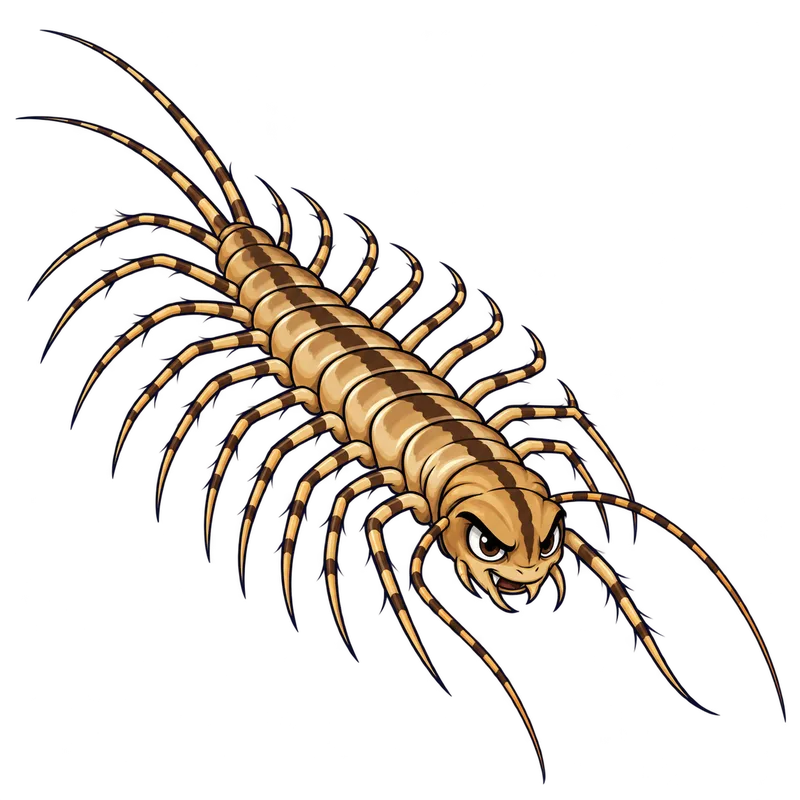
House centipedes live from about three years to as long as seven, depending on conditions, and they take upwards of three years just to reach adulthood. That means the one you keep seeing near the laundry sink may be a long-term resident, sticking around because your home offers moisture and a steady supply of small insects to eat.
What is actually going on
Imagine stepping into the quiet basement late at night, flicking on the light switch, and watching a pale, many-legged streak vanish behind the water heater with the kind of athletic speed that feels entirely unwarranted for a bug. That is a house centipede, and if you are wondering how long that nocturnal sprinter is going to be sharing your home, the answer is longer than most people expect: house centipedes live from about three years to as long as seven, depending on conditions. They also mature slowly, taking upwards of three years just to reach adulthood, which means that the swift visitor you spotted near the laundry sink might be a long-term resident rather than a passing tourist.
That lifespan is quite a marathon for an insect relative, and it takes an unusual path to get there. House centipedes do not hatch out looking like miniature adults. They emerge from tiny eggs laid in damp soil or structural crevices as rather helpless larvae with just four pairs of legs and no functional breathing tubes, relying initially on internal yolk reserves.
As they grow, they undergo a strange developmental process where they add body segments and new leg pairs through a series of six distinct larval molts, moving from four pairs to five, seven, nine, eleven, and thirteen pairs before finally reaching their adolescent complement of fifteen pairs. Even after hitting maturity, they do not stop shedding. Adults continue to molt on a regular cycle of thirty to sixty days for maintenance and growth, and they even possess the uncanny ability to completely regenerate lost limbs during their next molt if a predator catches a leg and forces them to drop it.
How to tell for sure
Before you decide how to handle your multi-legged guest, it helps to confirm what you are actually looking at. True house centipedes usually measure about an inch to an inch and a half in body length, but their long, banded legs and sweeping antennae can stretch their overall footprint out to three inches or more. Their bodies are typically a dirty yellow to olive green with three distinct dark stripes running down the back, and they move with a swift, gliding sprint that rarely pauses for long.
A common mix-up happens with millipedes, which people often confuse with centipedes simply because both have an abundance of legs. Millipedes usually have two pairs of short legs attached to each body segment, a cylindrical shape, and a sluggish, deliberate crawl as they feed on decaying organic matter. House centipedes, by contrast, have just one pair of exceptionally long legs per segment, a flattened or domed body, and a predatory nature that makes them chase down flies, silverfish, and spiders rather than munch on your houseplants.
You might also wonder if seeing one means you have a massive infestation brewing behind the drywall. That is usually a misconception because house centipedes are solitary creatures that do not build nests or form social colonies. An isolated sighting usually means a single hunter has wandered out in search of water or prey, though a persistent stream of them often points to a thriving population of other insects hidden out of sight.
What usually comes next
When you find yourself sharing space with these fast-moving hunters, your smartest move is fixing the conditions that drew them indoors instead of just swatting at them with a rolled-up magazine. House centipedes need damp spots to breathe without drying out, and they go wherever the small insects are hiding.
Start by drying out standard trouble spots like the basement, crawl spaces, and the bathroom by kicking on an exhaust fan or plugging in a dehumidifier. Check the outer walls for any gaps around pipes or cracks in the foundation, and seal those openings up with weatherstripping or fresh caulk. Putting a solid sweep on the bottom of the back door also stops centipedes and their meals from walking right in from the garden.
If you are curious about what is actually keeping them fed, tucking a few glue boards into dark corners will show you if you are dealing with a hidden population of silverfish, spiders, or roaches. Once you dry out their favorite zones and take away their hunting menu, the centipedes usually move along on their own.
When to get help
Even though these multi-legged hunters are actually quite helpful around the house because they eat genuine pests, you sometimes need to bring in a licensed pro or a medical expert. Call a pest control operator if the centipedes are pouring out of hard-to-reach places like sealed block walls or damp crawl spaces, or if your glue traps are full of structural pests like termites or health risks like German cockroaches.
As for health concerns, house centipedes are shy and rarely bite, using their venom mostly on small bugs instead of people. A bite generally feels like a minor bee sting and leaves behind a bit of temporary local soreness. That said, any break in the skin can let bacteria in. If the redness starts spreading, the swelling gets severe, or you notice signs of an allergic reaction, reach out to a doctor, urgent care clinic, or poison control right away.