
Should you kill house centipedes?
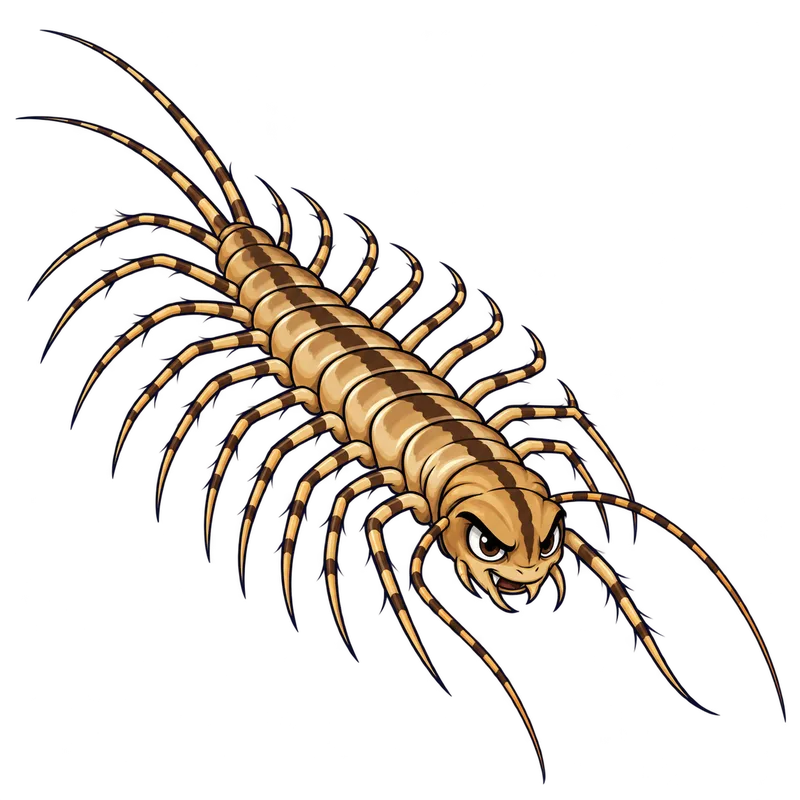
No, you generally should not kill house centipedes because these grayish-yellow predators act as free night-shift exterminators that hunt down silverfish and other pests. Seeing them often points to a high indoor humidity level, so killing the centipede just gets rid of the messenger while leaving damp conditions unaddressed.
What is actually going on
You are standing in the basement on a Tuesday night, reaching for the spare lightbulbs on the shelf, when a creature that looks like a bundle of greyish-brown toothpicks on fifteen pairs of impossibly long legs darts across the concrete floor and vanishes behind the water heater. Your first instinct is usually to grab the nearest heavy object or a can of spray. But before you squash it, you should know the short answer: no, you generally should not kill house centipedes.
It feels completely counterintuitive because they look like they crawled straight out of a horror movie. That frantic, high-speed scuttling across a bathroom tile floor is enough to make anyone jump. Yet those frightening legs and flattened bodies belong to a solitary, non-colonizing predator that acts as your home's free night-shift exterminator. They do not eat your drywall, chew your wool sweaters, raid your cereal boxes, or carry human diseases.
Instead, they spend their nights hunting down the things you actually need to worry about. A house centipede is an obligate carnivore, meaning it only eats other insects. It tracks down and consumes silverfish, booklice, spiders, carpet beetle larvae, and even small cockroaches. When you kill one, you are eliminating a free biological control agent that works while you sleep.
More importantly, seeing a house centipede is essentially your basement or crawlspace trying to tell you something important. These creatures dry out and die very quickly in dry air. If you are seeing them regularly, your indoor relative humidity is likely creeping up, and they have found a steady buffet of feeder insects to eat. Killing the centipede just gets rid of the messenger while leaving the damp conditions and the real pest problem completely unaddressed.
How to tell for sure
The house centipede is usually easy to spot once you know what to look for, but it helps to be certain you are not confusing it with other creatures. Adults usually measure about 25 to 38 mm in body length, though their 15 pairs of long, thin, banded legs make them look much larger. They are typically grayish-yellow or light brown with 3 dark longitudinal stripes running down their back.
You can usually tell a centipede from a millipede by looking closely at how their legs are arranged. Centipedes have 1 pair of legs attached to each body segment, whereas millipedes have 2 pairs of legs per segment and move at a much slower, more deliberate pace. Millipedes are harmless detritivores that feed on decaying plant matter, while centipedes are fast-moving hunters.
You might also wonder about those outdoor tropical centipedes you hear about that deliver agonizing, medical-emergency bites. Those are stockier, shorter-legged, and much larger. House centipedes do possess modified front legs that act like venomous fangs to paralyze tiny insects. Their mouthparts, however, can rarely penetrate human skin. If you somehow manage to squeeze one hard enough that it bites you in self-defense, the localized reaction is usually mild and comparable to a minor bee sting rather than a hospital visit.
If you are trying to identify a damaged or crushed specimen, distinguishing it from other species can get tricky. Field identification usually relies on a quick observation of those distinct 15 pairs of long legs and rapid movement. If you need to confirm fine anatomical details, an extension specialist would typically use a 10x magnification lens to look at the jaw structure, but a clear view of the living animal in your basement is usually enough for a positive identification.
What usually comes next
Since you have decided to let the creature live, or at least stopped reaching for the poison spray, you have to make one practical decision about how to handle your relationship with these animals. You can either choose to coexist with them as silent roommates that manage your invisible silverfish problem, or you can evict them by fixing the environmental conditions that invited them in the first place.
Coexisting requires a shift in mindset. You accept that seeing the occasional fast-moving shadow means your natural pest control is working behind the scenes. They do not build nests, they do not swarm, and they avoid humans at all costs. But if the sight of those long legs is simply too much for your nerves, or if you live in a commercial facility where any crawling insect is a regulatory violation, you need to pivot to sustainable management instead of random killing.
That single decision means shifting your focus away from the centipede itself and straight toward moisture and exclusion. You can easily remove an individual centipede by dropping a glass over it and sliding a piece of paper underneath to carry it outside, or by vacuuming it up and immediately sealing the vacuum bag in an outdoor trash bin. From there, your main task is drying out the damp corners of your basement, fixing leaking pipes, and sealing up the gaps around your foundation so neither the centipedes nor their prey can get inside.
When to get help
Most encounters with house centipedes require nothing more than a deep breath and a dry basement floor, but certain situations call for outside help. If you are getting bitten and experience severe pain, spreading redness, or any signs of an allergic reaction, you should consult a clinician, urgent care facility, or poison control center immediately. While their venom is meant for small bugs, individual sensitivities vary.
You should also bring in a licensed pest management professional when your centipede sightings are not isolated events. If you are seeing multiple house centipedes every single day, it usually means you have a severe, hidden infestation of secondary prey like cockroaches or silverfish behind your walls, or you are dealing with major structural water infiltration in an inaccessible crawlspace. A professional can assess the underlying moisture and insect issues safely.
When professional treatments involve chemical perimeter applications, keep in mind that pesticide use is strictly governed by federal and state regulations. The product label is a legal document, and professional applicators must follow every word of it while wearing mandated personal protective equipment such as chemical-resistant gloves and safety goggles. If your home requires chemical intervention due to severe infestations, leave those decisions entirely in the hands of a licensed applicator rather than experimenting with custom mixtures or unapproved indoor sprays.