
Silverfish vs house centipede: how can you tell them apart?
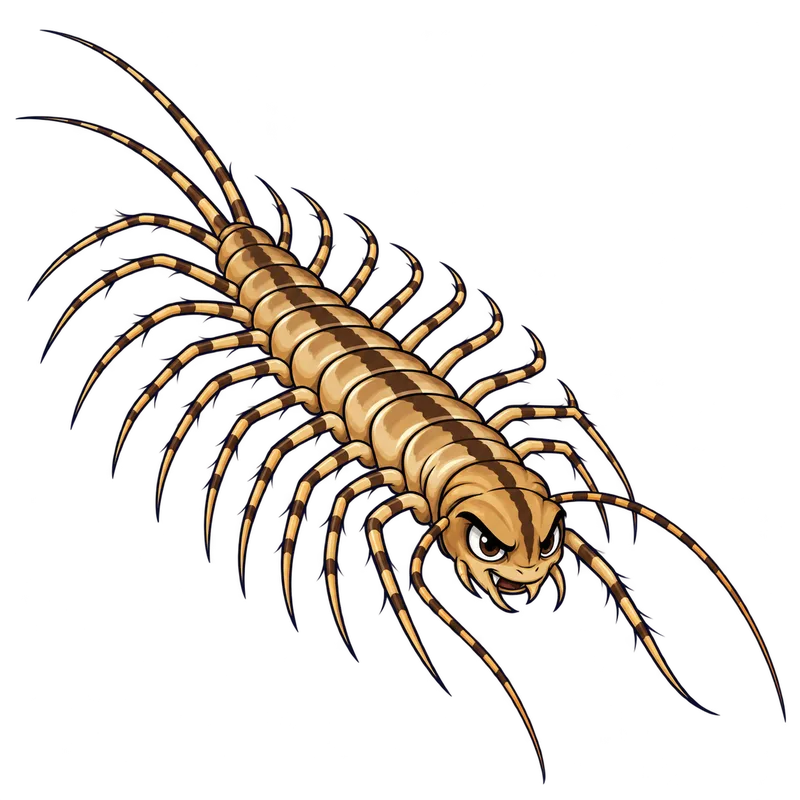
You can tell silverfish and house centipedes apart by looking at their legs, body shape, and movement. A silverfish has six legs, a metallic teardrop shape measuring 7 to 12 millimeters long, and moves in a slippery swimming motion. A house centipede has thirty long legs, a yellowish-gray body measuring 25 to 30 millimeters, and runs with great speed.
What is actually going on
You flip on the bathroom light in the middle of the night, and something instantly darts across the tile or scrambles frantically in the bottom of the porcelain sink. Before your eyes even adjust, the creature disappears behind the baseboard, leaving you wondering whether you just saw a silverfish or a house centipede.
The short answer comes down to legs, shape, and how they move. If what you saw looked like a tiny, shimmering teardrop with six legs that wiggled across the floor like a minnow, you usually have a silverfish. If what you saw looked like a feathery, living eyelash with thirty long legs sprinting at breakneck speed, you are looking at a house centipede.
These two creatures often end up in the exact same household spots, which is why people mix them up so often. You will find them trapped in bathtubs, sheltering beneath water heaters, or lurking behind basement storage boxes. They get stuck in porcelain sinks and tubs for the same reason: their tiny feet cannot get traction on smooth, glazed surfaces, turning your plumbing fixtures into unintentional pitfall traps.
There is also a predator-and-prey relationship happening behind your drywall. Silverfish are quiet scavengers that chew on the microscopic starches in wallpaper glue, cardboard, and book bindings. House centipedes, on the other hand, are the nocturnal hunters that stalk and eat silverfish, along with spiders, carpet beetles, and small roaches. If you spot a house centipede patrolling your baseboards, it is usually there because an unseen buffet of smaller moisture-loving pests invited it inside.
How to tell for sure
If you manage to trap one under a clear glass or get a good look before it scurries away, distinguishing them is straightforward once you know what to check. A silverfish is a true insect, which means it has strictly six legs tucked close beneath its body. An adult house centipede belongs to a completely different group of arthropods and usually carries fifteen pairs of legs, giving it thirty legs in total. Those legs are banded with dark rings, remarkably long, and flare outward from the body, making the creature look twice as wide as it actually is.
Next, observe the body silhouette and texture. A silverfish has a flattened, carrot-shaped body measuring about 7 to 12 millimeters long. It is covered in tiny, metallic scales that reflect light like aluminum foil. If you accidentally crush one with a tissue, those scales usually slough off as a faint silvery-gray smudge. A house centipede is longer, usually 25 to 30 millimeters in body length, with a rigid, yellowish-gray segmented body marked by three dark lengthwise stripes, and it completely lacks scales.
Look at the tail end. Silverfish have three distinct, thread-like bristles projecting backward from the tip of their abdomen: one straight out the back and two splayed out to the sides. House centipedes do not have these tail bristles. However, the centipede's final pair of back legs is exceptionally long, sometimes twice the length of its body, which can easily trick your eye into thinking it has antennae at both ends. Locomotion gives them away just as fast. A silverfish stays pinned close to the surface, undulating its body side to side in a quick, slippery swimming motion. A house centipede runs high off the ground on its spindly legs, moving with astonishing speed.
Keep in mind that if a bug got caught in a sticky trap or took a hit from a shoe, identification gets trickier. Silverfish shed their delicate tail bristles and silvery scales under pressure, leaving a dull gray nub. Centipedes frequently snap off their long legs to escape a threat. If you are inspecting a battered specimen, look at the body attachment points: six leg sockets mean an insect, while rows of lateral leg segments mean a centipede.
What usually comes next
Finding a lone silverfish or a stray centipede on the floor is not a reason to panic. Neither of them feeds on structural wood framing, neither can chew through your home wiring, and neither will damage your foundation. Silverfish cause damage only when large numbers graze undisturbed on valuable old paper, vintage photographs, starch-sized textiles, or wallpaper over many months, leaving shallow scraping marks and notched paper edges. Centipedes cause zero property damage.
The single most effective decision you can make right now has nothing to do with buying chemical bug bombs. It is managing relative humidity. Both creatures rely on ambient moisture to survive. Silverfish need high relative humidity to lay eggs and thrive. House centipedes dry out quickly and naturally seek damp basements, crawl spaces, and unvented laundry rooms where their prey gathers. If you pull the moisture out of the air, you break their life cycle.
Set up a dedicated dehumidifier in the basement or run your air conditioning to bring indoor relative humidity down below 50%. Keeping the air consistently below that mark stops silverfish eggs from hatching, starves the microscopic mold spores that secondary pests feed on, and forces centipedes to either retreat outdoors or die from dehydration. Along with dropping the humidity, take away their hiding spots and food sources. Transfer old files, books, and stored clothing from cardboard boxes into tightly sealed plastic bins with rubber gaskets. Vacuum baseboards, dark closets, and unfinished basement corners thoroughly to pick up stray food crumbs, dead insects, and shed skins. Seal perimeter gaps where plumbing pipes pass through drywall or concrete, and apply caulk along loose baseboard gaps where these critters hide during daylight hours.
There is one notable exception to the humidity rule. The grey silverfish, sometimes called the long-tailed silverfish, is larger than the common silverfish and tolerates dry environments much better. If you are finding long-tailed silverfish upstairs in carpeted, dry bedrooms or heated modern apartments, lowering the humidity alone might not clear them out, and targeted baiting behind baseboards may be required.
When to get help
Most encounters can be resolved with a vacuum, a dehumidifier, and some silicone caulk. However, certain situations call for specialist intervention. If you are dealing with a severe, recurring population in an apartment building, a large commercial property, or an extensive finished basement where moisture management alone has not reduced sightings after several weeks, consider hiring a licensed pest control professional. A certified applicator can inspect hidden structural voids, identify the exact species involved, and apply targeted treatments or specialized gel baits that are not sold on consumer shelves.
If you manage an archive, a library, or own irreplaceable historical documents and heirloom textiles that show active grazing damage, stop before spraying any retail pesticides. Liquid chemicals and store-bought sprays can permanently stain and degrade fragile paper and antique fabrics. Contact a professional paper or textile conservator to safely treat and preserve the items.
Finally, keep medical realities in perspective. Silverfish have weak, chewing mouthparts designed for scraping glue; they cannot bite humans or pets, carry no venom, and do not transmit infectious diseases. House centipedes do possess modified front legs that function like small venom fangs to stun their prey. They are shy and run away from humans, but if one gets trapped against bare skin, it can pinch. A house centipede bite generally feels like a mild bee sting with minor localized redness.
Medical complications are rare, but if a bite causes severe localized pain, expanding swelling, signs of a secondary bacterial skin infection, or any symptoms of an allergic reaction, seek attention from a primary care clinician, an urgent care clinic, or contact your local poison control center.