
Do house centipedes bite?
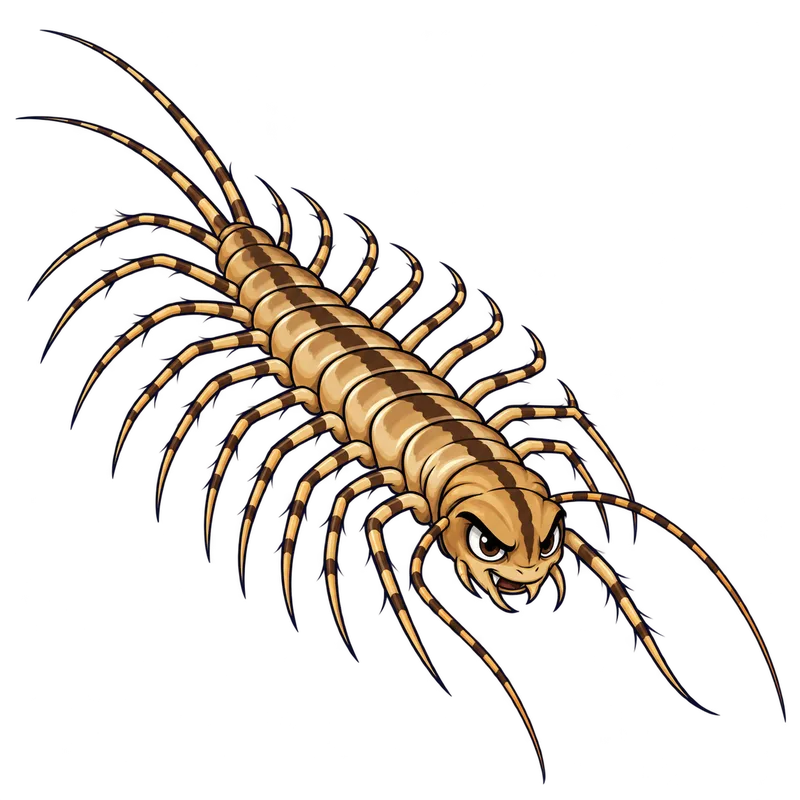
Yes, house centipedes can bite, but they only do so defensively when accidentally compressed against human skin. Their bite feels like a mild bee sting or a pinprick, leaving behind localized swelling and a red mark.
What is actually going on
You shuffle into the bathroom at two in the morning, flip on the light, and spot a frantic blur of legs darting across the floor tiles toward the baseboard. It looks like a stray piece of dust got possessed by a ghost, or perhaps a tiny feather duster with fifteen pairs of long, striped legs. You jump back, heart hammering, wondering if that terrifying sprint means you are about to be hunted down in your sleep. After all, anything that moves that fast and looks that alien must be dangerous, right?
To clear the air right away: yes, house centipedes can bite, but it is not something they go out of their way to do. Their bite feels roughly like a mild bee sting or a sudden pinprick, leaving behind a bit of localized swelling and a red mark. They do not hunt humans, they do not drink blood, and they certainly do not lie in wait under the covers.
The main reason people get bitten is entirely accidental. Imagine reaching into a damp pile of laundry left on the basement floor, or rolling over on top of one that crawled into your bed sheets looking for moisture. When the centipede finds itself suddenly compressed against your skin, its defensive reflex kicks in. It pinches down with specialized front appendages, and that is when you feel the sting.
People often picture centipedes biting with a set of jaws like a beetle or an ant, but their anatomy works quite differently. Those front claws are actually modified legs, known as forcipules, which double as venom injectors. Think of them as tiny hypodermic needles. They use these appendages to paralyze silverfish, spiders, and cockroaches in the dark corners of your home. When pressed against human skin, those same claws are strong enough to break the outer layer, though it takes a deliberate squeeze or pinch to make them use them defensively.
House centipedes are solitary creatures. They do not build nests, spin webs, or form massive colonies inside your drywall. If you spot one scurrying across the basement floor, it is usually just a lone hunter passing through in search of water or an easy meal. Finding them regularly, however, usually signals that your home has a couple of underlying conditions worth addressing. They thrive where indoor humidity is high and where an established population of other crawling pests provides a steady food supply.
Instead of forming colonies, these predators spend their nights hunting down common household nuisances. They patrol your floors and walls for silverfish, cockroaches, and spiders. When you find one in the sink or the tub, it is often trapped by the smooth porcelain walls while trying to reach a water source. Far from being malicious invaders, they act as an uninvited pest control service that happens to startle people with its speed.
How to tell for sure
Figuring out if you are looking at a house centipede usually comes down to checking the leg count and watching how it scurries. An adult house centipede typically carries fifteen pairs of long, fragile legs along a stiff, flattened body. That specific number sets them apart from true insects, which stop at three pairs, and spiders, which stick to four. Millipedes sport plenty of legs too, but they creep along in a slow, undulating wave instead of the blindingly fast sprint that centipedes use to cross a wall.
If you are staring at a mysterious red mark on your skin and trying to retrace your steps, take a moment and avoid jumping to conclusions. Skin welts and surface lesions rarely give away their origin, meaning a photograph or a verbal description of a spot on your forearm almost never proves which bug did it. Unless you physically spot the creature biting you or trap it right next to the mark, trying to identify an arthropod bite from the resulting blemish alone is generally unreliable.
What usually comes next
When you spot a house centipede darting toward your baseboards, your easiest immediate step is simply to remove it without a fuss. Instead of swatting at it with a magazine or trying to cup it under a glass, reach for the vacuum cleaner hose. Vacuuming sucks the runner up safely from a distance, allowing you to seal the canister or bag and take it straight to the outside bin.
Moving past the occasional startled visitor, your main choice boils down to whether you want to fix the conditions that drew them inside or just keep chasing them around. Since these hunters arrive because your house offers water and food, changing the environment beats any temporary spray. Lowering the moisture levels in notoriously damp areas like basements, cellars, and crawl spaces changes everything.
Setting up a dehumidifier in damp zones dries out the tiny wet pockets that centipedes and their preferred prey need to survive. You can also target their food chain by clearing out the silverfish and spiders sharing those same dark corners. Once you take away their meals and dry up their hiding spots, the centipedes tend to wander off on their own. If you decide to apply residual chemical treatments around foundation cracks or entry gaps, keep in mind that every product is governed strictly by its label, and major chemical applications are best left to licensed pest control operators.
When to get help
Most encounters end the second the centipede vanishes into a crack, but certain situations mean you should call for backup. If you notice severe pain, spreading redness, heat, or pus around a mark, those are classic signs of a secondary bacterial infection. More critically, if anyone in your home shows whole-body allergic reactions like trouble breathing, swelling around the face, or lightheadedness after an encounter, get medical help right away from a doctor, an urgent care clinic, or poison control. Never attempt to diagnose skin damage or guess at treatments on your own.
You might also want to bring in a pest management professional if centipede sightings turn into an everyday event in your living rooms. Spotting them by the dozen usually means you have a stubborn moisture problem hiding alongside a massive population of pantry or basement pests like roaches and silverfish. An expert can inspect the property, track down hidden pipe leaks, seal off entryways, and put together a targeted pest plan to make your home less inviting.