
Are house centipedes dangerous to cats?
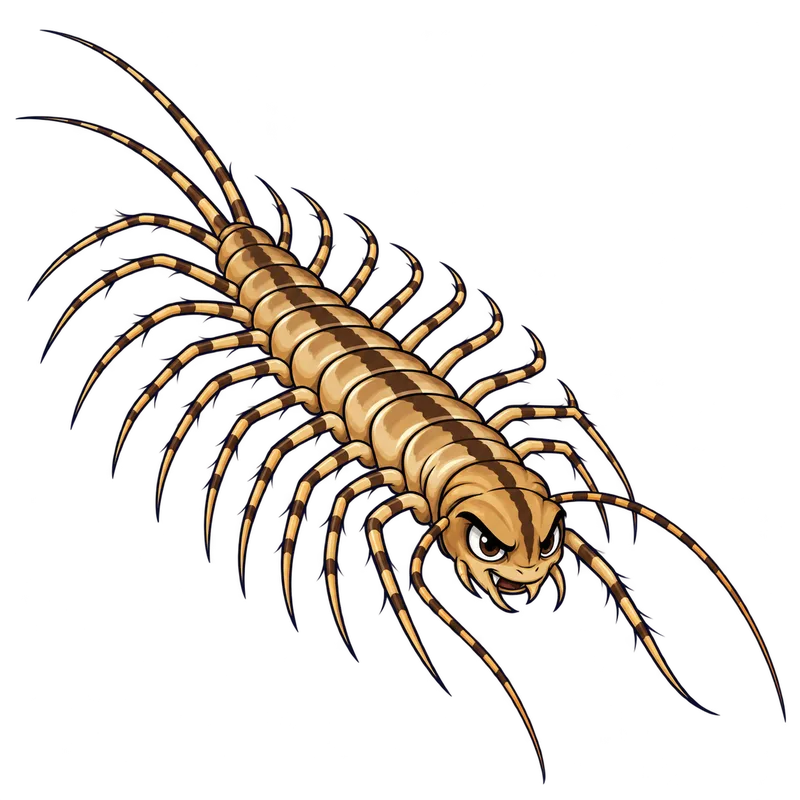
No, house centipedes are not dangerous to cats, and swallowing one will not poison your pet. A cornered house centipede can deliver a defensive pinch using modified front legs, but for a healthy adult cat, this feels much like a mild bee sting. However, a cat tangling with a larger desert centipede requires veterinary attention.
What is actually going on
You are standing in the hallway late at night, half-asleep, when you spot your cat hunched over in fierce concentration. Before you can intervene, a gray blur with a ridiculous number of legs darts across the baseboard, and your cat pounces. The multi-legged intruder vanishes, and your cat looks up at you with that satisfied, slightly guilty expression. Naturally, your immediate panic is whether that creepy-crawly just poisoned your cat.
The short answer is no. House centipedes are not systemically poisonous to cats if swallowed, and they do not carry diseases that will wreck your pet's health. While those frantic, scurrying bugs look like something straight out of a horror movie, they are actually solitary predators that spend their time hunting silverfish, spiders, and cockroaches in your walls and basements.
If your cat manages to crunch down and swallow one, its stomach acid and digestive enzymes break down the insect proteins without drama. Centipedes do not possess tissue-destroying body poison meant to harm mammals from the inside. Your cat might experience a moment of startled indignation, but a swallowed house centipede will not trigger a medical emergency.
The only real exception during an encounter happens if the cat bats at the bug instead of eating it right away. House centipedes use modified front legs to inject venom into their invertebrate prey. If a cat steps on one or presses a paw or lip against a cornered centipede, the bug can deliver a defensive pinch. For a healthy adult cat, this feels much like a mild bee sting, leaving behind a bit of temporary local tenderness or a tiny red spot rather than systemic trauma.
How to tell for sure
It helps to know what you are actually looking at, because not all multi-legged crawlers are created equal. A true house centipede usually has fifteen pairs of long, banded legs and extremely long antennae. They grow up to an inch and a half in body length, though their sprawling legs look much bigger when they sprint across a wall. They are fragile, delicate, and prefer damp, dark indoor corners.
You usually find them scuttling across basement floors or bathroom tiles at night. If you live in the southern or western regions of the United States, however, you need to watch out for larger desert centipedes. Those heavier-bodied creatures have twenty-one to twenty-three pairs of legs and can deliver a significantly more painful and potent sting that demands a veterinary call.
Do not confuse house centipedes with millipedes either. Millipedes are the slow, cylindrical neighbors with two pairs of legs per body segment that curl up into tight little spirals when disturbed and secrete a foul-smelling liquid instead of biting. If you see a lightning-fast sprinter with long legs, you are almost certainly looking at a harmless house centipede rather than a chemical-slinging millipede or a desert terror.
Remember that you cannot diagnose a bug encounter purely by looking at a red bump or a swollen paw on your cat. Many different skin irritations, allergies, and minor scrapes look identical. If your cat develops a sore spot, let a professional take a look rather than guessing based on a bug you spotted nearby.
What usually comes next
Since the centipede itself poses very little danger to your cat, your main decision centers on how to manage them in the house without creating a secondary hazard. Panicking and reaching for heavy chemical sprays or bug foggers is usually a mistake. Total-release bombs do not reach the dark wall voids where centipedes hide, and they introduce chemical residues into your living space that can be dangerous for cats.
Cats are uniquely sensitive to certain synthetic pyrethroids, which are common ingredients in many perimeter pest sprays. If a cat walks across a freshly treated floor or grooms residue off its paws, the pesticide exposure poses a far greater clinical danger than any centipede ever could.
Instead of chemical warfare, focus on making your home less attractive to them in the first place. House centipedes need moisture to survive and reproduce. Drop your indoor relative humidity below fifty percent using a dehumidifier in the basement or crawl space, fix any leaky pipes under the sink, and seal up large foundation cracks with silicone caulk. Physical removal using a vacuum cleaner or sticky monitoring traps works wonders without introducing risky toxins into your pet's environment.
When to get help
Most indoor centipede encounters require nothing more than a quick sweep with a broom, but certain situations call for immediate expert intervention. If your cat tangled with a large desert centipede instead of a standard house centipede, or if your cat has a known sensitivity to insect stings, you need to pay close attention.
Watch for warning signs such as persistent pawing at the mouth, heavy drooling, noticeable swelling around the muzzle, or obvious distress and difficulty breathing. If you notice any of these symptoms after an arthropod encounter, contact your veterinarian or an animal poison control center right away.
When pests get completely out of hand and traditional moisture control is not enough, leave chemical applications to a licensed pest control professional. A qualified applicator knows how to choose and apply products safely in a household with pets, keeping your cat out of harm's way while dealing with the underlying pest pressure.