
Do house centipedes eat cockroaches?
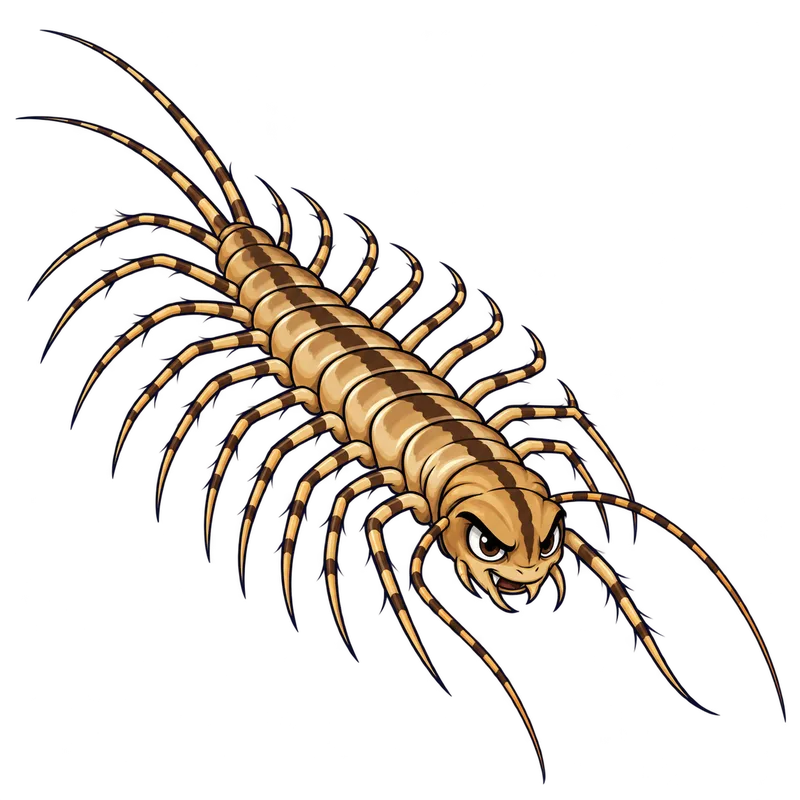
Yes, house centipedes hunt and consume small cockroaches and early stage cockroach nymphs when they cross paths indoors. These solitary predators use venom injected through modified front legs to subdue small prey. However, a single centipede cannot keep up with a domestic cockroach population and only targets smaller species.
What is actually going on
Picture walking down the hall for a glass of water at two in the morning, flicking on the kitchen light, and watching a creature with fifteen pairs of long, thread-like legs dart across the baseboard like a runaway fern frond. It looks like something out of a science fiction nightmare. Right after the heart palpitations settle down, a comforting thought usually pops up. Aren't these things supposed to eat other pests? Do house centipedes actually eat cockroaches?
Yes, they do. House centipedes are active, nocturnal predators that will happily hunt and consume small cockroaches and early-stage cockroach nymphs when they cross paths indoors. They do not spin webs or wait for prey to stumble into a trap. Instead, they use their exceptionally long antennae to sense vibrations in the dark, chase down their quarry at surprising speeds, and subdue it with a pair of modified front legs called forcipules that inject paralyzing venom.
Before assuming you have hired the ultimate free-roaming exterminator, there is a catch. Centipedes are solitary hunters. They do not live in colonies, and they certainly cannot keep up with the reproductive math of a domestic cockroach population. A single female German cockroach can produce thousands of descendants in less than a year. A lone centipede wandering out from behind the washing machine might snap up an occasional nymph, but it cannot scratch the surface of an established infestation.
If you spot one of these multi-legged sprinters, think of it less as pest control and more as a check engine light on your home's dashboard. House centipedes have delicate, thin skins that dry out quickly, meaning they only survive indoors when there is a steady source of high humidity and a reliable buffet of other small bugs, such as silverfish, flies, and booklice, to sustain them.
How to tell for sure
Spotting a house centipede usually involves seeing a creature up to an inch and a quarter long, with a grayish-yellow body marked by three dark stripes down the back. Those fifteen pairs of legs get progressively longer toward the rear, which keeps the animal from tripping over itself when it sprints across a wall.
When people worry about cockroaches, they are usually dealing with one of two common indoor species. German cockroaches are small, tan, and feature two dark parallel stripes right behind the head. Brown-banded cockroaches are similar in size but carry light transverse bands across their wings. House centipedes can easily handle the nymphs of these smaller species.
Larger roaches, such as the adult American cockroach or the Oriental cockroach, usually exceed the size threshold that a house centipede can tackle. An adult American roach is a heavy, well-armored tank compared to a slender centipede.
It helps to know what these animals are not doing. Centipedes do not eat wood, paper, fabrics, or human food. If you find chewed-up wallpaper, ruined starched shirts, or holes in pantry boxes, blame silverfish, clothes moths, or the cockroaches themselves. Centipedes are strictly carnivorous and care only about living prey. Furthermore, they do not possess a stinger on their tail, nor do they bite with ordinary mouthparts. Their venom is delivered exclusively through those pincer-like front legs beneath the head.
What usually comes next
Since spotting a centipede means your house has both too much moisture and a hidden food supply, the smartest move is fixing those environmental problems rather than worrying about the predators themselves.
Start by checking your indoor humidity. Basements, crawl spaces, and bathrooms often harbor damp microclimates that invite these creatures in from the outdoors. Running a dehumidifier to keep indoor humidity below fifty percent makes the space hostile to both centipedes and the smaller insects they hunt. Check under sinks for slow plumbing leaks, make sure bathroom exhaust fans vent properly, and see that floor drains stay clear.
Next, block their entry points. Seal foundation cracks, gaps around utility pipes, and mortar joints using quality silicone caulk. Put tight-fitting door sweeps on exterior doors to keep wandering bugs from sliding underneath.
Clear away organic debris like heavy leaf litter, mulch beds, and stacked firewood from the immediate perimeter of your house. Pushing that material three to five feet away from the foundation removes the damp outdoor shelter where centipedes breed before finding their way inside through a basement window.
If you spot individuals indoors, physical removal works best. A vacuum cleaner makes quick work of them, or you can place sticky glue boards flush against baseboards in dark corners.
When to get help
While house centipedes are generally harmless to humans and rarely bite unless pressed directly against bare skin, certain situations require calling in outside assistance.
If a centipede bite victim experiences severe localized pain, spreading redness, significant swelling, or signs of an allergic reaction like hives or trouble breathing, contact a clinician, urgent care center, or poison control hotline immediately.
For the underlying pest problems, a licensed pest management professional should be brought in under specific circumstances. Call an expert if you notice daylight sightings of German cockroaches, which usually points to a severe, overcrowded population hidden in wall voids. Multi-family housing units experiencing insect movement along shared plumbing chases also require professional intervention to treat the entire structure properly.
Finally, if an inspection of dark structural voids reveals roosting bats, remember that these animals are protected by state and federal wildlife laws. Never attempt to harm or poison them. Management and exclusion must always follow the regulations set by your state wildlife agency.