
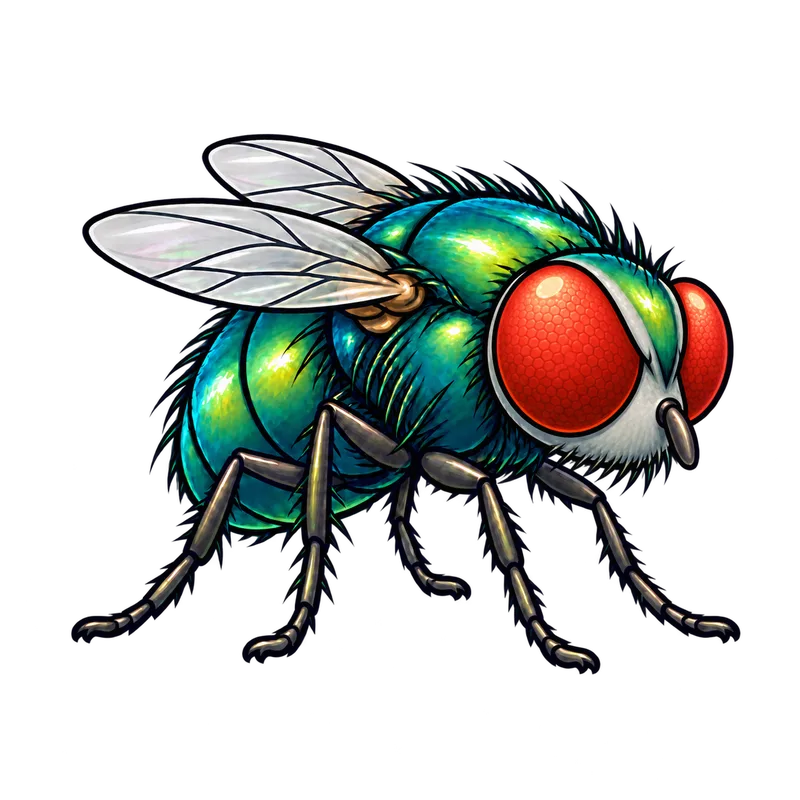
Blow flies
Family Calliphoridae
- Size
- 1/4 to 1/2 inch
- Color
- Metallic blue, green, copper, or bronze
- Habitat
- Carcasses, garbage, decaying organic matter, and building voids
- Diet
- Decaying flesh, animal protein, garbage leachate, and flower nectar
- Life cycle
- 10 to 25 days under warm conditions
Blow flies are the heavy-metal musicians of the insect world, showing up in brilliant shades of emerald green, cobalt blue, bronze, or copper that catch the light from across a room. They are stout, sturdy insects that often alert you to their presence with a loud, aggressive buzz against a window pane.
Identity
Measuring one-quarter to one-half inch long, these robust flies carry large, prominent compound eyes and soft, sponging mouthparts meant for sipping liquids rather than biting flesh. When you look at one under a steady gaze at arm's length, notice the smooth metallic finish on the back and the sharply angled fourth vein on each wing, which sets them apart from the dull gray, striped house fly. Females give themselves away by a noticeable gap between their eyes, while males have eyes that sit right next to each other on top of the head.
Habitat & behaviour
Outdoors, these flies lead a thoroughly unglamorous life driven by the search for decaying protein, animal carcasses, and garbage dumps. They are strong, confident flyers that can easily cover miles from where they hatched, drawn strongly to bright sunlight and warm window panes. When the temperature drops in autumn, adults stop patrolling the yard and look for sheltered winter lodgings inside building attics, wall voids, and chimneys. They do not feed or breed during the cold months, but a stray winter thaw can trick them into waking up early and stumbling sluggishly into your living room through gaps around light fixtures and window frames.
Visual variations
True blow flies go through four complete life stages, starting as tiny, cream-colored eggs that hatch within a day into legless, cylindrical maggots. These larvae are built to feed voraciously on rotting meat, stretching up to three-quarters of an inch long before they crawl away from their food source to find a dry, dark spot for the next stage. They transform inside a smooth, chestnut-brown, barrel-shaped protective shell that measures about eight millimeters long. Once metamorphosis is complete, the adult pushes its way out, dries its wings, and takes flight. There are no worker or queen castes here, just independent adults seeking mates and protein to mature their next batch of eggs.
Why it matters
Finding a sudden indoor swarm of metallic blow flies, or spotting cream-colored maggots dropping down from a ceiling light fixture, is usually nature's blunt way of telling you there is a dead mouse, rat, or trapped bird hidden inside a wall or chimney. A single tiny rodent carcass can crank out over a hundred flies, turning a quiet Tuesday afternoon into an urgent investigation. They do not cause structural damage to your home, and they do not bite people, but because they spend their early days on filth and carcasses, they can carry unwanted bacteria onto kitchen counters. If you suspect maggots have infested a living pet or human wound, or if you are dealing with a wildlife removal issue in an inaccessible space, consult a professional veterinarian, clinician, or local wildlife agency rather than guessing your next step.
Similar species
 Flesh fliesFamily Sarcophagidae
 Fungus gnatsFamily Sciaridae
 Horse fliesFamily Tabanidae
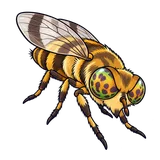 Deer fliesChrysops species
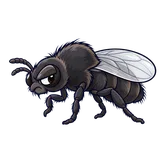 Black fliesFamily Simuliidae
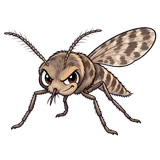 Biting midges / no-see-umsFamily Ceratopogonidae