
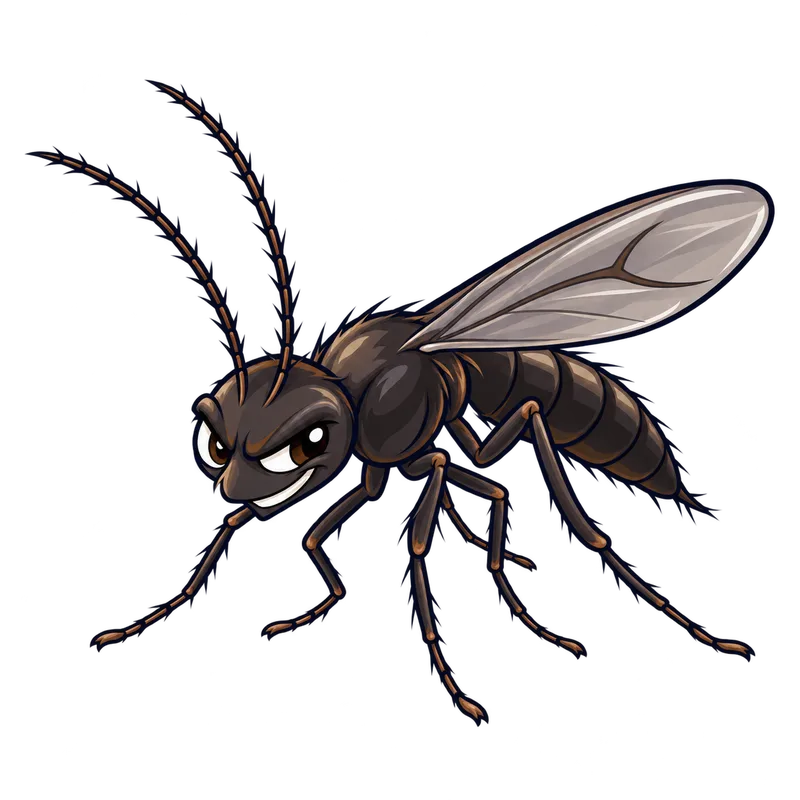
Fungus gnats
Family Sciaridae
- Size
- 1/16 to 1/8 of an inch long
- Color
- Dark-bodied with clear to dark wings
- Habitat
- Damp soil, overwatered houseplants, and decaying organic matter
- Diet
- Fungal spores, decaying matter, and plant root hairs
- Life cycle
- 14 to 20 days from egg to adult
Fungus gnats are not a single species, but rather a sprawling family reunion of small, dark-bodied flies across groups like Sciaridae and Mycetophilidae. When you spot one walking unsteadily across a computer monitor or hovering lazily near your favorite fern, you are looking at an adult measuring a mere 1/16 to 1/8 of an inch long. They are fragile, mosquito-like creatures with long, delicate legs and bead-like antennae that often stretch longer than their entire bodies.
Identity
If you squint at a dark-winged sciarid under enough magnification, you will spot a distinct, tiny Y-shaped fork in its wing veins. That little fork is the calling card separating them from other microscopic house guests. Beneath the soil surface, the larvae grow up to 1/4 inch long. These immature forms are legless, translucent white or dirty-gray maggots featuring a prominent, shiny black head capsule. They leave behind fine, glistening slime trails in the top few inches of earth, making them surprisingly easy to track down once you know where to look.
Habitat & behaviour
These insects thrive wherever moisture and decaying organic matter intersect. Outdoors, they emerge in late winter and spring, but inside climate-controlled buildings, they operate on a year-round schedule. Overwatered houseplants serve as their primary urban strongholds, where females bury themselves in the top 2 to 3 inches of damp potting media to lay eggs.
Adults are notoriously weak flyers. Tap the rim of a damp houseplant pot, and you will usually see them flutter a few inches before landing heavily back on the soil or lower leaves. They possess a strong attraction to light, which explains why they congregate on sunny windowsills or gather around glowing television screens and computer monitors after dark. The larvae spend their time munching on fungal spores, decaying matter, and tender plant root hairs, turning ordinary potting soil into a bustling subterranean nursery that completes a full generation in just 14 to 20 days.
Visual variations
Because these flies go through a full four-stage life transformation, they look completely different depending on when you catch them. The eggs are tiny enough to miss completely, hidden deep in wet compost until they hatch about a week later into those wormlike larvae with the glossy black heads.
Once those larvae finish eating, they shift into pale pupae right beneath the surface of the soil. The adults that finally crawl out are fragile and live for only 7 to 10 days, spending their short lives entirely on finding a mate and laying eggs rather than feeding. Most adults have clear, pale gray, or dark functional wings, but some female species do not have wings at all and run along the dirt instead of flying. Body shapes also vary across the family tree since Mycetophilidae adults have a distinct hump on their chest, larger hip segments, and spiny legs, which makes them look different from the slender, flat-backed sciarids you usually find in indoor planters.
Why it matters
Spotting tiny flies hovering around your living room naturally makes you think of itchy bites and out-of-control swarms, but fungus gnats are entirely harmless to people and pets. They do not have biting mouthparts, cannot pierce human skin, and do not carry diseases. Having them around is mostly just an annoying sight when they buzz near your face or land on your dinner plate.
For your plants, though, the situation changes. While a few gnats will not do much damage, large numbers of larvae eating root hairs can stunt young plants, make container plants droop, and turn leaves yellow. In commercial greenhouses and nurseries, that root damage can add up to real financial trouble. Inside a home, a sudden swarm is rarely a sign of bugs invading from the outside. It is usually just a friendly biological clue that your potted plants are staying a bit too wet, giving you a clear hint to let the soil dry out between waterings.
Similar species
 Horse fliesFamily Tabanidae
 Deer fliesChrysops species
 Black fliesFamily Simuliidae
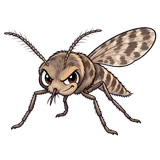 Biting midges / no-see-umsFamily Ceratopogonidae
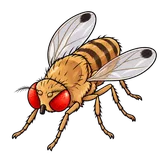 Spotted wing drosophilaDrosophila suzukii
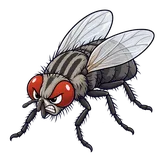 House flyMusca domestica