
Why are fungus gnats breeding in potting soil?
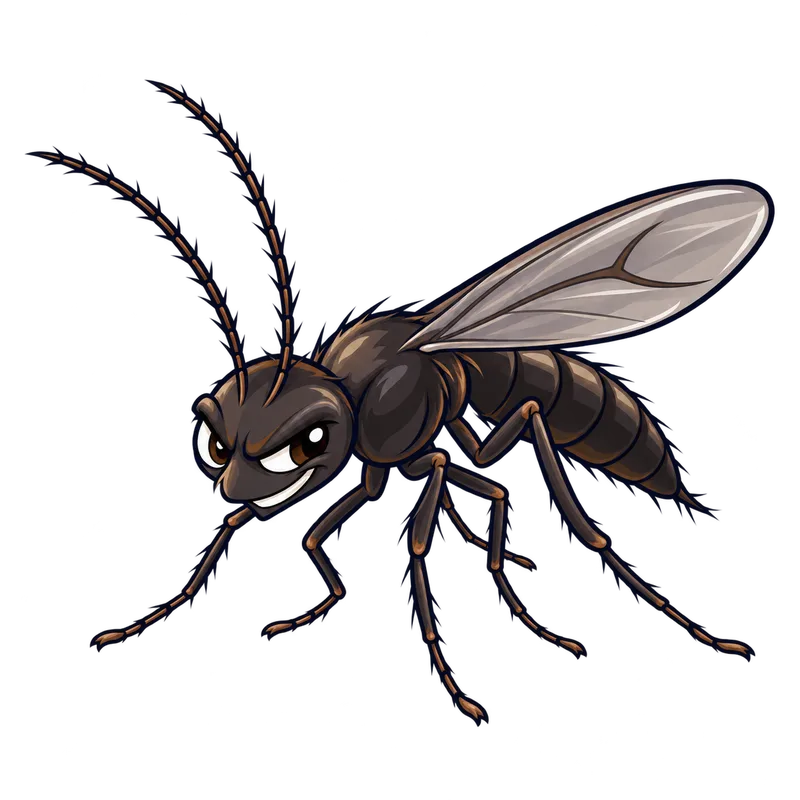
Fungus gnats breed in houseplant potting soil because overwatered organic growing media, rich in damp peat, compost, or decaying plant matter, provides the moisture, fungi, algae, and organic debris required for female egg-laying and larval survival. When you keep the soil saturated, it creates a damp micro-climate that supports an underground food web.
What is actually going on
Picture coming home on a Tuesday evening, settling down with a book near your favorite parlor palm, and noticing a tiny, dark blur darting across the lamp light. You tap the rim of the pot to investigate, and a dozen more of these miniature insects flutter out of the foliage, scramble over the soil surface, and quickly disappear back into the peat. It feels strange because you only wanted to keep your indoor green healthy through the winter months.
Fungus gnats breed in houseplant potting soil because overwatered organic growing media, rich in damp peat, compost, or decaying plant matter, provides the high moisture and abundant fungal hyphae, algae, and organic debris required for female egg-laying and larval survival. When you keep the soil saturated, you essentially turn a houseplant container into a damp micro-climate that supports an entire underground food web. Modern commercial potting mixes are designed to hold moisture, but when water lingers day after day without giving the soil a chance to breathe, tiny soil fungi and molds multiply out of sight.
Adult female gnats smell that decay and fly right to it. They spend their brief lives searching for moist organic debris, and the top few inches of a soggy houseplant pot offer the ideal nursery. They lay eggs that hatch into translucent, legless maggots with shiny black head capsules. These little larvae feed on the fungi and organic matter growing in the wet mix. Under typical indoor room temperatures, they finish their cycle in roughly two weeks, meaning a modest moisture problem quickly snowballs into overlapping generations of flying adults hovering around your windows and screens.
How to tell for sure
You are usually dealing with fungus gnats if the insects are tiny, measuring about one to four millimeters long, with slender, delicate bodies, long segmented antennae, and a weak, fluttering flight pattern. If you look at them closely, the adults usually show a distinctive Y-shaped branch in their wing veins. They are often mistaken for fruit flies, but fungus gnats prefer lingering around soil and light fixtures rather than hovering over kitchen fruit bowls, and they do not have red eyes.
Down in the soil, the larvae give themselves away if you dig just beneath the surface. They grow up to six millimeters long and look like tiny, translucent worms with a distinct, shiny black head capsule. That hardened black head is the main feature that separates them from other small fly larvae. If the population gets dense, you might even spot microscopic silvery slime trails across the soil particles or root surfaces where thousands of larvae have been foraging through the wet pore spaces.
You might wonder if these small pests hitched a ride from outside. While adults occasionally wander through a cracked window, most indoor colonies take root because the bag of commercial potting mix you brought home sat in an outdoor garden center yard and already contained eggs, or because you kept up a heavy summer watering routine into the dark winter months when indoor plants simply do not drink as much.
What usually comes next
Your best move relies on changing how you handle moisture in the pot instead of rushing out for harsh chemical sprays. Letting the top one to two inches of your potting soil dry completely between drinks starves the young larvae, kills off the fungi they eat, and stops adult females from dropping new eggs. It is a straightforward fix that stops the breeding cycle right at the source without stressing your green plants.
When drying out the topsoil fails to knock down a stubborn swarm, you can bring in targeted biological controls. A soil drench using a specific strain of soil bacteria known as Bacillus thuringiensis israelensis, which you can find in stores formulated just for gnat control, poisons the larvae when they eat it in the damp media. Just read the product label to ensure you have the right strain, because formulas made for garden caterpillars will not work on these fly larvae. Yellow sticky cards placed flat right at the soil level also catch flying adults and let you track whether your pest numbers are dropping or climbing.
When to get help
Most household fungus gnat issues clear up at home with careful watering habits, sticky cards, and biological drenches. Still, certain situations call for professional backup. If you manage a commercial greenhouse, a large indoor atrium, a shopping center display, or a commercial mushroom farm, heavy infestations usually demand professional chemical treatments or large-scale biological controls handled by a licensed pest control operator.
If your houseplants keep dropping leaves, turning yellow, and wilting despite your drying efforts and treatments, or if you simply cannot tell what kind of bug is crawling in the dirt, contact your local university extension office. They can look at soil and insect samples under a microscope to confirm the exact pest and tell you whether root rot or other hidden troubles are driving the damage.