
Fruit flies vs phorid flies: what can movement and habitat reveal?
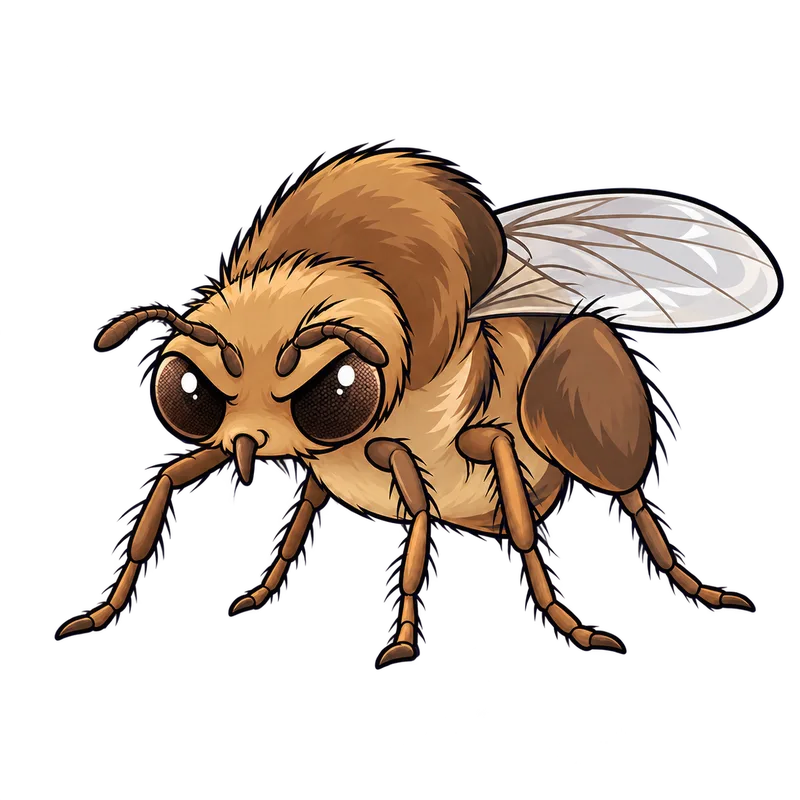
Movement and habitat reveal whether tiny pests are fruit flies or phorid flies. Fruit flies hover lazily around fermenting produce and sugar, while phorid flies feature a hunched silhouette and run rapidly across surfaces before flying. Phorid flies breed in heavy organic decay, animal waste, and slimy plumbing sludge, whereas fruit flies target yeast.
What is actually going on
You walk into the kitchen on a quiet Tuesday morning, reach for the coffee mug, and notice a tiny insect sprint across the counter like a microscopic racecar before darting into the air. Naturally, you glance over at the fruit bowl sitting nearby, assuming you have a classic case of fruit flies. But when you try to swat the intruder, it does not flutter lazily the way fruit flies usually do. Instead, it hits the countertop and takes off on another frantic little sprint.
That sudden burst of speed is the biggest giveaway that you might not be dealing with fruit flies at all. What you are likely looking at is a phorid fly, often called a scuttle fly. While fruit flies and phorid flies share roughly the same tiny size, around one-sixteenth to one-eighth of an inch long, their lives and habits are entirely different. Fruit flies are basically obsessed with fermentation, meaning they spend their time hovering around ripe or rotting produce, unrinsed cider jugs, and sticky beer spills.
Phorid flies have much darker tastes, quite literally. They do not care about your overripe bananas nearly as much as they care about heavy organic decay, animal waste, rotting meat, or the slimy sludge that builds up inside dirty plumbing. If you find small flies congregating in a bathroom, near a basement floor drain, or scurrying across a stainless steel prep table in a spotless kitchen, you are usually looking at phorid flies rather than fruit flies.
How to tell for sure
Telling these two pests apart usually comes down to looking at their bodies and watching how they move when you get close. Fruit flies usually have prominent red eyes, a tan or yellowish-brown body, and clear, rounded wings that keep them hovering gently around their target food sources. If they are disturbed, they take to the air immediately.
Phorid flies usually feature dark, non-red eyes and a tan, dark brown, or black body. If you look at one from the side, you will notice a distinct, arched, humpbacked thorax, which gives them a slightly hunched silhouette. Their legs are also built differently, featuring enlarged, flattened hind thighs that turn them into exceptional runners. Instead of flying away the second you approach, phorids typically scuttle across surfaces in rapid, jerky, short-burst running motions before finally taking flight.
Where you find them usually seals the identification. Common fruit flies breed in sugar and yeast. Phorid flies breed in protein and decay. If the insects are emerging from an unwashed yogurt container, they are usually fruit flies. If they are swarming near a cracked sewer pipe, a garbage disposal with a thick buildup of old food grease, or damp soil in a potted plant, they are usually phorid flies.
What usually comes next
People often buy a generic aerosol spray or pour a heavy glug of household bleach down the sink, hoping to wipe out the infestation in one afternoon. That shortcut rarely works out. Aerosol foggers only knock down the adult flies currently cruising around in the open, leaving the next generation safely sealed inside their breeding ground. Pouring bleach down a drain usually fails because the liquid just slides right past the thick, gelatinous film where the larvae actually live, leaving them completely undisturbed.
You usually have to track down the exact breeding source and deal with it physically. If you suspect a drain is the culprit, you can test it overnight by folding a piece of clear packing tape into a triangle with the sticky side facing inward and placing it loosely over the drain opening. If flies get stuck to the tape by morning, you have found an active breeding site.
Cleaning that site requires physical scrubbing rather than chemical tricks. Use a long-handled, stiff-bristle brush to physically scrape away the slimy organic buildup coating the inside of the drainpipes. Follow that up with a labeled microbial or enzymatic drain cleaner designed to digest lingering organic mats. If your traps and drain cleaning do not slow down the population, and you keep seeing phorid flies in spotless rooms, the source might be hidden out of sight, such as a broken sewer line beneath a concrete floor slab or a leak under a shower pan.
When to get help
Most household fly issues clear up once you throw away the old fruit and scrub out a neglected drain, but some situations call for outside reinforcement. If you keep battling heavy phorid fly outbreaks in a basement or ground-floor room despite deep cleaning every drain and surface, you might be dealing with a structural plumbing failure, such as a cracked or ruptured sewer pipe beneath your concrete slab. That kind of problem requires a licensed plumber to run camera inspections and fix the break.
Commercial facilities, hospitals, and nursing homes dealing with phorid flies should also bring in a licensed pest control professional immediately. Because these flies breed in unsanitary materials and can mechanically transfer bacteria to human food, medical equipment, or open wounds, commercial operations require specialized management.
Remember that flies do not bite humans, but they can carry filth microorganisms from their breeding grounds onto clean surfaces. If you or someone in your household experiences unexplained skin lesions, localized infections, or severe allergic reactions, consult a physician or contact poison control right away.