
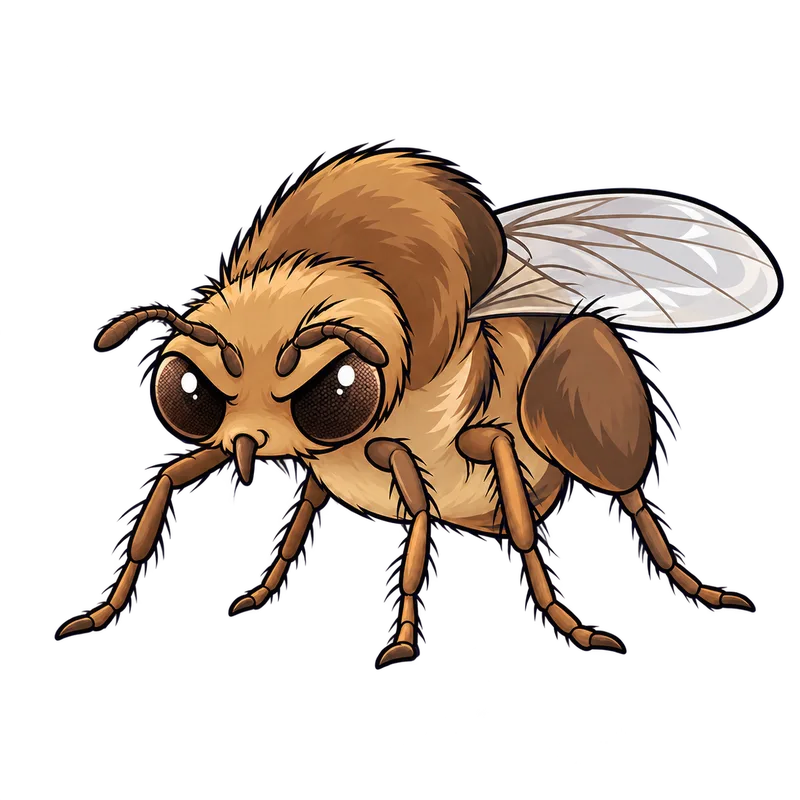
Phorid flies
Family Phoridae
- Size
- 1/64 to 1/8 inch
- Color
- Tan, yellowish-brown, dark brown, gray, or black
- Habitat
- Drains, decaying organic matter, and damp soil
- Diet
- Decomposing plant and animal material, garbage, and organic scum
- Life cycle
- 14 to 37 days
The most reliable way to tell you are looking at a phorid fly is to watch what it does when you try to swat it. While a fruit fly takes to the air immediately, a phorid fly will often sprint across your kitchen counter in a series of erratic, jerky bursts before finally taking off. That scuttling behavior earned them the name scuttle flies.
Identity
They are tiny creatures, measuring only 1/64 to 1/8 inch long, with colors ranging from tan to solid black. You do not need a microscope to spot their most famous physical trait, though. If you look at one from the side, its thorax arches up steeply into a pronounced hump, giving it a distinct humpbacked profile.
If you do happen to get a closer look, check their eyes and legs. Their eyes are dark brown or black, which sets them apart from red-eyed fruit flies. Their third pair of legs features broad, flattened upper segments that act like built-in running thighs, built for sprinting across surfaces rather than just walking. Their wings have heavy, thickened veins crowded along the front edge, with faint, unbranched lines running across the clear membrane and no cross-veins connecting them.
Habitat & behaviour
Phorid flies are fundamentally scavengers of the damp and the decaying. Outdoors, they thrive around compost heaps, lawn clippings, animal droppings, and garbage bins. Some specialized species even burrow six feet or more through loose soil in cemeteries to reach interred organic matter, which is why they are sometimes called coffin flies.
Indoors, they home in on moisture and organic filth. You will find them wherever a thick layer of organic slime can accumulate out of reach. This includes the gelatinous scum lining the inside of floor, sink, and shower drains, the forgotten grime tucked behind or underneath heavy kitchen appliances like stoves and refrigerators, dirty mop heads left in damp buckets, and the drip pans beneath refrigerators and air conditioners.
They breed continuously year-round inside heated buildings. When you see them hovering near a houseplant, it is rarely because of the plant itself, but rather because the potting soil is kept too wet and rich in decaying organic matter.
Visual variations
Adult phorid flies are remarkably small and stocky, sporting that unmistakable humpbacked silhouette and fully functional wings. Males and females look nearly identical, though the boys tend to emerge from the pupal stage slightly ahead of the girls, waiting around for them to show up. You will not find any social castes here like you get with ants or termites, since these creatures live entirely solitary lives driven solely by the hunt for food and breeding sites.
The life stages look nothing like the adults buzzing around your kitchen. Females drop tiny, white eggs right onto moist, fermenting muck. Out of those eggs pop the larvae, which are legless, cylindrical maggots tapering down toward the head. Brand-new maggots are practically see-through, turning pale or dirty-white as they grow up to roughly 11/64 of an inch long. They use microscopic mouth hooks to feed non-stop on the surrounding bacterial slime and rotting tissue.
Once they finish their meal, those maggots crawl out of the wet sludge to find a dry crack or crevice nearby. There, they morph into small, barrel-shaped pupae that darken to a deep brown just before the grown fly finally breaks out.
Why it matters
Spotting phorid flies around the house usually points straight to a sanitation slip-up or a hidden moisture leak. Since they hang out and breed in sewage, garbage, and rotting gunk, the adults can physically track bacteria on their legs and bodies right onto your clean kitchen counters and utensils. They have sponging mouthparts and do not bite or feed on human blood, but having them in hospitals or commercial kitchens creates a real hygiene hazard as they crawl over food, medical gear, or open wounds.
When these flies pop up out of nowhere and just will not quit, even after you have scrubbed every sink and counter raw, the culprit is often hiding behind the walls or under the floor. A cracked drainpipe or broken sewer line beneath a concrete slab can leak sewage straight into the dirt below, setting up a massive underground nursery where the adults find their way up into your living room through floor cracks and expansion joints. In those tricky situations, surface sprays and drain cleaners only buy you a little time until someone fixes the broken plumbing underneath.
Similar species
 Cluster fliesPollenia species
 Blow fliesFamily Calliphoridae
 Flesh fliesFamily Sarcophagidae
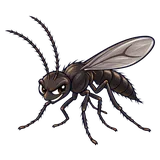 Fungus gnatsFamily Sciaridae
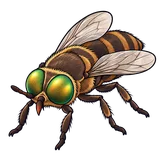 Horse fliesFamily Tabanidae
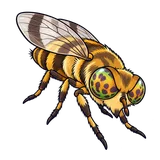 Deer fliesChrysops species