
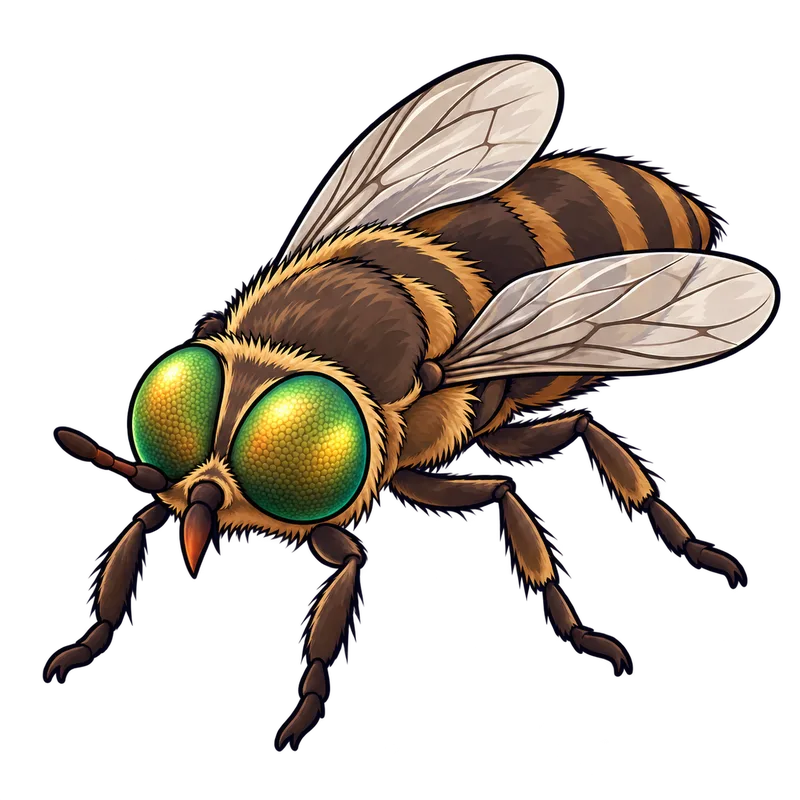
Horse flies
Family Tabanidae
- Size
- 3/4 to 1 1/4 inches, deer flies 6 to 12 mm
- Color
- Yellow to dark gray, brown, or solid black
- Habitat
- Ponds, swamps, marshes, and pastures near water
- Diet
- Females take blood, males eat nectar and pollen
- Life cycle
- 1 to 3 years from egg to adult
Horse flies are stout insects belonging to the family Tabanidae, order Diptera, and suborder Brachycera. If you have ever felt a sudden, sharp pinch while standing near a pond or walking through a pasture, you have likely encountered one.
Identity
The most striking feature of these flies is their enormous compound eyes, which cover almost the entire head and display brilliant iridescent bands or spots of green and purple. You do not need a microscope to notice these eyes, though getting close enough to see the color patterns usually means you are about to be bitten.
Sex is easy to tell from a glance if you can see the face. Males have eyes that meet continuously across the top of the head. Females have eyes separated by a distinct gap.
Different groups within the family have distinct wing patterns. Larger horse flies have clear or uniformly shaded wings. Deer flies sport dark cross-patches or bands across their wings. Clegs have speckled or mottled wings.
Habitat & behaviour
You will find horse flies outdoors in sunny, open areas near water, swamps, marshes, and wooded pastures. They are daytime flyers, most active on warm, bright days when they can use their sharp vision and sensitivity to carbon dioxide and body heat to track down hosts.
While house flies and mosquitoes seem content to hover and sip quietly, horse flies operate with blunt force. They are exceptionally swift, nimble fliers, which makes trying to swat them away a frustrating exercise in missing.
Only female horse flies bite. They are obligate bloodsuckers that need a blood meal to mature their eggs. Males are harmless plant visitors that spend their short lives feeding exclusively on flower nectar and pollen.
The bite itself is notoriously painful. Unlike mosquitoes that slide a fine needle into the skin, a female horse fly uses sword-like mouthparts to slice the skin open. She then injects saliva containing anticoagulants and laps up the pooling blood. Because defensive reactions by the host often interrupt them, females frequently bite multiple times to get a full meal.
Visual variations
Life for these insects unfolds through complete metamorphosis, which simply means they transform entirely across four distinct stages: egg, larva, pupa, and adult.
Females deposit cylindrical eggs in compact masses containing several hundred eggs on vegetation, rocks, or tree stumps overhanging water. Within a week, the tiny larvae hatch and drop straight down into the saturated mud or water below.
The larval stage is where the insect spends most of its life, lasting from 1 to 3 years. These larvae are worm-like maggots that act as aggressive carnivores, feeding on organic detritus and small aquatic organisms in the mud.
When maturity approaches, the larva migrates to drier soil nearby to pupate. The pupal stage lasts 2 to 3 weeks before an adult emerges. Adult flies live for 30 to 60 days, spending their summer months mating, feeding, and restarting the multi-year cycle.
Why it matters
Horse flies are strictly outdoor pests. They do not enter buildings to nest, breed, or overwinter, so finding one inside your living room is usually an accidental event rather than a sign of an infestation.
For people, the bite causes immediate pain, localized swelling, and intense itching. Scratching these wounds can introduce bacteria and lead to secondary skin infections. In livestock and pets, heavy attacks cause severe distress, reduced grazing, and significant blood loss that can lead to anemia in severe cases.
Because female horse flies often get interrupted while feeding, they can act as mechanical vectors, carrying pathogens from one animal to another. They are known to transmit equine infectious anemia in horses, as well as anthrax and tularemia. In parts of West Africa, certain deer flies serve as biological vectors for the parasitic worm responsible for Calabar swellings in humans.
Management is notoriously difficult. Spraying insecticides or attempting to treat vast marshes and mud flats where the larvae live is usually impractical and ineffective. Personal protection relies on wearing long clothing and applying insect repellents according to product label directions.
When bites cause severe allergic reactions, excessive swelling, or signs of systemic illness, seek medical evaluation immediately. Livestock experiencing severe distress or symptoms of vector-borne disease require professional veterinary care.
Similar species
 Deer fliesChrysops species
 Black fliesFamily Simuliidae
 Biting midges / no-see-umsFamily Ceratopogonidae
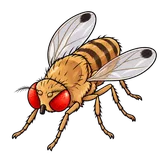 Spotted wing drosophilaDrosophila suzukii
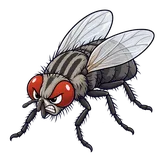 House flyMusca domestica
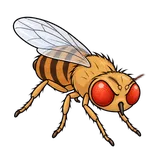 Fruit fliesFamily Drosophilidae