
Why do horse flies bite?
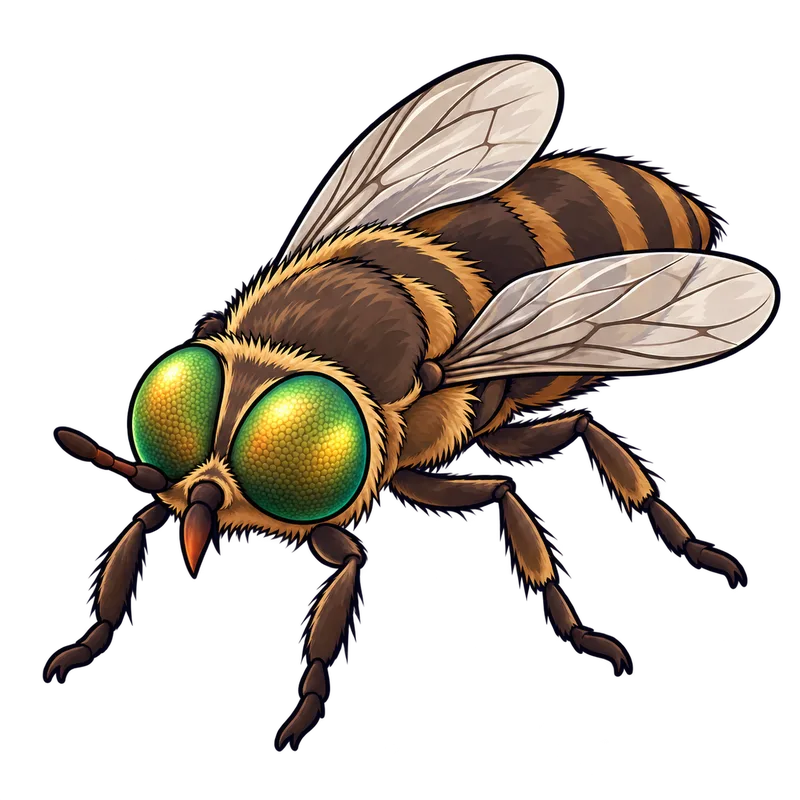
Adult female horse flies bite to obtain a blood meal that provides essential protein for developing their eggs, while male horse flies never bite because they lack the specialized mouthparts needed to puncture skin. Without this blood meal, the females cannot reproduce successfully.
What is actually going on
Imagine you are sitting by the edge of a quiet lake on a scorching July afternoon. Everything feels peaceful until a large, thick-bodied fly with startlingly green eyes lands squarely on your bare arm. Before you can even register the touch, a sudden, sharp pinch makes you yelp and swing your hand. That was not a gentle tickle from a house fly, and it was certainly not a mosquito slipping in a stealthy needle. That was a female horse fly, and she was simply trying to carve out a meal.
You might wonder why these bulky insects target humans and livestock with such hostility, especially when most other flies are content to buzz around garbage cans or sip flower nectar. The blunt truth is that adult female horse flies bite to obtain a blood meal that provides essential protein for developing their eggs. Without it, they cannot reproduce. This makes the female dependent on vertebrate blood to complete her life cycle.
If you are thinking about the males of the species, you can breathe a sigh of relief because they never bite anyone. Male horse flies completely lack the specialized mouthparts required to puncture mammalian skin. Instead, they spend their short lives hovering around vegetation and feeding exclusively on plant nectar and pollen.
How do they manage to find you in the first place? Females act as heat-seeking missiles in the bright summer sun. They track potential hosts by sensing plumes of carbon dioxide and picking up the body heat radiating from warm-blooded mammals. Once they lock onto that thermal signature, they close the distance fast and land with a heavy thud that you usually feel immediately.
People often assume any large, painful bite outdoors comes from a horse fly, but you need to look closer at the culprit before jumping to conclusions. True horse flies are usually large insects, measuring anywhere from three-quarters of an inch to an inch and a quarter long. They typically feature clear or solid dark wings and those unmistakable, brilliantly colored iridescent eyes.
You might also encounter their smaller cousin, the deer fly, which usually measures between a quarter and a half inch long. Deer flies generally have yellow to black bodies and distinct dark patches or cross-bands smeared across their wings. Both pests rely on the same ruthless biting strategy, but the deer fly is noticeably smaller and faster than the heavy-duty horse fly.
You can usually tell a horse fly apart from other biting pests by looking at the mouthparts and the way they feed. Unlike mosquitoes that use a fine, flexible needle or stable flies that rely on a rigid piercing bayonet, a female horse fly carries a set of miniature scalpels. She uses paired, sword-like mouthparts to slice laterally through your skin while secondary structures deepen the incision.
This mechanism creates an open pool of blood so she can lap it up rather than sipping through a straw. Saliva goes in to stop clotting, and pain receptors go wild. Because this causes immediate, sharp tissue trauma, you usually swat at the fly before she finishes eating, which is why a single female often bites multiple hosts sequentially.
How to tell for sure
Since broad chemical treatments or spraying for adult horse flies usually fail because of their strong flight range and widespread aquatic breeding sites, your best practical choice is to focus on personal avoidance and physical defense. When heading out into known horse fly territory near woods, wetlands, or pastures on warm and sunny days, you can generally protect yourself by dressing deliberately.
Wear light-colored, loose-fitting long-sleeved shirts and long pants because dark clothing acts like a beacon to these visual hunters. Pair your clothing with an insect repellent containing active ingredients like DEET or Picaridin applied to exposed skin. You can also treat your clothing with permethrin products for an extra layer of defense, keeping in mind that permethrin belongs strictly on fabric and never directly on human skin.
You might object that hiding under long sleeves in the dead of summer defeats the point of being outdoors. That is a fair frustration, but scheduling your outdoor chores or recreation during early morning or evening hours, or simply avoiding peak sunshine in prime fly habitats, saves you from enduring a barrage of painful, bleeding lacerations.
What usually comes next
Most horse fly bites result in localized pain, swelling, redness, and stubborn itching that fades within a few days, but certain situations demand outside help. If you scratch an open bite wound and introduce bacteria, you can develop a secondary bacterial infection that requires antiseptic treatment or prescription antibiotics from a clinician.
When to get help
Seek emergency medical care immediately if a bite triggers a severe allergic reaction, which involves widespread swelling, hives, dizziness, nausea, or difficulty breathing. Horse flies are also capable of transmitting serious pathogens to humans, so any unusual systemic illness following multiple bites should be evaluated by a healthcare professional.
For livestock owners dealing with massive fly attacks, the stakes are different. Heavy infestations cause intense panic, severe stress, and dramatic drops in milk production or weight gain in cattle and horses, as well as the risk of transmitting diseases. In those cases, property owners should consult a veterinarian, a licensed pesticide applicator, or a local agricultural extension specialist rather than attempting a fix on their own.