
What are sand flies?
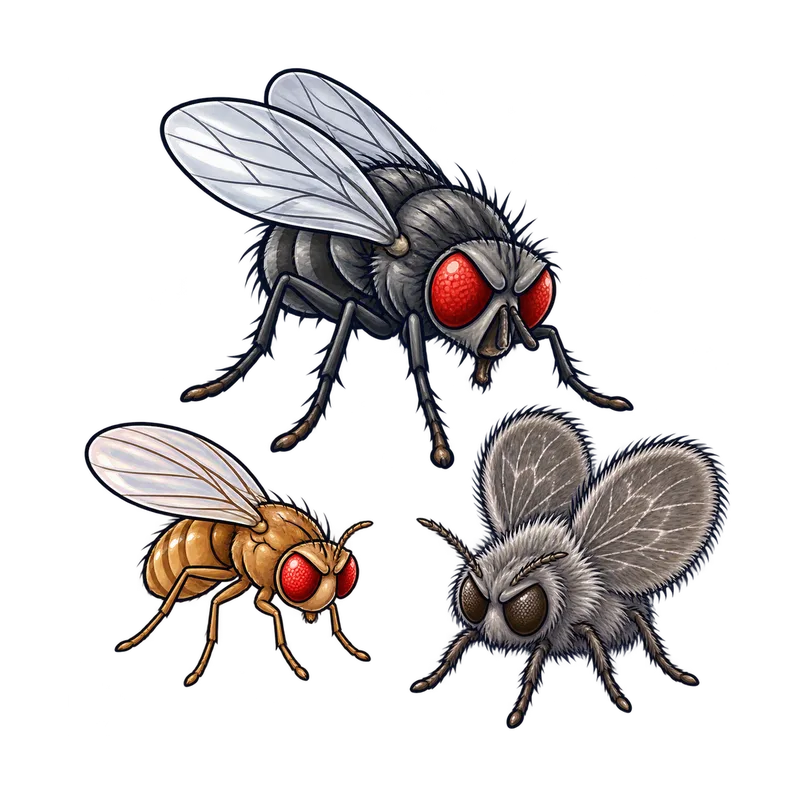
Sand flies are tiny, blood-sucking insects that measure about one-eighth of an inch in length and move with a jerky hopping flight. The common name is shared across different regions, often referring to true sand flies with delicate hairy bodies or to biting midges that have a stockier thorax.
What is actually going on
You are standing on your back porch at dusk, holding a glass of iced tea, when you notice what looks like fine black pepper scattered across your bare forearms. You brush at them, but before you can blink, a couple of those tiny specks give a sharp, silent pinch and vanish into a jerky little hop. By morning, those invisible bites bloom into red, maddeningly itchy welts that make you wonder what kind of microscopic menace just invaded your yard.
When people talk about sand flies, they usually mean one of several tiny, blood-sucking insects that are small enough to pass right through standard window screens. In strict biological terms, true sand flies are delicate, hairy insects with long slender legs and distinctive V-shaped wings held erect over the thorax. They do not breed in the open standing water that mosquitoes love. Instead, their larvae require dark, damp terrestrial microhabitats filled with decaying organic matter, such as animal burrows, tree hollows, rock crevices, and moist leaf litter.
The confusion deepens because the common name is routinely shared across different regions. In parts of Australia, the United Kingdom, and the southern United States, people often call biting midges or no-see-ums by the name of sand flies. These biting midges are similarly tiny, but they possess a stockier, humped thorax and fold their wings flat over their abdomen rather than holding them erect.
Only the adult females bite and consume blood, which provides the protein they need to develop their eggs. The males are strictly vegetarian, feeding entirely on plant nectars and sap. While true sand flies are infamous in parts of the world for vectoring protozoan parasites that cause leishmaniasis, in places like the United States they are more commonly experienced as an intense outdoor nuisance, or as an emerging veterinary concern for domestic pets in certain southern regions.
True sand flies belong to a specific insect group characterized by their delicate frames and hairy bodies. They go through a complete metamorphosis, meaning they pass through egg, larval, pupal, and adult stages. The females need a blood meal to reproduce, and they use piercing mouthparts to cut micro-wounds in the skin while injecting numbing agents so you rarely feel the bite as it happens. The delayed reaction you feel hours later is your immune system reacting to those salivary proteins.
Unlike mosquitoes, which drop eggs into stagnant ponds or old tires filled with rain, sand fly larvae crawl through terrestrial soil and organic debris. They need moisture and decaying matter to survive, which is why you find them thriving near animal burrows, dense leaf litter, or rotting wood. Their flight range is quite short, usually staying within a couple of hundred meters of where they hatched, which means their breeding source is rarely far from where you get bitten.
How to tell for sure
Trying to figure out what bit you based solely on the size of a red bump is a losing game. Bite reactions vary wildly from person to person depending on individual immune systems, meaning a mosquito, a bed bug, a flea, and a sand fly can leave behind identical itchy papules. To know for sure what you are dealing with, you usually have to catch and examine the insect itself under magnification.
True sand flies are tiny, typically measuring about one-eighth of an inch in length, and usually appear pale brown or yellowish. To the naked eye, they do not hover smoothly like a house fly or buzz steadily like a mosquito. Instead, they move with a characteristic short, jerky hopping flight across surfaces.
If you view one under a hand lens or a specialist microscope, you will usually spot a dense coating of fine hairs covering both the body and the wings. Those wings are pointed and leaf-shaped, and when the insect is at rest, they are held erect in a distinct V-shape over the thorax.
It helps to pay attention to where you find them. If you are discovering tiny fuzzy flies resting on your bathroom walls or hovering around your kitchen sink, those are usually drain flies or moth flies, which are harmless scavengers that breed in the organic gel film inside plumbing pipes. True sand flies and biting midges do not complete their life cycles inside clean, modern homes, so indoor sightings usually mean the adults wandered in from the outdoors through open gaps or un-screened windows.
What usually comes next
When you are dealing with persistent outdoor biting activity around your property, your best practical decision is to focus on physical exclusion and airflow rather than reaching immediately for chemical sprays. Because these insects are extremely small and weak flyers, simple adjustments to your environment can drastically reduce their ability to reach your skin. Standard window screens have mesh openings that are far too large to block a one-millimeter fly, so upgrading to fine-mesh micro-screening on doors and porches is usually the most effective structural step you can take.
You can also set up an oscillating electric fan on your patio to create a powerful wind barrier that delicate midges and sand flies cannot navigate, effectively blowing them away before they can land. Keeping leaf litter cleared away and addressing damp soil near your foundation also removes the quiet, hidden spaces where these tiny flies love to reproduce.
When to get help
There are specific moments when a backyard nuisance crosses the line into a situation that requires professional medical, veterinary, or pest control intervention. If you develop non-healing skin ulcers, persistent nodules, or unusual lesions weeks or months after traveling to an area where sand flies are endemic, you should seek an immediate evaluation from a qualified clinician to rule out cutaneous leishmaniasis. Systemic warning signs such as persistent fevers, unexplained weight loss, fatigue, or an enlarged liver and spleen require urgent medical referral to test for visceral leishmaniasis, a severe condition that demands professional oversight.
In regions where vector-borne diseases are monitored, domestic dogs showing unexplained hair loss, skin sores, or weight loss should be taken to a veterinarian for proper diagnostic testing. If biting activity around your home remains severe and unmanageable through basic screening and environmental sanitation, or if you need to apply exterior barrier treatments to large structures or heavy foliage, bring in a licensed pest control applicator who can perform the work in strict compliance with local safety regulations.