
Why do no-see-ums bite?
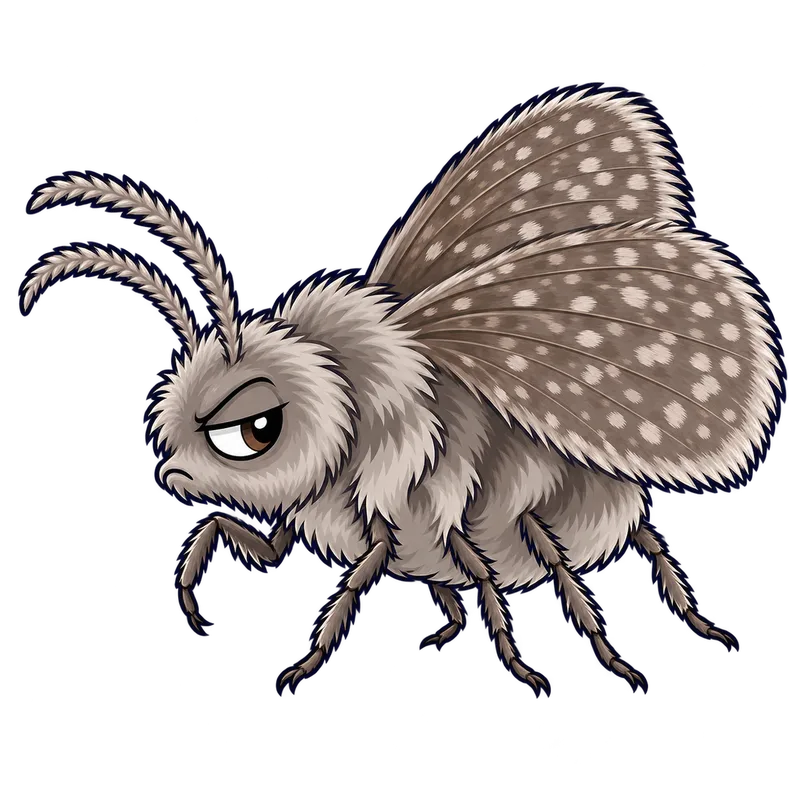
Female no-see-ums bite because they need a blood meal to develop a batch of eggs. The protein in human blood provides the raw material her body requires for reproduction. Only the females bite, slicing the skin with tiny blade-like mouthparts to drink the pooled blood while males feed solely on nectar.
What is actually going on
Picture a late summer evening on the back porch. The light is going soft, the air is dead still, and you are halfway through a drink when something lights up your ankle like a match head. You look down and see nothing, or maybe a moving fleck of black pepper. By morning there is a little crowd of welts, hot and itchy, all wildly out of proportion to whatever you saw. That is a no-see-um, and it bit you for one blunt reason: a female needed your blood to make eggs.
Only the females bite. A female no-see-um is a biting midge, and she cannot develop a batch of eggs without a blood meal. The protein in blood is the raw material her body uses to build those eggs. This is not malice, revenge, or a tiny insect with a grudge against ankles. It is reproduction, and you happened to be warm, available, and standing still. The males are not part of the problem. They feed on nectar, and their mouthparts are not built to cut skin, so a male no-see-um could not bite you even if he had strong opinions about it.
The bite feels worse than the insect looks because the method is rough. A mosquito works more like a fine needle, slipping in with less damage. A no-see-um uses mouthparts with tiny blade-like edges, closer to microscopic scissors than to a syringe. She slices the surface so blood pools where she can drink it, then adds saliva that keeps the blood from clotting while she feeds. Your immune system reacts to those salivary proteins, and that reaction is the burning, swelling, and stubborn itch. In plain terms, she does a bit of crude surgery and leaves your body to argue about the chemicals afterward.
A fair question is why one person gets chewed up while the person next to them gets off lightly. Part of it is exposure: calm air, dawn or dusk, shade, stillness, dark clothing, and bare skin all make life easier for a weak flier. Part of it is your own immune system, which does not read the same rulebook from person to person. The insect is not choosing the most deserving victim. She is choosing the easiest meal in the few minutes when conditions suit her.
How to tell for sure
Start with size, because size explains the name. An adult no-see-um is about 1.0 to 3.0 mm long, roughly 1/32 to 1/16 of an inch. On skin it can look like dark dust or ground pepper that has decided to move. Often the first clear sign is the sting itself, then you spot the speck responsible. They are weak fliers, so they usually show up when the air is calm: early morning, evening, still overcast afternoons, sheltered corners of a porch. A breeze that barely inconveniences a mosquito can shut these down.
Here is the part people do not love hearing: you cannot identify the insect from the bite alone. A red itchy welt is your immune system talking, not a signature. Several biters can leave similar marks, and scratching only makes the evidence less readable. If you want certainty, catch the insect, ideally stuck to clear tape, and have it looked at by someone who can place tiny flies under magnification. That sounds fussy until the alternative is treating the wrong problem for two weeks.
There is also a common indoor mix-up worth clearing away. Small fuzzy flies lounging around a bathroom sink or shower drain are usually drain flies, and they do not bite. Their mouthparts are soft, made for mopping up the organic film inside pipes, not for cutting skin. The little gnats hovering over houseplants are in the same not-the-culprit category. So if something is truly biting indoors, the source usually came in from outside, and this is where no-see-ums have an unfair advantage. A standard window screen, the normal 16x18 mesh on many homes, has openings large enough for a 1 mm midge to pass through. To them, a screened porch can be less barrier than doorway. Finer midge mesh, 20x20 or tighter, helps, though they can still ride in on clothing or slip through an opened door.
What usually comes next
Once the why is settled, the choice gets pretty plain: be out when they are out, or make yourself harder to use. Timing beats most gadgets. If porch sitting, gardening, or the dog walk can slide away from dawn, dusk, and those dead calm gray afternoons, you miss the worst of it without buying a thing. When the schedule cannot move, loose long sleeves and long pants in light colors help, because bare skin and dark clothing make you easier to find and easier to hold still on.
For skin that has to be outside during midge time, an EPA-registered repellent with DEET or picaridin, used exactly as the label directs, is the steady option. Botanical and essential oil sprays can smell lovely and still quit early, which leaves you reapplying often for weaker protection. For families, keep the rule blunt: repellents are not recommended for babies under 12 months, so infants get clothing and fine mesh netting over the stroller instead. For children 12 months and older, products with up to 10% DEET or picaridin are the standard guidance. The label is not a friendly hint, especially with kids, sensitive skin, or repeated use.
Around the house, moving air does more than people expect. A box fan on the porch can matter because these insects are lousy fliers in a breeze. Fine screening helps, but only if doors are not standing open and everyone is not carrying midges inside on sleeves like tiny hitchhikers. And if the real problem turns out to be those harmless drain flies in the bathroom, the answer is not biting insect warfare. Scrub inside the pipe with a stiff brush and use a microbial enzyme drain cleaner to digest the gunk they breed in. Skip the bleach and boiling water routine; it tends to slide over the slime layer while letting you feel briefly accomplished.
When to get help
Most no-see-um bites are miserable but harmless, and in the continental United States these midges are usually a nuisance rather than a disease concern for people. Still, watch the bite, not just the itch. If a welt starts oozing, feels hotter by the hour, shows red streaks moving outward, or the swelling is severe, that points toward infection or a strong allergic reaction. That is clinician or urgent care territory, not a contest to see who can tough it out longest. If there is a suspected reaction to a repellent or any pesticide exposure, call Poison Control at 1-800-222-1222.
On the pest side, get help when the pattern stops making sense. If biting continues indoors despite finer screening and fans, or you keep finding tiny flies you cannot confidently name, catch a few specimens and take them to a local university extension service or a licensed pest control professional. Guessing wrong means treating the wrong problem, and with insects this small, guessing is the default setting. Get the name right first, then act. The short version stays simple: females bite to reproduce, calm air is their opening, timing and airflow beat bravado, and spreading heat, streaks, ooze, or severe swelling mean it is time for a human with training.