
Do phorid flies bite humans?
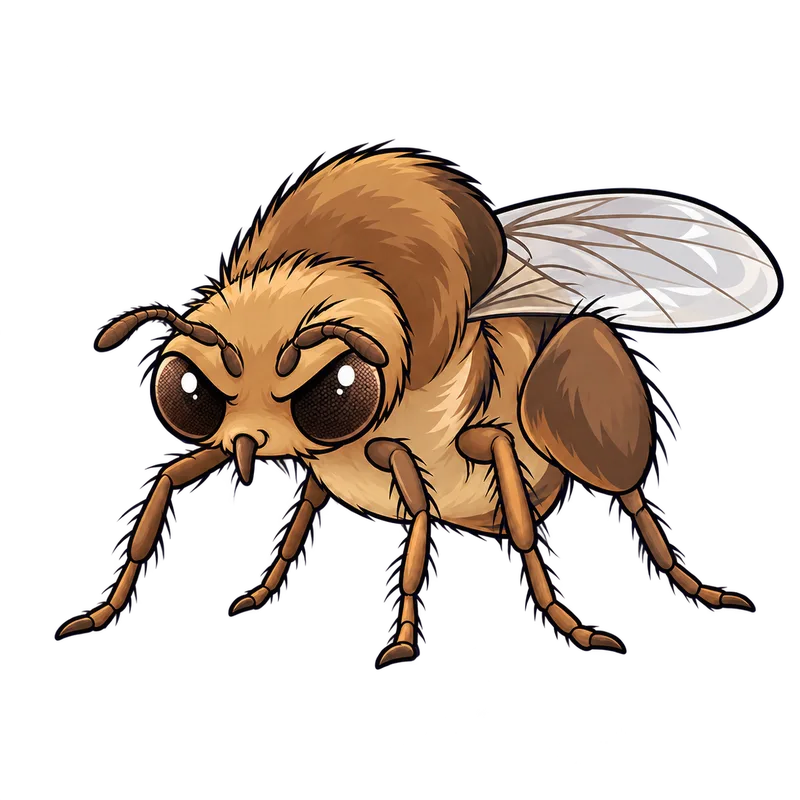
No, adult phorid flies do not bite humans because they have soft, spongy mouthparts that can only soak up liquids. These tiny insects cannot pierce skin, so your body is completely off their menu. They survive on moisture and decaying organic film instead of blood.
What is actually going on
You are sitting at your kitchen island late at night, nursing a glass of water, when a tiny, dark insect lands right next to your elbow. Instead of taking off into the air like a house fly, it darts across the granite in a frantic, jerky sprint before pausing under the fruit bowl. Your first instinct is to smack your arm, figuring you are about to feel a sharp pinch. Do phorid flies bite humans? No, they do not. In fact, they cannot.
If you tried to examine one of these creatures under a microscope, you would quickly see that its mouthparts look nothing like the needle-like tools of a mosquito or the blood-shedding blades of a stable fly. Instead, adult phorid flies have soft, fleshy, sponging mouthparts. They are built strictly for soaking up liquids, similar to a tiny kitchen sponge. They survive on moisture, nectar, and decaying organic film, which means your skin is completely off the menu.
That lack of biting equipment does not mean these insects are harmless guests you can simply ignore. Also known as humpback flies or scuttle flies because of their arched thoraxes and fast running habits, they are serious sanitation pests. They breed in deeply unpleasant places like drain slime, rotting produce hidden at the bottom of a pantry, broken sewer pipes, or pet waste. Because they crawl through filth before exploring your countertops, they mechanically carry bacteria straight onto your food and preparation surfaces.
This explains why seeing them indoors usually points to a hygiene or plumbing issue rather than an outdoor visitor looking for a meal. They do not want your blood. They want the damp organic sludge accumulating where water and debris meet. Once you realize they are harmless to your skin but problematic for your kitchen hygiene, you can stop swatting and start looking for the source.
How to tell for sure
Before you start tearing your kitchen apart, you need to make sure you are actually dealing with phorid flies and not fruit flies, fungus gnats, or tiny biting midges that happen to look similar from a distance. Phorid flies usually measure about one-eighth of an inch long, with colors ranging from dull tan to dark brown or black. If you catch one on a flat surface, watch its movement. They rarely fly right away. Instead, they run across counters or walls in short, erratic bursts, powered by enlarged hind legs designed for scuttling.
Look closely at their heads and eyes, too. Unlike fruit flies, which have bright, vivid red eyes, phorid flies usually have dark brown or black eyes. If you happen to have a magnifying lens handy, you will usually notice a distinct, steeply arched thorax that gives them a humpbacked profile, making the head look like it is tucked downward.
One detail that matters greatly is what you are feeling on your skin. If you are waking up with itchy welts or mysterious pricks, it is usually a mistake to blame the phorid fly sitting on your wall. Pest identification can rarely be made from a bite mark or skin lesion alone, because human skin reactions vary widely and are often caused by entirely different culprits like mites, fleas, or bed bugs. If you want to know what bug you are dealing with, you have to look at the intact physical specimen, not the mark it supposedly left behind.
What usually comes next
Once you confirm you have phorid flies, your single most practical move is to hunt down the breeding source rather than grabbing a can of spray. General bug killer or bug bombs will only drop a few adult flies for an afternoon. If you leave the organic sludge where the larvae are growing, a fresh batch will hatch out tomorrow, and you are right back where you started.
Most homeowners make the mistake of dumping boiling water or household bleach down an infested sink. That trick usually fails because those liquids slide right over the tough, jelly-like film coating the inside of the drainpipe without breaking it up. If a drain is the culprit, you have to physically scrub the inside pipe walls with a stiff brush, then follow up with an enzymatic or microbial cleaner that actually digests the organic scum.
If you clean every drain, toss out any forgotten bags of rotting potatoes, and empty the trash, but the flies keep showing up in the exact same spot on your ground floor, your trouble usually runs deeper than surface dirt. Stubborn phorid takeovers in basements or slab-built homes often point to a cracked sewer line or a loose drain pipe leaking sewage into the soil beneath your concrete foundation. When that happens, no amount of counter wiping will fix it until a plumber repairs the pipe.
When to get help
There are moments when a weekend cleaning routine is simply not enough, and you need to hand the problem over to someone else. If phorid flies are taking over a commercial kitchen, a school cafeteria, or a healthcare facility, you need to involve a licensed pest control operator right away. In clinical settings, these flies are notoriously drawn to bodily secretions and open wounds, creating an unacceptable sanitation hazard that requires professional oversight.
You should also bring in a licensed plumber the second you suspect structural plumbing failures, such as broken drain lines beneath a concrete slab or wet soil under your floorboards. Those situations call for specialized gear like pipe cameras and jackhammers, which fall well outside ordinary home maintenance.
Finally, if anyone in your house is dealing with severe swelling, spreading redness, signs of a secondary infection from a skin reaction, or extreme physical distress, skip the bug remedies entirely. Turn your attention to a qualified healthcare clinician or your regional poison control center to address the medical symptoms safely.