
What are black flies?
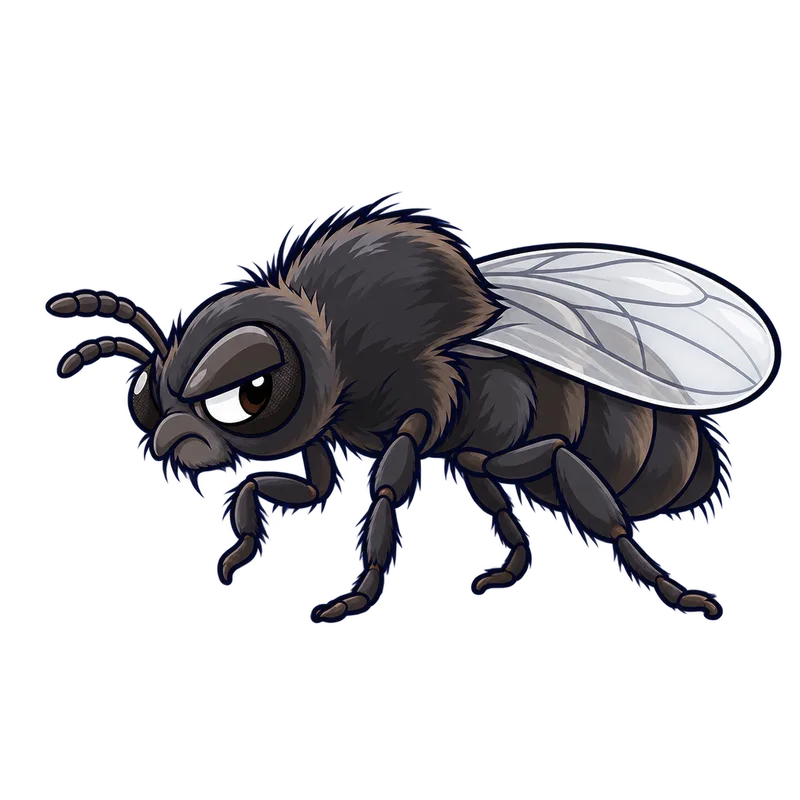
Black flies are remarkably small, dark insects measuring one-sixteenth to one-half inch with a hunchbacked profile. Female black flies slice open human skin with blade-like mouthparts to take a blood meal for egg maturity. These daytime flyers breed only in clean, fast-running water and travel miles from their birthplace.
What is actually going on
You walk out to the garden on a bright spring morning, coffee cup in hand, only to find yourself surrounded by an irritating halo of tiny, dark insects that seem peculiarly obsessed with your face. You wave them away from your eyes and nose, but they stubbornly return, darting in and out of your hair. Later that afternoon, you notice a strange, dull ache on your neck and find a tiny, solitary drop of blood trickling from a small wound. You are dealing with black flies.
Also known regionally as buffalo gnats, these creatures belong to the family Simuliidae and the genus Simulium. They are remarkably small, measuring anywhere from 1/16 to 1/2 inch, and they sport a stout, dark-colored body with a distinctively arched thorax that gives them a hunchbacked profile. Unlike many other nuisance insects, they are strictly daytime flyers, and their activity noticeably spikes on bright mornings and just before a summer rainstorm rolls in.
People often wonder why these flies are buzzing around in the first place, given that they do not seem to care about your kitchen trash or your house plants. The reason is biological reproduction. While both males and females feed on plant nectar and pollen for energy, the females require a vertebrate blood meal to mature their eggs. They are strong fliers that can travel 15 miles or more away from their birthplace, which explains why you might encounter a heavy swarm even if you live a fair distance from the nearest rushing river.
The actual bite feels quite different from what you might expect if you are used to mosquitoes. A mosquito uses a thin, needle-like stylet to pierce a blood vessel directly. A female black fly, on the other hand, uses sharp, blade-like mouthparts to slice open the upper layers of your skin, creating a tiny pool of blood that she then laps up. Along with this incision, she injects saliva containing local anesthetics and anticoagulants, which keeps the blood flowing freely and stops you from feeling the initial cut right away.
How to tell for sure
Pinpointing the culprit usually starts with looking closely at the insect and the geography of where you found it. If the fly is tiny, dark, and has that unmistakable humpbacked silhouette behind its head, you are usually looking at a black fly. If you find small flies swarming around kitchen drains, house plants, or stagnant puddles in the yard, they are usually something else entirely, such as drain flies, fungus gnats, or mosquitoes, because black flies have very strict living requirements.
Those requirements dictate that black fly babies can usually only grow up in clean, fast-running water that carries plenty of oxygen. They cannot breed in still ponds, backyard rain barrels, or indoor pipes. The young insects anchor themselves to submerged rocks and plants in tumbling streams using a special suction pad and silken threads, filtering out microscopic bits of food from the moving current. If you do not live near a river, creek, or fast stream, a sudden swarm of black flies is usually the result of adults flying in from a distant waterway rather than hatching in your yard.
Figuring out what bit you takes some care because skin reactions can vary wildly from person to person. Within an hour of a black fly feeding, your immune system usually reacts to the injected saliva by forming a raised bump, severe itching, and local swelling that can hang around for days. Still, you can usually tell a black fly bite apart from other insect marks by the giveaway trickle of blood left right at the site of the cut.
What usually comes next
When heavy swarms arrive in your area during the spring or early summer, your smartest move is to focus on keeping them off your skin instead of trying to treat your yard. Because these insects breed in wide-open river systems miles away, traditional backyard pest control methods like emptying stagnant water or treating your lawn will have zero impact on them. Instead, you need to decide how to manage your exposure when venturing outdoors near water corridors.
When you know you will be spending time near streams or hiking trails during peak daytime hours, the most effective path forward is to wear light-colored, tightly woven clothing with long sleeves and long pants, keeping your cuffs tucked in so the flies cannot crawl underneath. Applying an insect repellent to exposed skin according to the product label instructions also helps deter them from landing. Keeping your window and door screens in good repair will usually keep them from wandering inside your home, where they typically dry out and perish quickly anyway due to the dry indoor air.
When to get help
Most black fly bites result in mild itching and swelling that resolve on their own, but certain reactions demand medical attention. If you or someone with you exhibits severe systemic allergic symptoms, such as extreme facial swelling, eyes swelling shut, widespread hives, dizziness, or difficulty breathing, seek immediate medical evaluation from a clinician, urgent care facility, or emergency service. You should also consult a healthcare professional if a bite site shows signs of a secondary bacterial infection, such as worsening warmth, expanding redness, pus, or increasing pain days after the incident.
For livestock managers and farmers facing massive swarms attacking cattle, horses, or poultry, the risk of severe blood loss, acute anemia, or fatal shock means a veterinarian should be consulted promptly. Finally, any large-scale effort to control black fly populations requires specialized intervention. Chemical or biological treatments applied to public waterways and rivers are strictly regulated by state environmental and agricultural agencies, and those applications must be executed exclusively by licensed pesticide applicators.