
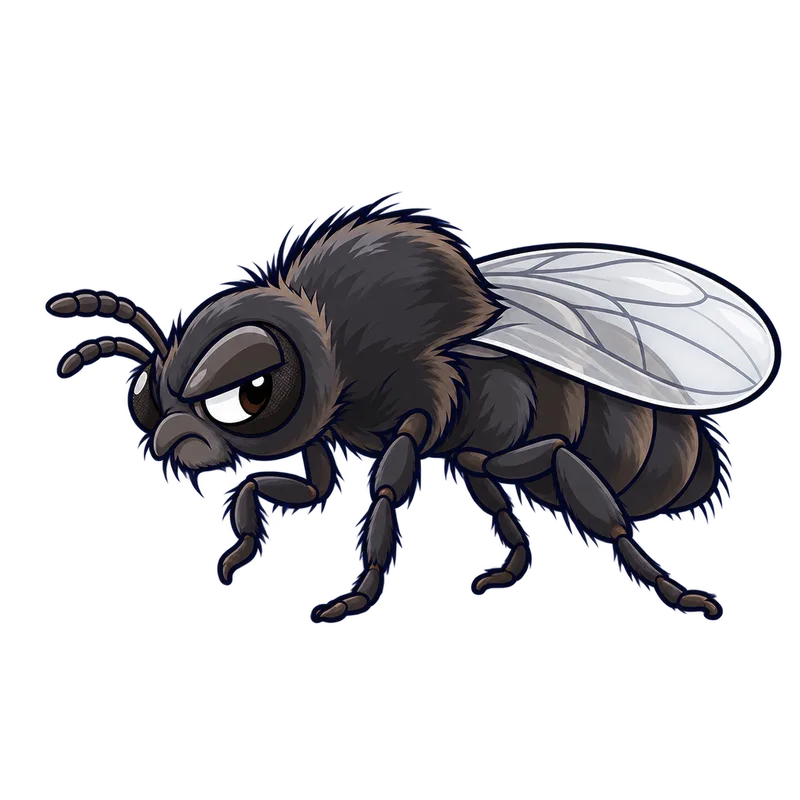
Black flies
Family Simuliidae
- Size
- 1/16 to 1/2 inch
- Color
- Black, dark brown, dark gray, or silverish-gray
- Habitat
- Clean, fast-flowing streams and rivers
- Diet
- Females take blood; males feed on nectar
- Life cycle
- Complete metamorphosis from egg to adult
Black flies are small, stout insects belonging to the family Simuliidae that you will usually encounter outdoors near moving water. The most reliable field mark is a strongly arched, shiny thorax that gives the insect a distinctive hump-backed or buffalo profile. Adults measure anywhere from 1/16 to 1/2 inch in total body length, depending on the species. Their legs and antennae are noticeably short, and their broad, transparent wings show four to five prominent veins crowded along the front margin. You do not need a microscope to spot the humped back, but getting a closer look at the antennae reveals whether you are dealing with a biter or a nectar feeder. Females have simple antennae and blade-like mouthparts for cutting skin, while males have feathery antennae and feed entirely on plant flowers.
Habitat & behaviour
If you are wondering why these insects suddenly appear around your head during a walk near a creek, you can blame their strict need for oxygenated, moving water. Larvae develop exclusively in clean, fast-flowing streams, rivers, and mountain creeks, anchoring themselves to submerged stones or vegetation using a rear suction disc. They cannot survive in stagnant ponds, rain barrels, or indoor plumbing. Once adults emerge, they are strong flyers capable of traveling 15 miles or more from their stream breeding grounds. Unlike mosquitoes that prefer the cover of evening, black flies are strictly daytime biters. They show peak activity during daylight hours, especially on overcast days or just before a rainstorm, and they form annoying swarms around the heads, hair, and faces of humans and animals.
Visual variations
Black flies go through complete metamorphosis, shifting through four distinct chapters before they ever bother anyone outdoors. Females drop their eggs in compact masses on submerged stones or trailing vegetation that stays continually splashed by the current. Once those eggs hatch, the wriggling larva grows up to 1/2 inch long with a dark, spindle-shaped body, a rear suction disc, and foldable fan-like mouth filters that snatch up organic debris floating in the rapid water. That larval stage eventually builds a woven silken case firmly anchored to underwater objects, where it pupates and uses specialized respiratory horns to extract dissolved oxygen. When the adult finishes its transformation down below, it floats right to the surface inside a bubble of air and takes flight immediately. Throughout these stages, the most striking physical contrast remains the split between the sexes, since only the females pack the blade-like mouthparts required for blood-feeding while the males stick to sipping nectar from plant flowers.
Why it matters
Noticing these insects usually means you are well within flight range of a fast-flowing stream or river. Their bites are notoriously irritating because females inject a mixture of saliva containing anticoagulants and local anesthetics to pool blood, meaning the initial puncture often goes entirely unnoticed. Within an hour, however, the site typically develops local swelling, soreness, and intense itching that can persist for several days. While most people experience only minor localized discomfort, highly sensitized individuals can suffer severe swelling, such as eyes swelling shut, which definitely requires medical evaluation. Livestock and poultry exposed to heavy swarms can also experience acute distress, reduced production, or severe anemia from repeated feeding. Because black fly larvae develop entirely in public, flowing watercourses, individual property owners cannot treat the breeding sites themselves, making personal protection with tightly fastened clothing and registered insect repellents your primary defense.
Similar species
 Biting midges / no-see-umsFamily Ceratopogonidae
 Spotted wing drosophilaDrosophila suzukii
 House flyMusca domestica
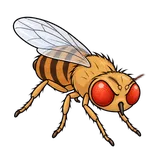 Fruit fliesFamily Drosophilidae
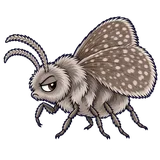 Drain fliesFamily Psychodidae
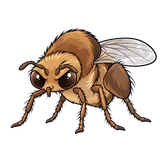 Phorid fliesFamily Phoridae