
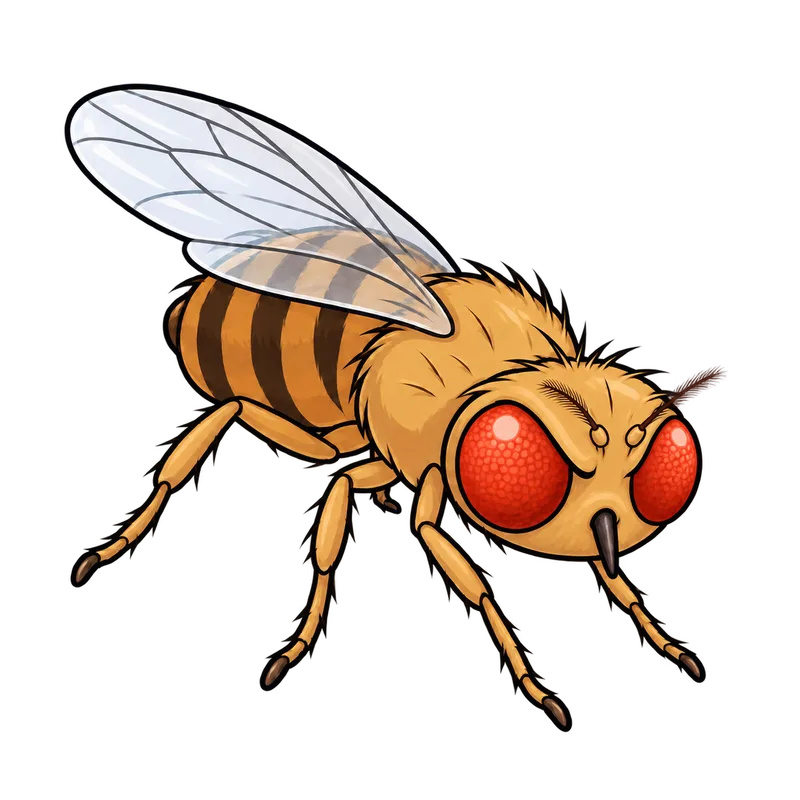
Fruit flies
Family Drosophilidae
- Size
- 1.5 to 4 mm
- Color
- Dull yellowish-brown or tan
- Habitat
- Indoors near fermenting organic matter
- Diet
- Yeasts and microbes in decaying produce
- Life cycle
- 7 to 10 days
When people talk about fruit flies in the kitchen, they usually mean the tiny vinegar flies or pomace flies belonging to the family Drosophilidae. Entomologists make a sharp distinction between these household pests and the true fruit flies of the family Tephritidae, which are larger, agricultural pests with heavily patterned wings. A standard adult fruit fly measures roughly 1.5 to 4 mm, which is about one-sixteenth to one-eighth of an inch.
Identity
Getting a positive ID requires looking past the general shape to specific details. Most species sport a dull yellowish-brown or tan thorax and a striped abdomen, paired with bright red compound eyes, though darker species lean toward dark red or black eyes. Under magnification, the short, stubby antennae reveal a feathery bristle called an arista.
The invasive spotted-wing drosophila adds a few twists to the family look. Males carry a single distinct dark spot on the leading edge near the tip of each wing, accompanied by dark comb-like rows of bristles on their front legs. Females lack the wing spots entirely, but possess a heavily sclerotized, saw-toothed ovipositor at the tip of the abdomen that acts like a tiny knife for slicing into fruit skin.
Several other insects invite confusion. Phorid flies look similar in size but move in rapid, jerky runs and feature a distinct arched thorax and dark, non-red eyes. Drain flies are fuzzy and moth-like with broad, hairy wings. Fungus gnats have slender, dark, mosquito-like bodies with long legs and antennae, hovering around potted plants instead of fruit bowls.
Habitat & behaviour
Fruit flies thrive wherever moisture, warmth, and fermenting organic matter meet. Indoors, they find their way into homes, restaurants, and grocery stores through open doors or on store-bought produce. They are weak fliers, but their minute size allows them to slip right through standard window insect screening.
Outdoors, they ride the wind or seek out microhabitats in leaf litter, soil, and rotting vegetation. Adults are sensitive to drying out and prefer the cooler, high-humidity periods around dawn and dusk, sheltering in shady spots when temperatures climb.
The larval food source dictates where populations concentrate. Standard vinegar flies feed primarily on the yeasts and microbes growing inside overripe, bruised, or decaying produce like bananas, tomatoes, and onions, as well as spills of wine, beer, cider, and vinegar. They also target the organic slime lining slow drains, dirty trash cans, and damp mops. The spotted-wing drosophila behaves differently, bypassing rotting items to attack intact, ripening soft fruits on the plant, including raspberries, blackberries, cherries, and grapes.
Visual variations
Fruit flies cycle through four distinct stages during complete metamorphosis. The translucent, milky-white egg measures under 0.6 mm, featuring two to four threadlike respiratory filaments at one end that poke out of the liquid breeding medium or fruit skin like tiny snorkels.
The legless, worm-like maggot measures 1.5 to 4 mm and grows up to 6 mm in mature spotted-wing drosophilas. It is pale white to cream-colored and tapers at the head, with visible black mouth hooks and internal organs showing through the skin as it feeds on yeast.
When the larva finishes feeding, it crawls out of the wet medium into a drier spot to pupate. The pupa forms a reddish-brown, seedlike cylinder about 2 to 3 mm long, marked by two hornlike breathing stalks at the front end.
Adults emerge from this pupal case pale white, quickly darkening to their characteristic tan and striped pattern upon exposure to air. Males and females differ slightly in appearance beyond the specialized features of the spotted-wing variety. In common fruit flies, males feature a solid dark patch at the very tip of the abdomen, while females display separated dark bands.
Why it matters
A sudden cloud of fruit flies in the kitchen usually means a forgotten potato at the back of the pantry or unrinsed recycling bin has turned into a maternity ward. Because their life cycle can compress into just 7 to 10 days under warm conditions, a single female laying hundreds of eggs can turn a minor oversight into a full-blown invasion in less than a week.
Fruit flies do not bite or feed on blood, lacking the mouthparts to do so, but they act as mechanical vectors. When they bounce between rotting organic filth and clean food preparation surfaces, they can transfer decay fungi, rot bacteria, and human pathogens like Escherichia coli and Salmonella.
Standard kitchen control hinges on finding and removing the actual breeding source, whether that is a bag of overripe fruit or the organic film lining a slow drain. Pouring bleach down a sink rarely solves the problem because the liquid slides right past the greasy slime where the larvae live, leaving them untouched. For soft-fruit growers, managing invasive agricultural species requires careful monitoring and timing that often calls for professional integrated pest management.
Similar species
 Drain fliesFamily Psychodidae
 Phorid fliesFamily Phoridae
 Cluster fliesPollenia species
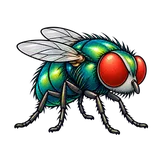 Blow fliesFamily Calliphoridae
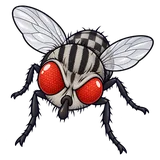 Flesh fliesFamily Sarcophagidae
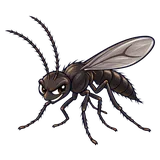 Fungus gnatsFamily Sciaridae