
How are fruit fly eggs dealt with?
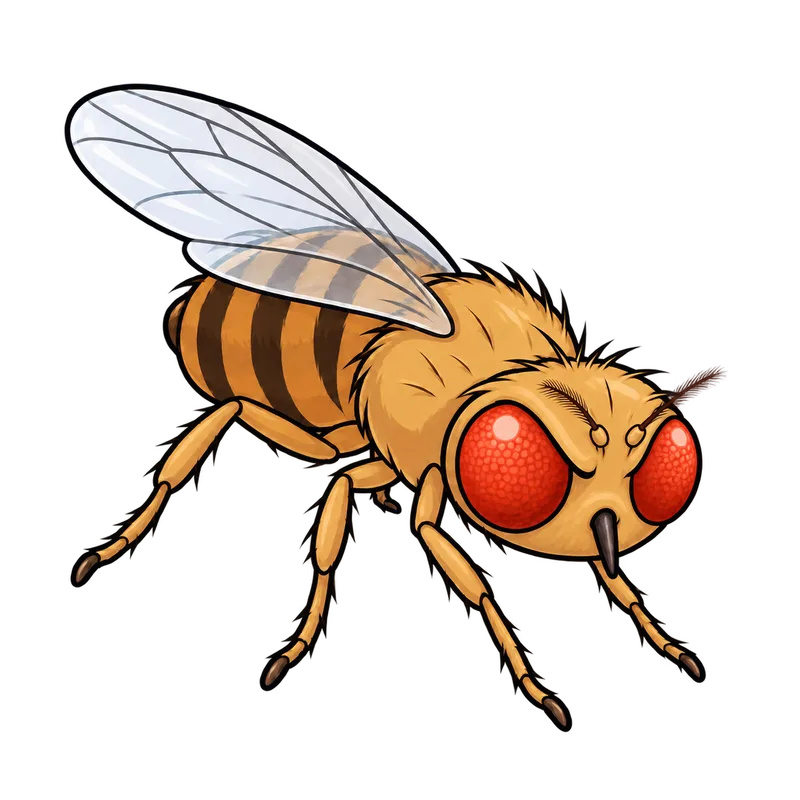
Fruit fly eggs are dealt with by removing or destroying the material they are laid in rather than using direct sprays. You clear out overripe produce, seal trash tightly, scrub the organic scum lining your drains, and store fresh fruit in the refrigerator.
What is actually going on
Picture this: you leave a bowl of peaches on the counter for two days, and by Thursday there is a small cloud of tiny tan flies hovering over it like they pay rent. You toss the peaches, wipe the counter, maybe wave a dish towel at the cloud, and two days later the flies are back. That is the moment most people start asking the real question, which is not how to kill the flies they can see, but what to do about the eggs they cannot.
Here is the blunt answer: you almost never kill fruit fly eggs directly. You deal with them by removing or destroying the material they are laid in. The eggs sit tucked inside rotting fruit, fermenting residue, or the slimy film coating the inside of a drain, and no household spray reaches them there. Contact insecticides kill adult flies on the wing, full stop. Once an egg is under the skin of a fruit or buried in drain gunk, it is chemically untouchable. So the whole strategy comes down to sanitation, temperature, and physically blocking the females from laying in the first place.
One more thing changes what you are up against, so it is worth knowing. The everyday fruit fly in your kitchen, the classic vinegar fly, can only lay eggs in soft, already-decaying material. Her egg-laying tube is delicate. But there is an invasive cousin, the spotted wing drosophila, whose female carries what amounts to a tiny serrated saw. She can cut into intact, ripening fruit, your raspberries and cherries that look perfectly fine, and deposit eggs inside the flesh. If you grow soft fruit, that distinction matters a lot. If you are just fighting flies over the fruit bowl, the ordinary kind is your problem, and the fix is simple housekeeping done thoroughly rather than anything exotic.
How to tell for sure
Fruit fly eggs themselves are almost comically small, under a millimeter long, translucent white, and shaped like tiny grains of rice. You will not spot them on a banana with the naked eye unless you have excellent vision and unusual patience. What you can sometimes see, with a magnifying glass, are the giveaway features: each egg carries two or more threadlike filaments at one end, essentially miniature snorkels that stick up out of the fruit pulp or liquid film so the egg can breathe. If you notice tiny white threads poking out of a soft spot on a berry, that is usually an egg cluster breathing, not a wisp of mold.
More practical is identifying where eggs are likely to be, because that tells you where to clean. In a kitchen, the usual suspects are overripe or damaged produce, the unrinsed wine bottle in the recycling bin, the dregs in a soda can, the wet bottom of a trash can, a forgotten potato quietly liquefying in the pantry, and the organic scum lining sink and floor drains. Yes, drains. People pour boiling water or bleach down there and feel accomplished, but neither removes the gelatinous film the eggs are embedded in. You need a stiff brush to physically scrub the pipe walls, or a microbial or enzymatic drain cleaner that digests the gunk. Bleach flows right past the slime and accomplishes roughly nothing, which is a shame given how confident everyone feels while pouring it.
If you grow berries and want to know whether eggs or young larvae are inside sound-looking fruit, there is a simple test: crush a sample of fruit in a salt-water solution and watch for small white larvae floating to the surface. Be clear about what this is, though. It is a diagnostic check, not a way to rescue infested fruit for the table. If larvae float out, that batch tells you the flies are active in your planting, and the answer is faster harvesting and colder storage, not a salt bath for your breakfast.
What usually comes next
So the real decision in front of you boils down to one question: where are they breeding? Everything else hangs off answering that honestly, and the honest answer is usually a spot you have not checked yet.
Inside the house, the sequence goes like this. Bag up anything suspect, seal the bag, and walk it straight out to the outdoor bin, not the kitchen trash, which is just a bed and breakfast with a lid. From now on, ripe fruit lives in the fridge or in sealed containers. Rinse cans and bottles before they hit the recycling. Take the trash out daily and actually wash that wet film out of the bottom of the bin. Then give the drains a proper scrub. Do the whole lot in one go, because a warm kitchen works like an accelerator: at summer room temperatures an egg can hatch into a larva in as little as a day or two, so doing half the job just means you get introduced to the next generation.
If the flies are coming from your garden or berry patch, the playbook changes. Pick ripe fruit promptly and pick it clean, because every day a berry hangs there going soft is an open invitation. Get fallen and damaged fruit off the ground, seal it in heavy plastic bags for the trash, or solarize it under clear plastic sheeting in full sun. What does not work is the two things everyone tries first: chucking culls on the compost pile or burying them shallow. Flies happily finish their development in compost and climb out of buried fruit like it was a minor inconvenience. For picked berries you suspect are carrying eggs, cold is your pause button: getting them down to refrigerator temperatures, around 34 to 38 degrees, stops egg development and kills many eggs and young larvae. A hard freeze at 0 degrees for at least a week takes care of stored food. And for next season, fine mesh netting over the bushes, put up after pollination but before the fruit starts to color, physically keeps the females from ever reaching the fruit. No spray needed, which is convenient, since sprays cannot touch the eggs anyway.
You might fairly object that this is a lot of fuss over a tiny fly. Reasonable point. But weigh the alternative: one female can lay hundreds of eggs in her lifetime, and the puncture she makes in a fruit also lets rot fungi in, so the fruit collapses from the inside. Clearing the breeding sites once, properly, beats swatting adults for the rest of the summer.
When to get help
Most fruit fly problems are a sanitation problem, and sanitation costs nothing. But there are cases where scrubbing harder stops paying off, and that is your cue to change tactics.
If flies keep showing up after you have cleared every scrap of produce and scrubbed every drain you can reach, the breeding site is probably somewhere you cannot see: a cracked drain line under a concrete slab, a slow plumbing leak under a dishwasher, or organic buildup hiding beneath loose floor tiles. That is licensed pest control territory, and quite possibly a plumber's territory too. Persistent infestations in restaurants and food businesses especially call for a professional, since the source there is often structural rather than a forgotten banana.
If you grow soft fruit commercially and suspect spotted wing drosophila, talk to your local extension service before spraying anything. They can confirm the identification, which genuinely takes expertise at the egg and larva stage, and any insecticide decision belongs on the product label and, for restricted products, in the hands of a licensed applicator. Markets have zero tolerance for larvae in fresh fruit, so guessing wrong gets expensive in a hurry.
For the ordinary kitchen invasion, though, you already own everything you need: a trash bag, a refrigerator, a stiff brush, and about one thorough afternoon.