
What are drain fly larvae in a toilet?
Drain fly larvae in a toilet are the immature, legless stage of moth flies that feed on microbial slime and organic biofilm accumulating under the flushing rim or inside the water trap. They measure from one-sixteenth to three-eighths of an inch long and feature a dark head capsule with a breathing tube on their tail end.
What is actually going on
You walk into the half bath that nobody used all summer, lift the toilet lid to check things out, and notice tiny, worm-like specks wriggling in the water or clinging just above the wet line. It is a deeply unsettling sight, and your first thought is probably that something crawled up out of the municipal sewer lines. You are not entirely wrong, but the more common culprit is actually breeding right there inside the porcelain bowl.
Drain fly larvae found in a toilet are the immature, legless stage of moth flies belonging to the family Psychodidae. These tiny organisms feed entirely on the microbial slime and organic biofilm that accumulates quietly under the flushing rim, inside the water trap, or along connecting drainpipes. Female adult flies hunt down moist, decaying organic matter and lay clusters of eggs directly onto that gelatinous scum layer.
Within forty-eight hours, those eggs hatch into slender larvae that measure anywhere from one-sixteenth to three-eighths of an inch long. They have a distinct dark head capsule and a specialized breathing tube on their tail end. While their heads stay buried in the muck to graze on bacteria, fungi, and microscopic debris, they stick that tail end out like a tiny built-in snorkel to breathe atmospheric oxygen.
You might wonder how they managed to set up housekeeping in a place that gets flushed with water regularly. The secret is that they live underneath and behind a thick matrix of organic scum that standard water flow simply glides right over. Think of that biofilm like a heavy waterproof raincoat. Pouring hot water or bleach over the top runs straight off without soaking through to the creatures huddled underneath, leaving them safe and well-fed in their slimy blanket.
Spotting tiny bugs in a bathroom can send anyone down a frantic rabbit hole, but you can usually tell what you are dealing with by looking closely at how they move and what they look like. Drain fly larvae usually appear as pale brown or off-white segmented worms that are slightly darker at both ends, growing up to three-eighths of an inch long. If you see something much larger, such as a flattened, leathery, dark brown creature nearly an inch long, you are likely looking at a black soldier fly larva that has wandered up from a major sewer breakdown to find a dry place to pupate.
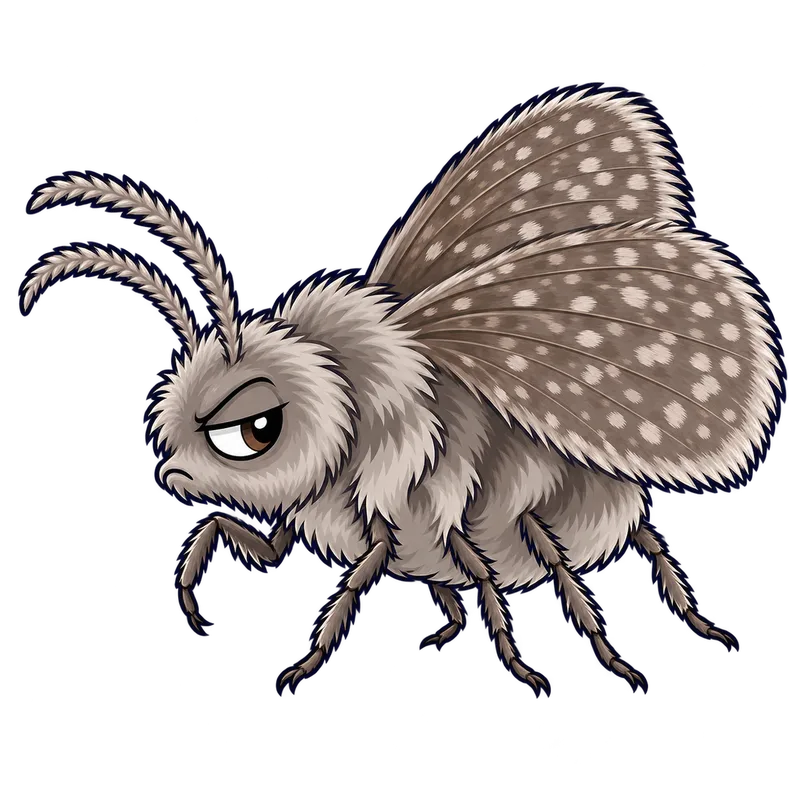
Adult flies give away the game just as clearly as their offspring do. Drain flies look less like typical houseflies and more like miniature, fuzzy moths covered in fine hairs, usually measuring about one-sixteenth to one-fifth of an inch. When they rest on bathroom walls, they fold their wings in a roof-like shape over their bodies and tend to make short, hesitant hops rather than long flights.
You might also encounter phorid flies, which are tiny, dark insects that act like nervous little racecars. Instead of flying right away, phorid flies scuttle across porcelain or wall surfaces in fast, erratic spurts before slamming on the brakes to take flight. They lack the hairy, moth-like look of drain flies and usually point toward organic decay hidden behind walls or beneath flooring.
Before you buy any supplies, you need to confirm whether the toilet itself is the active breeding ground or just a staging area. A simple sticky trap or a strip of clear packing tape stretched across part of the bowl opening overnight will usually tell you the story. If emerging adult flies get caught on the sticky side by morning, you have confirmed an active breeding site right beneath that tape.
How to tell for sure
Once you know you are dealing with drain fly larvae, your next move has to focus on physical removal rather than chemical shortcuts. Chemical drain openers and household bleach usually fail because they cannot break down the sticky biofilm where the larvae live. You have to get rid of that physical slime layer first.
Grab a stiff-bristled toilet brush and scrub the bowl thoroughly, paying special attention to the under-rim flushing channels and upper jet holes where biofilm loves to hide. Once you have mechanically scrubbed away the visible buildup, you can follow up with a commercial biological drain cleaner containing live bacterial cultures or specialized enzymes. These biological agents digest the remaining organic residue without harming your plumbing, but you have to apply them during periods of low water use, such as right before bed, so they can sit undisturbed against the pipe walls.
If you come home from a long vacation to find flies in an unused guest bathroom, the fix is usually much simpler. The standing water in the plumbing trap likely evaporated completely while you were away, opening an unhindered corridor for adult flies from the main sewer line to fly straight up into the bowl. Running water down all your household drains and flushing unused toilets at least once a week usually restores that water barrier and stops the migration cold.
What usually comes next
Drain fly infestations are primarily a sanitary nuisance rather than an immediate structural emergency, but stubborn cases can point to deeper problems that require outside help. If you have scrubbed the bowl repeatedly and used enzyme cleaners yet the flies keep coming back, the breeding source is likely located outside the toilet fixture entirely. Persistent swarms often indicate a cracked drainpipe beneath a concrete slab floor, a broken sewer line in a crawl space, or a failed toilet wax ring that allows sewage moisture to leak into the subfloor.
When to get help
When your diagnostic tests point to plumbing failures beneath the floor or behind walls, call a licensed plumbing contractor. They can run a camera line inspection to check for hidden structural damage that simple cleaners cannot reach. On the other hand, if you manage a commercial facility or experience an overwhelming infestation that defies standard cleaning, a licensed pest control professional can apply specialized insect growth regulators or commercial foam treatments safely.
On the health side, remember that drain flies do not bite humans, but because they breed in unsanitary conditions, they can carry bacteria onto clean surfaces. In heavy indoor infestations, the decaying body parts and shed cuticles of dead flies can break down into airborne dust that triggers allergies or asthma in sensitive people. If anyone in your home accidentally ingests larvae or shows signs of skin or mucosal irritation, stop trying to diagnose the issue at home and contact a qualified clinician or your regional poison control center right away.