
What are biting midges?
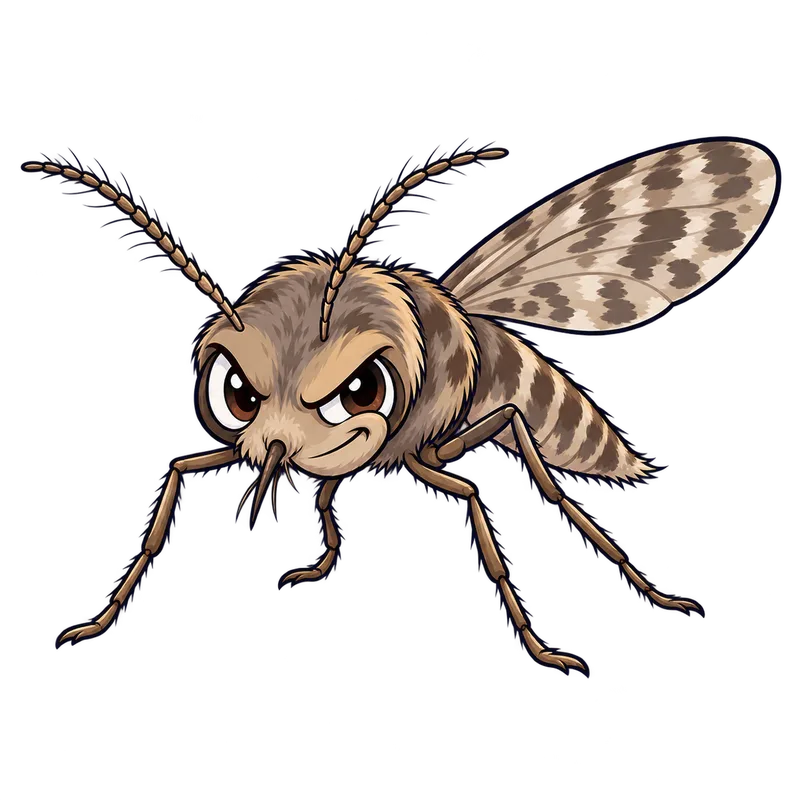
Biting midges are the smallest blood-sucking flies in the world, with adults measuring between 1.0 mm and 3.0 mm in length. Only the females bite, using tiny blade-like mouthparts to cut human skin and create a micro-pool of blood.
What is actually going on
You are sitting on the back patio around dusk, holding a glass of iced tea and enjoying the sudden stillness after a hot afternoon. A light breeze dies down, and within minutes, your ankles and wrists start to feel like someone is pressing tiny, hot needles into your skin. You swat at the spots, expecting a mosquito, but your skin comes away empty. There is nothing to see, yet the burning pinch returns. What you are dealing with is a swarm of biting midges, tiny blood-feeding flies.
People most often call them no-see-ums or punkies, and for good reason. Adult biting midges measure between 1.0 mm and 3.0 mm in length, which translates to roughly 1/32 to 1/16 of an inch. That makes them the smallest group of blood-sucking flies you will ever encounter. When a heavy swarm lands on your arms, it looks remarkably like someone just shook a light dusting of black pepper over your skin, except those pepper flakes are alive and hungry.
Only the females bite. They need the proteins found in blood to develop their eggs, and they use short, blade-like mouthparts to cut into the outer layers of human or animal skin. This feeding style creates a tiny pool of blood that the midge laps up, rather than drilling directly into a blood vessel the way a mosquito does. This cutting action causes an immediate burning sensation and triggers localized inflammation. The males, meanwhile, spend their short lives quietly feeding on plant nectar and sap, completely harmless to anyone looking for a fight.
You might wonder why these pests seem so much worse near water or damp areas, even when you cannot spot a pond. Biting midges rely on moist organic substrates to complete their life cycle. The females lay eggs in dark, damp micro-habitats like coastal salt marshes, estuarine mud flats, wet margins of lakes and streams, or even soil saturated by septic tank overflows. Their worm-like larvae need moisture to survive, which is why your dry suburban lawn rarely hosts them unless you have a persistent plumbing leak or wet compost pile sitting undisturbed.
Biting midges belong to the family Ceratopogonidae and the order Diptera, representing the smallest blood-sucking flies known to science. When a female midge lands on an exposed wrist, she does not pierce a vein with a needle-like proboscis. Instead, she uses her tiny, blade-like mouthparts to lacerate the outer layers of skin, a feeding mechanism entomologists call telmophagy. The resulting micro-pool of blood allows her to lap up what she needs, leaving behind salivary proteins that trigger a sharp, burning sensation and subsequent delayed immune reactions.
Because they are so light and diminutive, their flight capability is severely limited. A steady breeze of even a few miles per hour grounds them completely. This explains why they appear in thick, aggressive swarms on calm, humid evenings around dawn and dusk, yet seem to vanish entirely when a strong wind picks up. Their attraction to artificial light sources also pulls them toward glowing windows and porch lamps long after the sun goes down.
How to tell for sure
Telling biting midges apart from other tiny winged nuisances comes down to size, resting posture, and mouthparts. Because the public often lumps every small flying insect under the broad label of gnat or sand fly, it helps to look closer at what is actually landing on your screen. True biting midges usually have a stout, stocky body with a slightly humped thorax and relatively broad wings that fold flat over their abdomen when they rest. Many species feature distinct dark or clear spotted patterns on those wings.
You will also want to avoid confusing them with true sand flies, which belong to an entirely different family and hold their hairy, delicate wings in a distinct V-shape above their bodies at rest. In coastal regions and various parts of the United States, locals often call biting midges sand flies, which creates endless confusion. True sand flies vector specific protozoan diseases, whereas biting midges in North America and Australia do not transmit human illnesses, though they can still drive you indoors with their painful bites.
Another common mix-up involves non-biting midges, which look somewhat similar and even form large, annoying swarms around porch lights. Non-biting midges usually have plumose, feathery antennae on the males and completely lack the mouthparts required to pierce human skin. If you are standing outside and the insects are merely hovering near your head without leaving painful, burning welts, you are usually dealing with the harmless variety.
What usually comes next
When you realize that standard window screens are letting these tiny attackers straight into your living room, your first instinct is usually to grab a can of bug spray or check every window seal in the house. Standard household window screens use a 16x18 mesh size, which works wonderfully for houseflies and keeps out most mosquitoes. Because a biting midge can measure a mere 1.0 mm across, it slips straight through standard screen openings as if they were wide-open doors. If you live near a marsh, lake, or damp coastal area, your practical decision comes down to upgrading your physical barriers by installing ultra-fine mesh, often sold specifically as no-see-um screening.
Relying solely on topical repellents or indoor bug zappers treats the symptom rather than the architectural flaw. While chemical repellents containing DEET or Picaridin can protect your skin when you are sitting outside, they wash off, wear off, and offer zero protection once you step back indoors through an inadequately screened porch. Upgrading your window and door mesh to a tighter weave permanently changes your indoor environment, keeping the tiny pests outside where they belong without requiring you to constantly reapply products to your skin.
If you prefer chemical protection while sitting outside, apply EPA-registered repellents directly to exposed skin. For children, keep in mind that insect repellents should not be used on infants under 12 months of age. For children aged 12 months and older, products containing a maximum of 10 percent DEET or Picaridin may be used sparingly. Never apply permethrin-based sprays directly to human skin, as those formulations are strictly reserved for treating outer clothing and gear.
When to get help
Most midge bites heal on their own with basic first aid, such as washing the site with soap and water and applying a cold compress to manage the burning and swelling. However, the intense itching often leads to vigorous scratching, which can break the skin and introduce environmental bacteria. If a bite site develops increasing redness, warmth, red streaks, pus, or if you develop a fever, you should consult a primary care clinician or an urgent care center for a proper medical evaluation and potential treatment for a secondary bacterial infection.
Livestock owners and agricultural managers face a different set of risks. Certain species of biting midges serve as biological vectors for the Bluetongue virus, which affects sheep, cattle, and goats. If you manage farm animals and notice signs of fever, oral lesions, swelling, or lameness in your ruminants, you must report these symptoms immediately to a veterinarian or your state agricultural authority. Similarly, horses frequently suffer from a severe allergic dermatitis known as sweet itch in response to midge saliva, requiring professional veterinary guidance for housing adjustments and topical care.
When outdoor midge populations around a home, resort, or property become entirely unmanageable despite your best efforts with fans, lighting adjustments, and fine screening, it is time to involve a licensed pest management professional. Licensed applicators have access to specialized equipment and registered residual products designed for exterior barrier treatments on resting surfaces. They can evaluate your specific perimeter harborage and apply treatments safely while adhering strictly to environmental regulations and product label laws.