
Do horse flies bite humans?
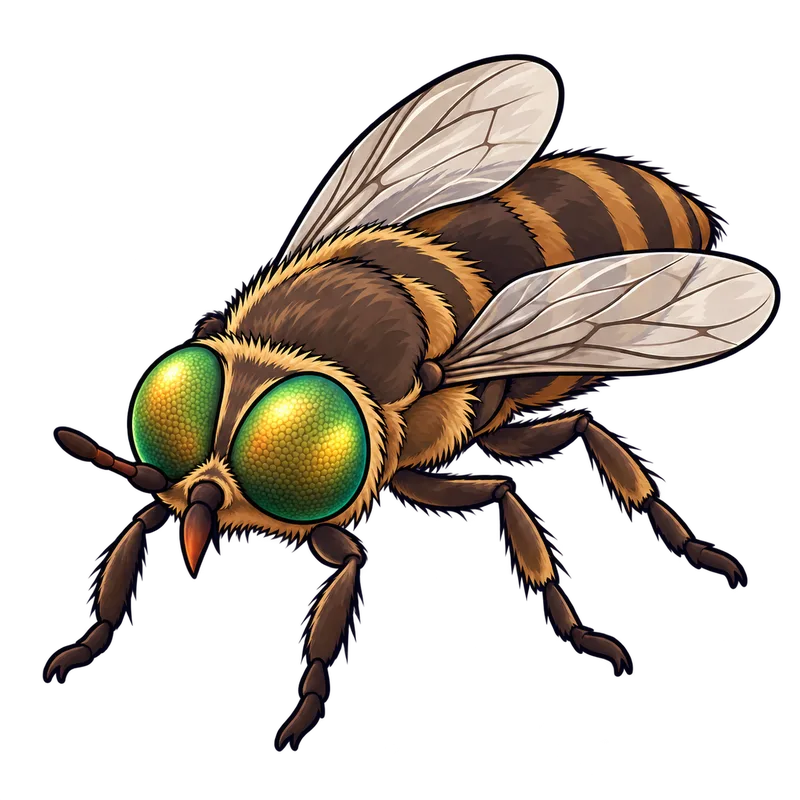
Female horse flies absolutely bite humans, using blade-like mouthparts to slice the skin and feed on blood. Only female horse flies bite, needing protein from blood to develop their eggs, while males feed only on nectar and pollen.
What is actually going on
Picture a hot July afternoon at the lake, or a walk along a wooded trail next to a slow creek. Out of nowhere something the size of your thumbnail lands on your arm, and before you can even process what it is, you feel a sharp, slicing pain, like somebody pinched you with tiny scissors. You slap, it zooms off, and there is a small bead of blood where it was sitting. That was almost certainly a horse fly, and yes, horse flies absolutely bite humans.
One thing worth knowing right away: only the females bite. Male horse flies spend their whole lives sipping nectar and pollen from flowers, living their best vegetarian lives, and they physically cannot bite because they lack the cutting mouthparts. The females need the protein in blood to develop their eggs, and you, your dog, and every horse and cow in the county are all on the menu.
So why does it hurt so much, and hurt instantly? It comes down to technique. A mosquito works like a sneak: it slides a fine, flexible needle straight into a blood vessel, so delicate you often do not feel it until the itch shows up later. A female horse fly has no use for subtlety. She uses a pair of blade-like mouthparts that work sideways like little shears, slicing through your skin and the tiny blood vessels in it. Then she pumps in saliva that keeps the blood from clotting and laps up the pool that forms. It is less 'bite' and more 'minor field surgery.' That is why you feel it the second it happens, and why the spot often bleeds a little.
One belief worth correcting while we are here: horse flies do not sting. There is no stinger, no venom sac, nothing coming out of the tail end. All the damage happens at the head, with those blades, and the swelling and itching afterward come from your immune system reacting to the proteins in her saliva. People also assume any big fly buzzing around a barn can bite, but house flies, face flies, and even the chunky botflies that hover around horses all lack the equipment to break skin at all.
How to tell for sure
If you want to confirm what bit you, the honest answer is that the bite itself will not tell you. A red, raised, itchy welt is your body's generic response to all kinds of insect saliva, and no photo of a mark on your skin can pin it to a species. What identifies the culprit is catching the insect in the act, or at least getting a good look at it. Horse flies make that easier than most biters because they are big, bold, and land in broad daylight.
A true horse fly is hard to miss: usually somewhere between three quarters of an inch and an inch and a quarter long, stout-bodied, with enormous eyes that are often brilliantly colored or iridescent. The wings are usually clear or solidly dark. Its smaller cousin, the deer fly, runs about a quarter to half an inch, has a yellowish to black body, and carries distinctive dark bands or patches across its wings, plus patterned eyes. Deer flies are notorious around wooded areas and wetlands and will happily circle your head for minutes before committing.
The usual lookalike that fools people is the stable fly. It is about the size and color of an ordinary house fly, but it bites, typically going for ankles and lower legs. The giveaway is the rigid, dark, needle-like snout it holds pointing straight out in front of its head, like a tiny bayonet. A horse fly's cutting blades tuck underneath the head instead. Black flies are another daytime biter, but they are much smaller, dark, and humpbacked, and they tend to leave a visible trickle of blood.
Context helps too. Horse flies and deer flies usually show up on warm, sunny days in late spring and summer, near water, marshy ground, pastures, or stream edges, because that is where their larvae develop in wet soil and mud. They are fast, strong fliers drawn to large, dark, moving shapes, body heat, and the carbon dioxide you breathe out. If you were wearing a black t-shirt and walking near a pond in July, you basically sent out an invitation.
What usually comes next
Most horse fly bites are a rotten day or two, then they quiet down on their own. The usual script is sharp pain right at the bite, a little bleeding, then a red raised welt that swells and itches over the next few hours. Wash it with soap and water, keep your nails off it, and watch it for a day or two. Scratching is how a simple bite gets opened up and infected, and that is the main way these things graduate from annoying to worth a phone call.
The smarter decision is how to avoid the rematch, because one female on a sunny afternoon usually means her sisters are working the same shoreline. Light-colored clothing helps, since dark colors draw them in. Long sleeves and pants help too, but pick a tighter weave, because these flies can sometimes get through thin or clingy fabric. On exposed skin, an EPA-registered repellent with DEET can help, and permethrin-treated clothing adds another layer. Follow the product label exactly. The label is both the safety manual and the legal instructions, and no clever shortcut improves on it. Timing matters as well: if you can move the marsh hike or pasture chores away from the hottest, sunniest part of a midsummer day, you will usually meet far fewer of them.
You might be thinking, fine, why not just spray the yard or treat the pond and be done with it. Generally, that does not work. The larvae are spread through wetlands, stream banks, and saturated soil, and trying to chemical your way across that kind of habitat is impractical, mostly ineffective, and hard on everything else living there. This is one of those pests where protecting the person beats trying to erase the source.
When to get help
Most bites need soap, water, and patience, nothing fancier. Some cross the line into “get this looked at.” Seek medical care promptly if swelling keeps spreading, the skin gets more red, warm, or painful, you see pus, you run a fever, or red streaks move away from the bite. Those can point to a bacterial infection that needs a clinician. If a bite is ever followed by dizziness, swelling of the face or throat, or trouble breathing, treat it as an emergency and get help immediately, because severe allergic reactions to insect saliva do happen.
A clinician is also the right call if you get sick without a clear explanation after heavy fly exposure. Horse flies and deer flies can mechanically carry certain infections, including tularemia, by moving pathogens on contaminated mouthparts when one fly bites several hosts in quick succession. That is not common, but it is a solid reason to mention the bites to your doctor instead of letting a search bar practice medicine.
On the animal side, heavy horse fly pressure is a real livestock problem: blood loss, stress, reduced milk production in cattle, and diseases such as equine infectious anemia moving among horses. If your animals are getting hammered, talk with a veterinarian about protection instead of improvising with products meant for some other job. If biting flies are swarming a commercial property, campground, or any venue where you are responsible for other people’s comfort, bring in a licensed pest management professional who can assess the site properly. For your own afternoon by the lake, light clothing, repellent used exactly as labeled, and a healthy respect for sunny wetlands will usually carry you through the season.