
How do you reduce horse flies around a home?
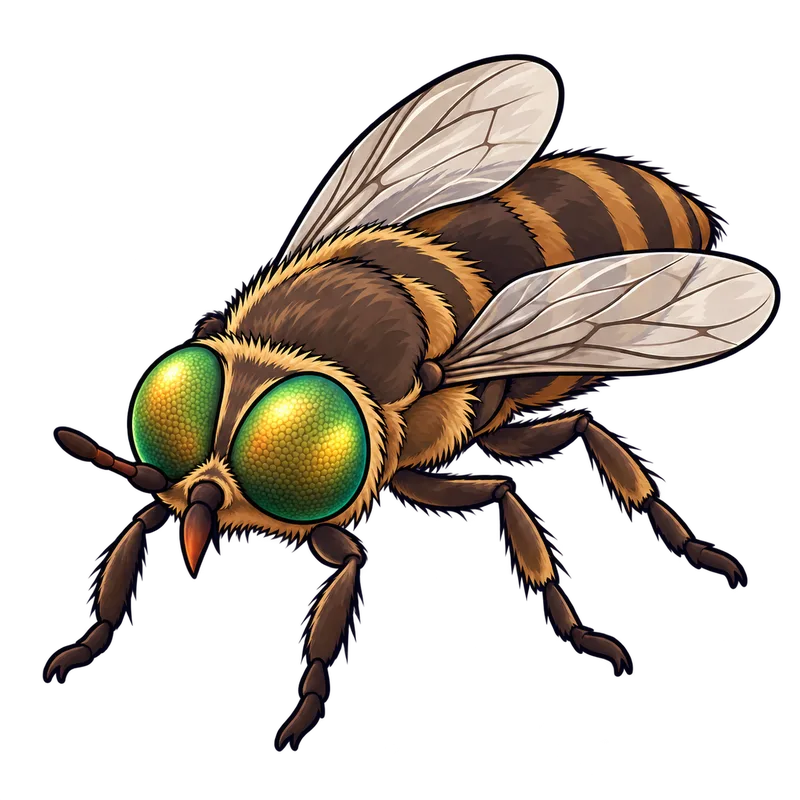
You reduce horse flies around a home by using a layered defense of physical exclusion and personal protection, since backyard pest control and local yard treatments are ineffective against their off-site breeding grounds. Keep windows and doors tightly screened, wear light-colored clothing, and apply repellents to deter them from landing and biting.
What is actually going on
You walk out to the back patio on a bright Saturday afternoon, coffee mug in hand, and within seconds a heavy, buzzing shadow slams into your shoulder with the subtlety of a falling brick. That is not a confused house fly or a lazy bumblebee. That is a horse fly, and if you have ever tried to swat one away only to receive a sudden, stinging bite that starts bleeding immediately, you already know how aggressive they can be. People often assume there must be a nest hidden somewhere in the garden mulch or under the deck, so they reach for a can of bug spray and sweep the lawn, hoping for a quick fix.
The frustrating reality is that you cannot eliminate horse flies by treating your yard alone. Adult female horse flies are extraordinarily strong, swift fliers that think nothing of traveling miles from their natural breeding grounds in unmanaged wetlands, pond margins, or stream banks just to find a warm-blooded host. Think of them as commuter traffic from two towns over. Even if you keep your own property pristine, those adults keep arriving on the highway of the open air. Furthermore, their larvae spend one to three years lurking as semi-aquatic predators in saturated mud far beyond your fence line, which renders local backyard pest control completely ineffective against the source.
So how do you actually reduce them around a home if you cannot destroy where they come from? You have to shift your strategy away from eradication and toward a layered defense. Because these pests rely on physical exclusion, personal barriers, and targeted resting sites, managing them is less about wiping out a local colony and more about making your immediate living space an inhospitable place for them to land, wait, and bite.
How to tell for sure
Before you try any tactics, you need to know what you are dealing with because misidentification wastes time. If the insect causing you grief is a large, bulky fly measuring anywhere from three-quarters of an inch to an inch and a quarter long with brilliant, iridescent eyes and clear or solid-colored wings, you usually have a true horse fly on your hands. If it is smaller, closer to a quarter or half an inch, with dark patterned bands across its wings, you are usually looking at a deer fly. Both belong to the same family and share those dreaded slicing mouthparts, but their size helps tell them apart.
You might wonder why this matters if they both bite. The distinction becomes critical when people confuse them with stable flies, which look remarkably like ordinary house flies but have a sharp, forward-projecting bayonet proboscis that punctures ankles and legs around the yard. Stable flies breed in rotting organic matter, wet grass clippings, and manure-soaked straw right on your property, whereas horse flies come from off-site wetlands. If you treat your yard for stable fly sources when you actually have an influx of horse flies descending from a nearby riverbank, your efforts will completely miss the mark.
Another common point of confusion involves gender. You can usually assume that any fly aggressively buzzing around your head, tracking your movement, and trying to bite you is a female. Male horse flies lack the cutting mouthparts required to draw blood and spend their short lives quietly feeding on flower nectar and pollen. The females are the ones driven by the biological necessity of a protein meal to mature their eggs, and they use visual movement, dark silhouettes, body heat, and carbon dioxide plumes to zero in on targets.
What usually comes next
Faced with relentless biting flies that ignore standard bug zappers and mosquito foggers, you have to make one practical decision about your primary line of defense. Do you focus your energy on keeping them out of your physical space, or do you accept that you will encounter them outside and prepare your clothing and skin accordingly? Most homeowners find that a combined approach of physical exclusion and personal protection works best because relying on a single method leaves you vulnerable the moment you step off the porch.
To keep them out of your living areas, your windows and doors usually need tight-fitting, intact screens with a fine mesh, and exterior doors should remain closed during peak daylight hours when these pests are most active. When you do head outside into the yard, swap out your dark-colored shirts and trousers for light-colored clothing. Dark fabrics act like a beacon to host-seeking females that hunt by visual silhouette, while light colors help you blend into the background. You can also pair those clothes with EPA-registered repellents applied to exposed skin, and treat your outer garments with permethrin to deter flies from landing.
Some people try applying residual barrier sprays containing active ingredients like permethrin or bifenthrin to non-flowering shrubs, fences, and shady exterior walls where adult flies love to rest between meals. If you choose this route, you must avoid flowering plants entirely to protect foraging bees and other pollinators. Even with these measures in place, remember that persistence is key on bright, warm, sunny days when horse flies are at their worst.
When to get help
There comes a point where DIY property management hits a hard wall, and knowing when to call in outside help can save you considerable grief. If your home sits directly adjacent to a sprawling marsh, swamp, or unmanaged riverbank, the sheer volume of incoming flies will overwhelm any homeowner-grade barrier spray. In those situations, a licensed commercial pest control applicator should be consulted to evaluate whether complex perimeter treatments are viable or if you must rely entirely on screening and personal protection.
You also need to know when a pest problem crosses the line into a medical concern. While a horse fly bite is notoriously painful because the female uses blade-like mouthparts to slice open the skin and lap the flowing blood, normal reactions involve localized pain, swelling, and itching that resolve within a few days. However, if a bite results in unusually large local swelling, systemic signs like hives, dizziness, nausea, or difficulty breathing, or if the wound shows signs of secondary bacterial infection from scratching, you must seek prompt evaluation by a qualified healthcare professional or emergency clinician.
Finally, never attempt large-scale environmental interventions on your own. Applying insecticides directly to natural water bodies, streams, or protected wetlands is illegal without specific regulatory permits due to the severe devastation it causes to aquatic life. If an infestation seems tied to public drainage ditches or protected natural areas, contact your local mosquito and vector control agency or environmental protection department rather than taking matters into your own hands.