
How do you tell biting midges from non-biting midges?
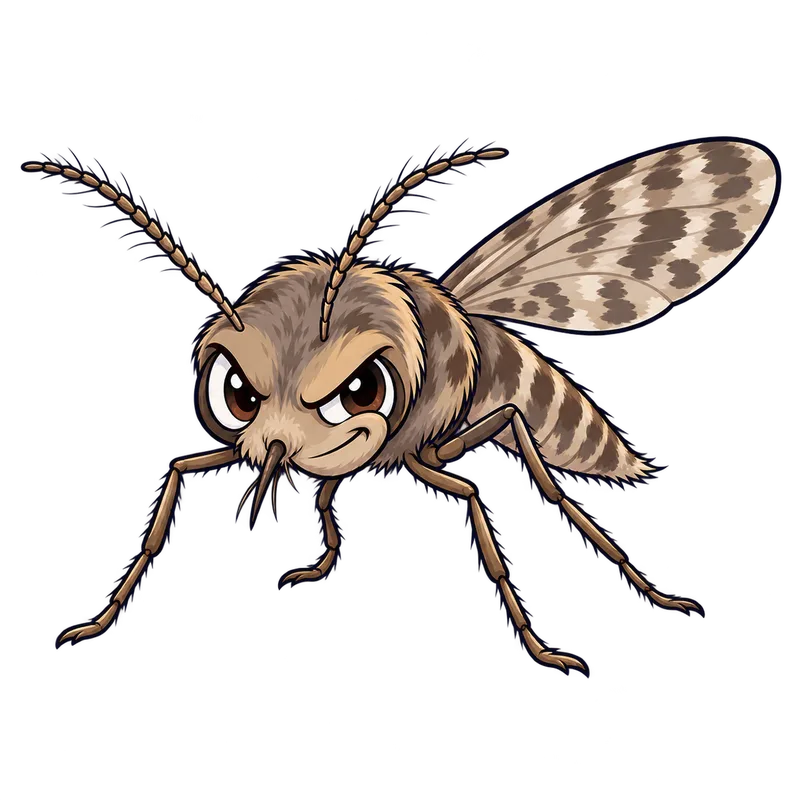
You tell biting midges from non-biting midges by checking their size, wing patterns, and resting posture. Biting midges are microscopic, measuring 1.0 to 3.0 mm with spotted wings held flat over a stocky, humped body. Non-biting midges are usually larger, slender, and have clear wings.
What is actually going on
You are sitting on your porch just as the sun dips below the tree line, enjoying a rare quiet evening. Suddenly, your ankles feel like someone is jabbing them with hot needles. You slap at your skin, expecting to crush a mosquito, but your fingers come away empty. When you look closer, nothing is there except a vague, prickling sensation that turns into angry red welts by morning. Chances are, you have just met a biting midge, better known around the country as a no-see-um or a punkie.
The confusion usually starts because not all midges want to bite you. In fact, most of the tiny flies you see hovering in massive, humming clouds near lakes, rivers, and outdoor porch lights are completely harmless. People often look at a swarm of insects dancing in the evening air and assume every single one is looking for a blood meal. That assumption leads to a lot of wasted worry, and occasionally to misdirected efforts to spray gardens that do not need treating.
To sort them out, you have to look past the general panic and examine the physical traits that separate the biters from the freeloaders. Biting midges belong to a family of tiny flies, while non-biting midges belong to another family entirely. They both belong to the grand order of two-winged insects, but their evolutionary paths split sharply in mouthparts, body shapes, and whether they pose any nuisance to human skin.
The fundamental divide between these two insects lies in their biology and what they need to survive. Biting midges belong to the family Ceratopogonidae, and only the females bite. They need a blood meal rich in protein so their eggs can mature properly. To achieve this, female biting midges use short, blade-like cutting mouthparts to slice into the upper layers of human or animal skin, injecting a bit of saliva that prevents clotting. That foreign protein is what triggers your immune system to form itchy welts hours later.
Non-biting midges belong to the family Chironomidae. Their mouthparts are heavily reduced and practically non-functional, meaning neither males nor females can pierce skin or draw blood. Instead, they spend their brief adult lives sipping nectar or water, or ignoring food entirely. Their larvae, often known as bloodworms due to a respiratory pigment called hemoglobin that helps them survive in low-oxygen mud, live completely underwater or in stagnant sediment. Biting midges, by contrast, prefer damp organic soil, decaying leaves, and salt marsh edges where water is shallow and moist.
People often wonder why these tiny pests seem so persistent around certain homes. The answer usually connects back to local moisture and wind conditions. Biting midges are exceptionally weak fliers. A gentle breeze above a few miles per hour keeps them grounded, which is why they tend to ambush people during calm, humid evenings or overcast mornings near coastal marshes, riverbanks, and damp garden mulch.
How to tell for sure
Size is your first major clue, though it requires getting uncomfortably close. Biting midges are microscopic terrors, measuring anywhere from 1.0 to 3.0 mm, which is roughly the size of a single grain of coarsely ground black pepper. Non-biting midges are usually larger and much more slender, often stretching past a quarter of an inch, making them look a bit more like frail, leggy mosquitoes.
If you happen to catch one resting on a surface, look at its posture and wings. Biting midges usually have a stocky, slightly humped body with broad wings that they hold flat over their abdomen. Those wings often feature faint dark or pale spots if you look under magnification. Non-biting midges, by contrast, have narrow, clear wings and a habit of standing still with their long front legs extended forward and raised slightly off the surface.
Then there is the matter of the headgear and mouthparts. Male non-biting midges sport large, conspicuously bushy, feathery antennae, and neither males nor females possess functional mouthparts for piercing skin. They eat nothing or sip a little water and nectar. Female biting midges, however, possess short, blade-like cutting parts designed to open skin so they can lap up blood for egg maturation. Males of both families have those feathery antennae, so do not assume feathery antennae automatically mean the insect is harmless. Usually, if you are being bitten, the culprit is a female biting midge whose tiny size lets her slip right through standard window fly screens.
What usually comes next
Once you realize you are dealing with biting midges rather than their harmless cousins, the practical choice comes down to how you plan to seal your living space. Standard window screens are designed to keep out house flies and mosquitoes, but they are practically wide-open gates for insects that measure under 3.0 mm. If no-see-ums are making your indoor evenings miserable, your most effective immediate step is replacing or supplementing standard mesh with fine micro-mesh screening on your doors and windows.
If you prefer keeping windows shut during peak dawn and dusk hours, running indoor ceiling fans or portable oscillating fans can drastically reduce their ability to land on you. Biting midges are notoriously weak fliers, and even a mild breeze from a household fan disrupts their flight path and keeps them away from your skin.
When to get help
Most midge bites result in minor irritation and swelling that fade over a few days, but skin reactions can sometimes escalate. If a bite site develops spreading redness, localized warmth, pus, or red streaks extending away from the wound, you should consult a qualified clinician or urgent care clinic to check for a secondary bacterial infection. Seek immediate emergency medical evaluation if you experience systemic allergic reactions such as facial swelling, dizziness, hives, or difficulty breathing after insect exposure.
When midge populations are tied to complex structural breeding sources, such as broken subterranean drainage systems, chronically flooded crawl spaces, or failing septic overflows near the house, bringing in a licensed pest management professional is the right path. A professional can properly locate hidden larval habitats and apply treatments safely without risking non-target wildlife or violating local pesticide regulations.