
Can biting midges enter a house?
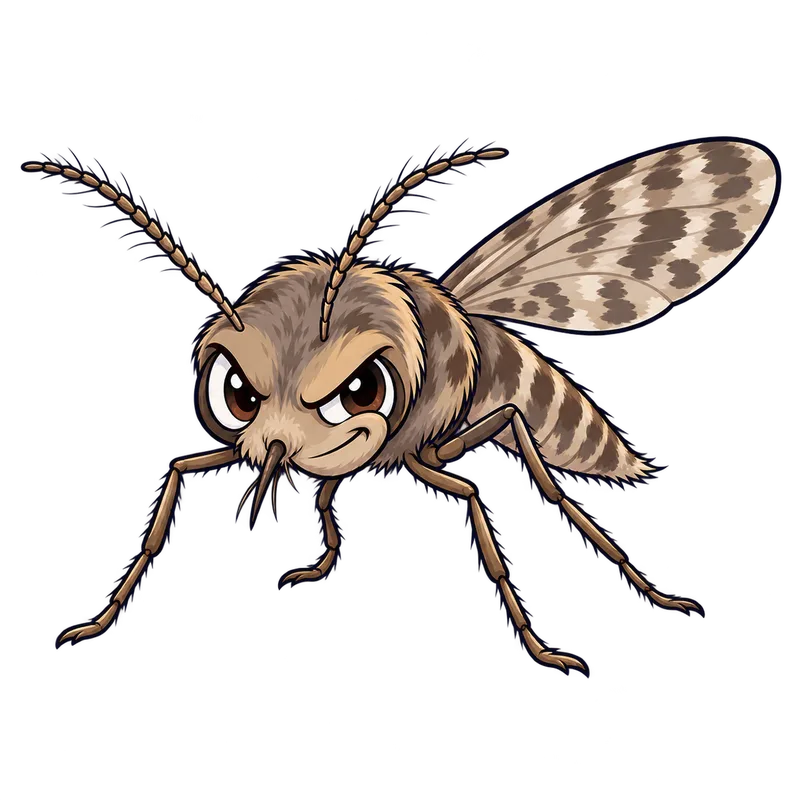
Yes, biting midges can easily enter a house because adults measure between zero point eight and three millimeters in size. This minute scale allows them to slip right through standard window screens. Entry also depends on weather conditions, as high humidity and calm wind encourage them to fly indoors.
What is actually going on
You are sitting indoors on a warm summer evening, reading a book by the living room lamp. The windows are shut, and the window screens look completely intact. Yet the next morning, your ankles and arms are covered in tiny, intensely itchy red welts. It feels like magic, or perhaps a ghost. How did something bite you inside a closed house?
The short answer is yes, biting midges can easily enter a house. Also known as no-see-ums, punkies, or tiny coastal sand flies, these creatures are among the smallest blood-feeding insects on earth. Adult biting midges typically measure between zero point eight and three millimeters, which translates to roughly one-thirty-second to one-eighth of an inch. That minute size changes everything about how your home interacts with the outside world.
Standard window and door screens use what builders call sixteen-mesh or eighteen-mesh screening. That means there are sixteen or eighteen strands woven across every single inch, leaving little square holes that easily block common house flies, blow flies, and mosquitoes. Think of a standard screen like a tennis net or a chain-link fence. It stops larger objects without a second thought.
Biting midges, however, are smaller than the gaps in that mesh. An adult midge can simply fly or crawl right through the openings of a closed screen window without touching the sides, much like fine sand slipping through a coarse garden sieve. Once inside your home, they are drawn to you by your body heat, your breath, and the carbon dioxide you exhale. They are also pulled indoors by positive phototaxis, which is the technical way of saying they love the glow of your reading lamps, television screens, and overhead lights.
Biting midges do not breed inside your house. Their larvae require saturated outdoor substrates rich in organic matter, such as estuarine mud, salt marshes, stream margins, wet leaf litter, or livestock waste lagoons. When you find them indoors, you are dealing with opportunistic structural invasion rather than an established indoor population. They hatch outside, fly toward your porch lights, and slip right through your window screens.
Weather conditions also play a huge role in how many of them manage to get inside. High humidity and calm wind conditions maximize adult flight activity, while wind speeds above five miles per hour usually suppress their flight entirely. If a warm, still evening settles over your neighborhood, you are far more likely to find them wandering around your living room than on a breezy afternoon.
How to tell for sure
If you are finding tiny biting insects indoors, you usually want to confirm what you are dealing with before you start altering your home. True biting midges are so small you will usually feel them long before you see them. Their bites bring a sharp, burning sensation followed by persistent red papules that tend to itch for days.
People often confuse these tiny flies with other indoor insects that do not bite at all. If you see small, moth-like flies hovering near bathroom drains or kitchen sinks, those are usually drain flies. They breed in the organic scum inside your plumbing, but they do not feed on blood and they cannot bite you. Similarly, if you notice tiny, mosquito-like gnats hovering around the soil of overwatered houseplants, those are usually fungus gnats. They are a mild nuisance, but they are entirely harmless to your skin.
Another common point of confusion involves the term sand fly. In Australia and parts of the coastal United Kingdom, people use sand fly as an informal name for biting midges. In medical parasitology, however, true sand flies belong to a completely different family called Psychodidae. These true sand flies are delicate, hairy, yellowish-brown flies that hold their wings in a distinct V-shape over their backs, and they are known to transmit serious illnesses in tropical and subtropical regions. In most of North America and Europe, the tiny pests slipping through your screens are true biting midges rather than disease-carrying sand flies, but their painful, itchy bites remain a universal annoyance.
What usually comes next
Once you realize that standard window screens are essentially open doors for midges, the most practical decision you face is how to upgrade your physical exclusion methods. Patching a hole or spraying indoor aerosols will not stop them if the screen mesh itself is the wrong size for the job.
You can replace your standard window and door screening with specialty fine mesh, often sold as no-see-um netting. This tighter weave features smaller apertures that physically block the insects from passing through while still allowing fresh air into your home. If replacing every screen in the house feels like too much work at once, you can focus on the rooms where you spend the most time in the evening, such as the bedroom or the home office.
Beyond upgrading the mesh, you can exploit a major weakness in the biology of biting midges. They are remarkably weak fliers. To an insect that weighs less than a single milligram, the gentle breeze from an ordinary indoor ceiling fan or a portable floor fan feels like a powerful gale. Running a fan in your living space creates turbulent air currents that make it physically impossible for these tiny flies to navigate or land on your skin. Turning on a fan is usually the fastest, most effective way to reclaim a room without reaching for chemicals.
When to get help
Most midge encounters require nothing more than basic home adjustments and some topical anti-itch cream. However, there are times when you need to step back and call in outside help.
If you or someone in your household experiences severe local swelling, dizziness, or widespread systemic allergic reactions from insect bites, do not try to treat it at home. Seek immediate care from a physician, an urgent care clinic, or your local poison control center. The same rule applies if a bite develops spreading redness, red streaks, pus, or extreme pain, as relentless scratching can introduce bacteria and lead to a secondary skin infection that requires professional medical treatment.
On the property side, if midge pressure around your home remains overwhelming despite your best efforts with fine mesh screens and fans, you may want to consult a licensed pest management professional. Local pest control technicians can inspect your home envelope for structural gaps, evaluate nearby outdoor breeding sites like damp mulch or poorly draining soil, and apply registered residual barrier treatments safely around exterior window frames and door casings in full compliance with local pesticide laws.