
Are no-see-ums common in Florida?
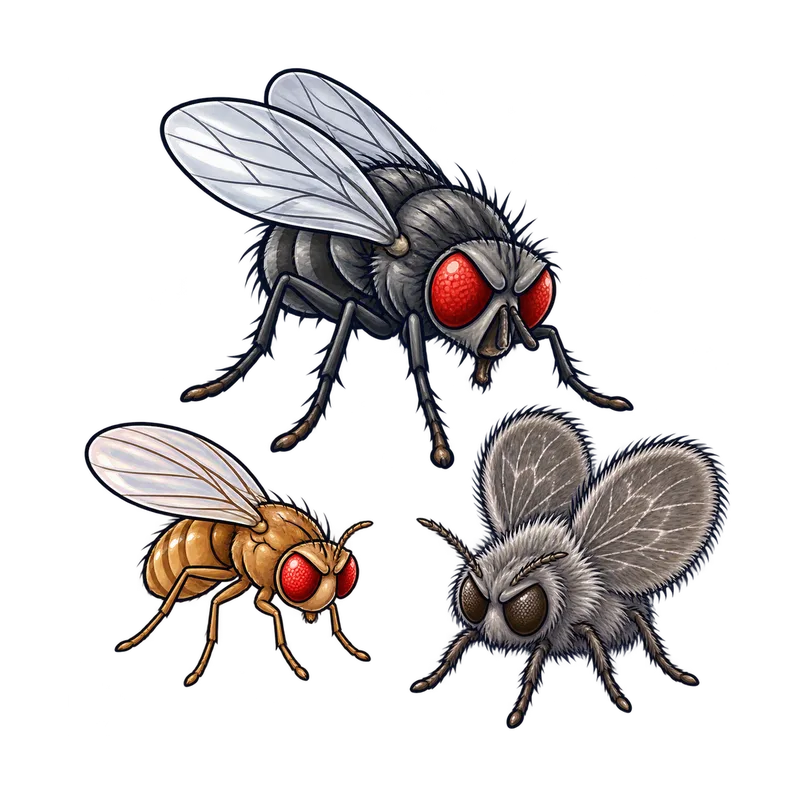
Yes, no-see-ums are extraordinarily common in Florida, especially if you live near the coast, salt marshes, mangrove swamps, or damp inland waterways. These tiny biting midges measure between 0.8 and 3.0 mm in length and share yards with residents year-round.
What is actually going on
You are sitting on a screened lanai in Florida just as the sun dips below the horizon, holding a cold glass of sweet tea and enjoying the sudden evening breeze. Within minutes, you feel a dozen sharp, needle-like pricks along your ankles and forearms. You look down, expecting a mosquito, but you see nothing in the air at all. Yet the burning sensation intensifies, and by tomorrow morning, those spots will turn into stubborn, fiery welts.
Yes, no-see-ums are extraordinarily common in Florida. If you live near the coast, salt marshes, mangrove swamps, or damp inland waterways, you share your yard with them year-round. These tiny pests are actually biting midges. Because they measure anywhere from 0.8 to 3.0 mm in length, they easily live up to their folklore name.
To understand why they are such a fixture in the Sunshine State, you only have to look at the geography. Florida offers an endless expanse of high humidity, subtropical warmth, and intertidal wetlands. Female biting midges need saturated organic soil, mudflats, and damp detritus to lay their eggs. Their semi-aquatic larvae thrive in these moist environments, which means coastal developments and lake communities sit right on top of prime breeding grounds.
There is also a common belief that these bugs only come out when you visit the beach, but that overlooks their adaptability. While coastal species synchronized with tidal cycles dominate the headlines, inland populations do just fine around creek margins, pasture seeps, and damp leaf mold. If you have damp soil and calm air, you have a habitat that can support them.
How to tell for sure
People often blame mosquitoes for every outdoor bite, but no-see-ums leave a distinct calling card. When a swarm lands on exposed skin, it usually looks like someone sprinkled a light dusting of freshly cracked black pepper. Because they are so minuscule, you will usually feel the damage long before you spot the culprit.
The physical mechanics of their bite explain why it hurts so much more than a typical mosquito puncture. Mosquitoes use a long, slender tube to tap directly into a blood vessel, which is a relatively stealthy operation. No-see-ums possess short, blade-like mouthparts that lacerate the skin surface to create a tiny pool of blood. Combined with their saliva, this tissue destruction causes a sharp, burning pain followed by delayed, intensely itchy welts that can last for days.
You can usually separate biting midges from other tiny household invaders by paying attention to where they hang out and how they behave. Fungus gnats hover lazily around your potted houseplants and do not bite at all. Drain flies cluster near sink scum in the bathroom. True sand flies are larger, whereas local biting midges are purely an aggressive nuisance.
If you are trying to catch one in the act, check your windows at night. No-see-ums are strongly attracted to exterior house lights and indoor lamps. If you see tiny, stocky dark flies with arched thoraxes crawling right through your standard window mesh, you are usually dealing with midges.
What usually comes next
When faced with an onslaught of invisible biters, most homeowners make the mistake of running to the hardware store for general insect sprays. They often try to treat the nearby salt marsh or damp yard soil with chemicals, but that approach usually fails. Treating vast, semi-aquatic larval habitats like mangrove swamps is ecologically impractical and legally restricted.
Instead of chasing the breeding grounds, your most effective practical decision is to focus on physical exclusion and environmental manipulation right around your living space. Standard window and patio screening usually features a 16x18 mesh, which leaves gaps large enough for a 1.0 mm midge to walk right through. Retrofitting your porch with fine 20x20 mesh no-see-um screening changes the math entirely by blocking them at the boundary.
If rescreening a whole patio feels like a massive leap, look at how you manage air movement. Biting midges are exceptionally weak fliers. They cannot navigate against a breeze stronger than 3 to 5 miles per hour. Installing an overhead ceiling fan on your porch or placing a high-velocity floor fan near your seating area creates a barrier of artificial wind that physically stops them from landing.
When you step away from the house into the yard during calm dawn, dusk, or overcast periods, wearing lightweight long sleeves and applying a registered repellent gives you personal cover. Choosing to upgrade your physical barriers and manage wind currents protects your space without requiring impossible yard treatments.
When to get help
While most bites resolve with standard self-care and patience, the intense itching often leads people to scratch the skin raw. Breaking the skin barrier introduces a real risk of secondary bacterial infections, such as impetiginized abrasions or cellulitis. If your bite sites develop spreading redness, warmth, increasing pain, or pus, you should consult a primary care clinician, urgent care facility, or poison control center for proper medical evaluation.
Pets and livestock also suffer from these insects. Horses living near coastal or damp pastures frequently develop severe allergic dermatitis triggered by midge saliva. If an animal exhibits continuous rubbing, raw skin, hair loss, and severe distress, a licensed veterinarian needs to examine the animal and manage the allergic response.
When midge pressure around a home is severe enough to require extensive exterior perimeter treatments, property owners should call a licensed pest control operator. Trying to apply barrier sprays to exterior walls, eaves, and shaded resting vegetation requires specialized equipment and careful execution. A professional applicator knows how to apply residual products safely while keeping the spray away from flowering plants and blooming shrubs to protect foraging honeybees and other non-target pollinators.