
How do you reduce no-see-ums in a house?
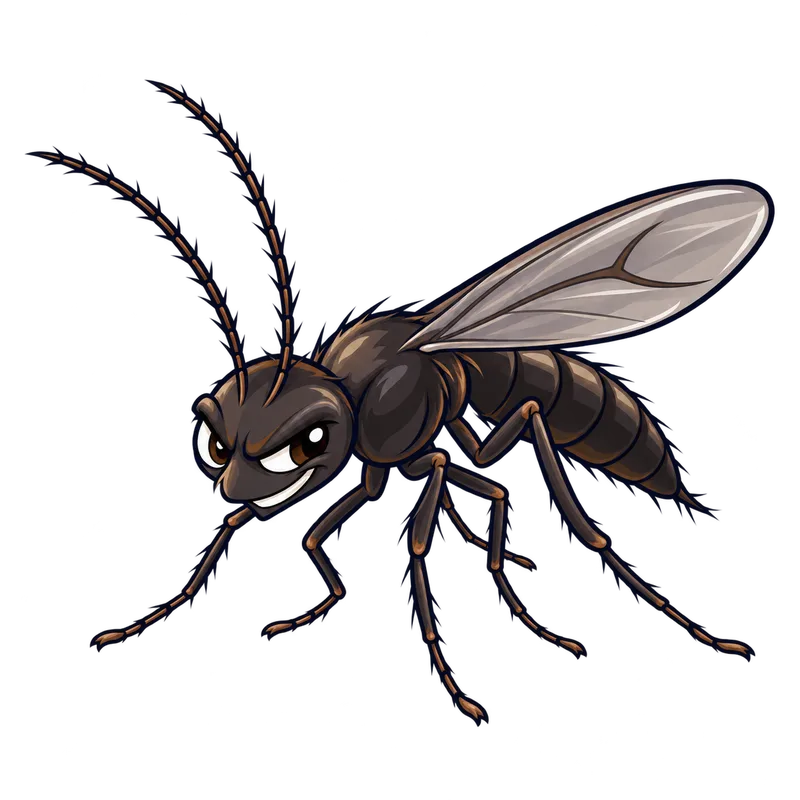
To reduce no-see-ums in a house, upgrade your standard window screens to specialized fine mesh netting and seal structural gaps around window frames with silicone caulk. Because these fragile biting midges measure just one to three millimeters long and slip through ordinary screens, you can also use indoor air currents from fans and turn off unnecessary porch lights.
What is actually going on
You are sitting on the porch as the sun dips below the trees, enjoying the quiet of the evening. Suddenly, it feels as though someone is flicking tiny grains of black pepper onto your skin, followed by a sharp, persistent prickling sensation. You brush your arm, expecting a mosquito, but you find nothing except a red welt starting to form. When you lean closer to the window, you spot tiny, pinprick specks crawling right through the wire mesh of your screen as if it were an open gate.
Reducing no-see-ums in a house comes down to understanding that standard household defenses simply do not apply to insects measuring just one to three millimeters. Because biting midges easily slip through ordinary window screens, physical exclusion requires upgrading to fine-mesh netting. At the same time, because their bodies are exceptionally fragile and their flight muscles are weak, creating indoor air currents with ceiling or floor fans provides an effective invisible barrier against them.
Beyond keeping them out of open windows, you have to manage what draws them to the house in the first place. These tiny biters are strongly phototactic, meaning outdoor porch lights act like a beacon pulling them from distant damp soil and marshlands straight to your exterior walls. Turning off unnecessary lighting or switching to yellow bug bulbs reduces that nocturnal pull. When individuals do manage to slip inside, labeled pyrethrin space sprays can knock them down quickly, though you still need to seal up structural gaps around window frames and doors to stop the steady stream of replacements.
People often assume any tiny flying insect indoors is a fruit fly or a fungus gnat, but no-see-ums belong to a different family entirely. True to their name, these biting midges are usually microscopic specks that measure roughly one-thirty-second to one-sixteenth of an inch long. Unlike fungus gnats that hover sluggishly around potted plants or fruit flies that swarm lazily over the kitchen counter, no-see-ums are aggressive blood-feeders. Only the females bite, requiring that protein meal to mature their eggs, while the males feed strictly on plant nectar and pollen outdoors.
When you try to track down how they are getting in, you usually find they are not sneaking past an open door at all. Instead, they walk or fly right through the standard eighteen-mesh screening found on most residential windows. If your screens have a visible grid you can see across the room without squinting, the openings are generally too wide to stop them.
You also have to look at where your home sits. If you live near coastal salt marshes, tidal flats, riverbanks, or damp woodland soils, you are usually dealing with massive natural breeding grounds that stretch for acres. Unlike container-breeding mosquitoes that you can stop by emptying a bucket in the yard, biting midge larvae develop in saturated organic mud that a homeowner cannot drain or treat. That means your identification effort should focus less on finding a backyard puddle and more on recognizing that your house is simply located in a heavy midge zone, shifting your entire strategy toward tight exclusion.
How to tell for sure
When you realize that standard screens and yard cleanups will not solve the problem, you have to decide whether to invest time and materials into a physical barrier upgrade or rely purely on active management like fans and lighting changes. If you live in an area where these biting midges are a seasonal staple, the most practical decision is to replace your standard window and door screens with specialized fine-mesh netting, often sold specifically as no-see-um screening.
You might wonder why you should bother rescreening the whole house if you can just run fans and spray indoor aerosols. The catch is that fans and space sprays are temporary workarounds. An indoor aerosol knockdown clears the air for the evening, but it leaves your doors and windows wide open for new arrivals tomorrow. Similarly, ceiling fans protect the immediate room you are sitting in, but they do nothing for the rest of the house.
Upgrading your screens requires a bit of patience and some hardware store supplies, but it creates a permanent line of defense that stops the insects before they ever touch your living space. Pair that physical upgrade with a tube of silicone caulk to seal tiny gaps around your window frames and door trim, and you eliminate the secondary entry points they use once they realize the screens are blocking them. It takes upfront effort, but it generally saves you weeks of chasing invisible bites with temporary fixes.
What usually comes next
There are moments when household adjustments are not enough, and you need to hand the problem over to someone else. If outdoor perimeter swarms are overwhelming your living spaces, or if treating exterior walls requires specialized power equipment and microencapsulated barrier formulations, you should call a licensed pest management professional. Commercial applicators have the gear to treat exterior resting surfaces safely without risking runoff into storm drains or nearby waterways.
When to get help
Medical help is necessary when reactions go beyond ordinary irritation. Biting midge bites cause a painful burning sensation, localized swelling, and intense itching that can linger for days. Scratching those welts frequently breaks the skin and introduces bacteria, leading to secondary bacterial infections. If you experience severe swelling, weeping lesions, or signs of an infection, stop trying home remedies and visit a qualified clinician or an urgent care facility. Never try to diagnose a pest species or a medical condition based entirely on a skin mark.
Finally, keep safety rules in mind if you decide to use chemical controls around the property. Always read and follow the pesticide product label, as it is a legal document that dictates where and how a product can be applied. Never spray pyrethroid treatments on flowering plants where bees and other pollinators forage, and keep pets away from treated surfaces until all liquid sprays have completely dried. If your home sits directly adjacent to protected wetlands or tidal zones, check with local environmental agencies before applying any outdoor barrier treatments to ensure you stay within regional conservation rules.