
How do you get rid of drain fly larvae?
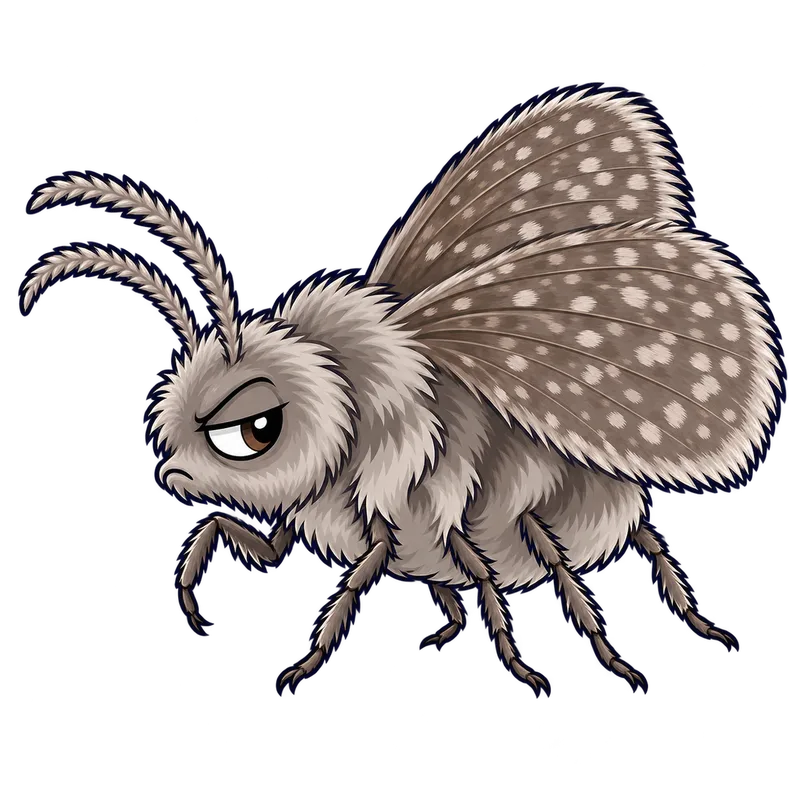
To get rid of drain fly larvae, you must physically scrub away the stubborn slime layer inside your plumbing using a stiff-bristled brush. Boiling water and bleach fail because liquids simply slide past that protective organic film. After mechanical scrubbing, you can follow up with microbial or enzymatic drain cleaners to digest any remaining residue.
What is actually going on
You walk into the downstairs half-bath on a quiet Tuesday morning, turn on the sink, and notice a handful of fuzzy, moth-like little insects sitting lazily on the tile wall above the basin. They do not dart away like houseflies or buzz aggressively past your ear. They just hop in a clumsy, hesitant sort of way if you wave a hand near them. You probably saw a few of the same specks near the kitchen floor drain last week, and you are wondering how they managed to move in.
Getting rid of drain fly larvae is not a matter of dumping a pot of boiling water down the pipe or splashing in a cup of chlorine bleach and hoping for the best. Those old tricks fail because the larvae live embedded inside a stubborn, gelatinous slime layer coating the inside of your plumbing. Think of that organic film as a heavy rubber raincoat, and you will understand why liquids poured from above simply slide right past it. The larvae stay snug and dry beneath that barrier, chewing away on microscopic fungi and bacteria while you think you are cleaning the drain.
If you want the larvae gone, you have to break up their shelter first. That means reaching down inside the pipe with a stiff-bristled brush to physically scrub away the slime where they breed and feed. Once you strip away that protective layer, you can follow up with treatments that starve and finish off whatever microscopic leftovers remain in the plumbing.
Drain flies start as tiny eggs deposited directly into the moist, organic film that accumulates inside drainage pipes, floor drains, and sewage systems. Within two days, those eggs hatch into semi-aquatic larvae that lack legs but possess a specialized breathing tube at their tail end. This breathing tube allows them to stick out of the thick slime matrix and draw in oxygen from the air while remaining completely submerged in organic filth.
Because this slime layer acts like an insulating barrier, ordinary chemical liquids poured down the drain fail to reach the pests. Hot water cools down too quickly as it passes over the surface, and liquid bleach flows right past the hydrophobic organic film without dissolving it. Contact insecticides wash away immediately into wastewater systems without providing any real residual control. The larvae continue to feed on bacteria, algae, and fungi inside the biofilm undisturbed until they complete their growth cycle and emerge as adult flies.
How to tell for sure
Before you start scrubbing pipes, you need to make sure you are actually dealing with drain flies and not some other tiny winged nuisance that wandered in from elsewhere. True drain flies usually feature short, fuzzy bodies covered in tiny hairs and distinct, rounded wings that fold back like a peaked roof over their backs. They rarely fly far or fast, which explains why you usually find them resting on walls, shower curtains, or mirrors within a few feet of a plumbing fixture.
You can confirm which specific drain is hosting them by running a simple diagnostic test before bed. Take a strip of clear packing tape and place it sticky-side down right across the drain opening, leaving just a small gap at the edge so air can still move freely up the pipe. Leave the tape in place overnight. If adult flies emerge from that drain the next morning, they will get stuck to the underside of the tape like cars at a tiny tollbooth. If the tape comes up clean after twenty-four hours, that particular drain is usually innocent, and you need to look elsewhere.
Do not confuse these pests with fruit flies or fungus gnats. Fruit flies sport bright red or dark eyes and hover around rotting produce on the counter, while fungus gnats have long, slender legs and hang out near the damp soil of your houseplants. Phorid flies look a bit darker and feature a distinct humpbacked thorax, scurrying across surfaces in a rapid, jerky run rather than taking flight. If your sticky tape test catches fuzzy, moth-like bodies over a floor drain or sink, you have found your culprit.
What usually comes next
Once you identify the active drain, your main decision comes down to choosing between a thorough physical cleanup and wasting your Saturday afternoon on shortcuts. If you skip the physical scrubbing and rely only on chemical pours, the infestation bounces right back in a week or two. You need a long, flexible pipe brush pushed down into that drain and worked up and down against the interior walls to mechanically detach the slimy buildup and any larvae clinging to it.
After you break up and scrape away that gunk, pour a large volume of hot water down the line to flush the debris straight into the municipal sewer. With the plumbing walls now scraped clean, your next step usually involves applying a microbial or enzymatic drain cleaner late at night when no one else is going to run the taps. These biological cleaners contain safe, spore-forming bacteria that cling to the remaining microscopic film and slowly digest it over several days, cutting off the food supply for any surviving hatchlings.
If your drains are completely clean and you still see flies, you might be dealing with a dry water trap in an unused guest bathroom or basement floor sink. When the standing water in that U-shaped pipe evaporates, it removes the liquid seal that normally blocks insects from traveling up from the main sewer lines. Running the tap for thirty seconds to refill that trap usually solves the problem.
When to get help
There are moments when standard home plumbing maintenance hits a wall, literally. If you scrub your pipes, use enzymatic cleaners, and keep your water seals primed, but drain flies keep emerging from cracks in a concrete basement floor or along expansion joints, stop what you are doing. That stubborn pattern usually points to a broken or cracked sewer pipe sitting underneath your concrete slab foundation, allowing raw sewage to leak directly into the sub-slab soil where flies breed out of reach. Fixing that requires a licensed plumber with specialized camera equipment to dig down, repair the pipe, and remove the contaminated earth.
You should also consider involving a professional pest management company if you manage a commercial facility, a restaurant kitchen, or a large multi-unit building where structural voids and heavy grease loads make DIY efforts ineffective. On the health side, remember that while drain flies do not bite, their disintegrating body parts and fine wing hairs can drift into indoor air and trigger allergic reactions or asthma symptoms in sensitive people, especially when large populations die off at once. If anyone in your household experiences persistent respiratory distress or severe allergic symptoms, consult a clinician right away.