
What do fruit fly eggs look like?
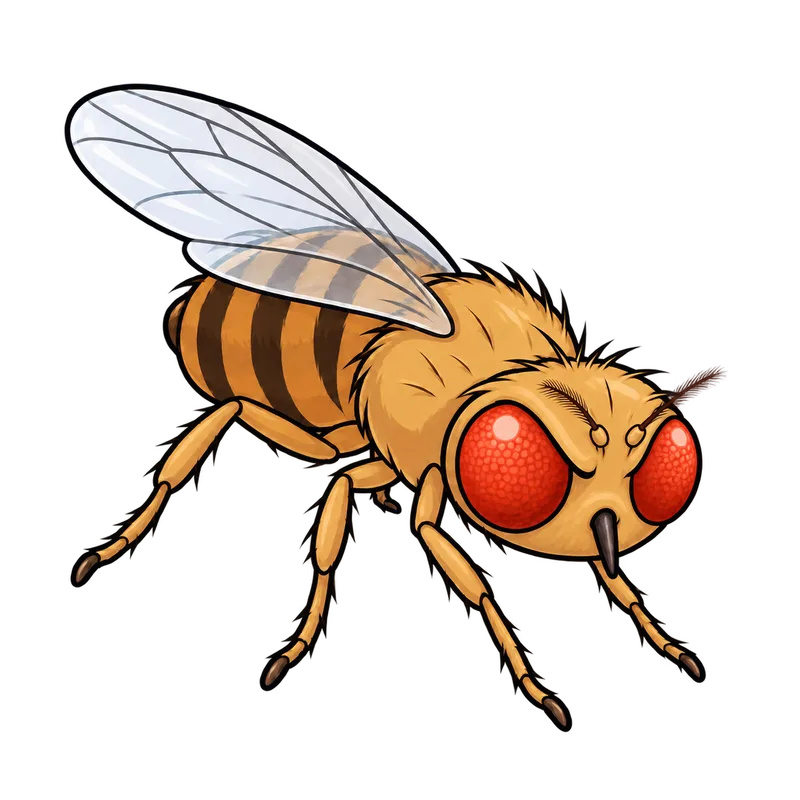
Fruit fly eggs are microscopic, glossy, and translucent to milky-white objects measuring under 0.6 mm in length. They feature two to four thread-like respiratory filaments at one end that act as breathing tubes. Because they are smaller than a single grain of salt, you usually only spot these tiny white filaments protruding from punctured fruit skin or wet surfaces.
What is actually going on
You stand in the kitchen, turning a pint of glossy blackberries over in your hand. One berry has a tiny wet spot, and sticking out of it are two microscopic white threads that look like the finest bits of lint. You grab a magnifying glass, wondering if it is mold or some kind of stray fuzz. It is neither. You are looking at the breathing tubes of a fruit fly egg.
Fruit fly eggs are microscopic, glossy, and translucent to milky-white. They measure under 0.6 mm in length, which translates to less than 1/32 of an inch. If you want a mental picture, think of something smaller than a single grain of table salt or the period at the end of a printed sentence. Because they are so tiny, you cannot resolve their actual shape with the naked eye. You only notice the evidence they leave behind.
Every single one of these eggs comes equipped with two to four thread-like respiratory filaments at one end. You can picture these appendages as tiny microscopic snorkels. When a female fruit fly lays her eggs in fermenting liquids, sticky drain scum, or directly beneath the skin of a ripening fruit, these breathing tubes stay exposed to the air. They allow oxygen to reach the developing embryo so it does not suffocate in the wet pulp.
Common vinegar flies, the kind that hover around your wine glass or overripe bananas on the counter, simply drop their eggs onto the surface of decaying organic matter or liquid spills. They cannot break into a sound, uninjured piece of fruit. But their invasive cousin, the Spotted Wing Drosophila, carries a saw-like egg-laying organ. That specialized tool lets her slice right through the tough skin of an intact, firm berry on the vine or in the carton, hiding the main body of the egg inside while those little white breathing tubes poke out into the open air.
How to tell for sure
Trying to identify fruit fly eggs with the naked eye is usually a fool's errand. Without magnification, you are mostly guessing based on context. If you see tiny yellowish or brownish specks on a banana peel, those are usually insect fecal spots or fungal lesions, not eggs. Real fruit fly eggs are pearly or translucent white.
To see them clearly, you generally need a 10x or 15x hand lens and a bright direct light. Under that magnification, you are not usually looking at the smooth egg body itself, but rather at those fine white thread-like filaments sticking out of a pin-prick puncture on fruit skin or poking through the film of a sticky kitchen drain.
You also have to remember that not every tiny fly or small maggot in your house belongs to a standard fruit fly. Phorid flies drop their eggs into grease traps and rotting meat scraps, and you can spot them by their humpbacked thorax and fast, scuttling walk across the counter. Drain flies leave masses of eggs in gelatinous pipe sludge. If you find maggots inside completely sound, firm market berries, those are usually the work of the Spotted Wing Drosophila rather than the common kitchen vinegar fly that waits for fruit to rot.
Definitive species identification from an egg or an early-stage larva is practically impossible for a homeowner. Entomologists require laboratory molecular tests or need to rear the specimen until it reaches adulthood to tell certain closely related flies apart. For everyday purposes, finding those tiny breathing tubes protruding from a puncture mark is enough to tell you what family of insect visited your produce.
What usually comes next
Once you realize that fruit fly eggs are present in a bowl of fruit or a kitchen trash can, your immediate decision centers on whether to salvage the food or discard it entirely. Because those tiny eggs hatch into hungry larvae in as little as 12 to 72 hours in warm indoor conditions, waiting even a single day means the problem multiplies rapidly.
If you spot punctures and breathing tubes on soft berries or overripe peaches, the practical choice is to toss the infested produce into an outdoor bin immediately. Trying to cut around the soft spots or washing the fruit does not remove microscopic eggs or the tiny maggots that have already started tunneling inside.
To keep the cycle from repeating, your next step is breaking their breeding routine rather than hunting down individual eggs. Standard kitchen vinegar flies need moisture and fermenting sugars to lay their next batch. Scrubbing out the organic slime inside your sink drain with a stiff brush and getting rid of that old onion rolling around at the bottom of the pantry stops future females from finding a suitable nursery.
When to get help
Fruit flies do not bite, and they do not cause direct physical wounds to humans or pets. However, because adults spend their time walking over garbage, drains, and rotting matter, they can mechanically pick up and transfer unwanted bacteria like E. coli and salmonella to clean food and kitchen counters.
If you or someone in your household accidentally consumes food heavily infested with fruit fly eggs or larvae, it can sometimes cause temporary gastrointestinal upset, diarrhea, or accidental myiasis, which is the infestation of tissue by fly larvae. Anyone experiencing persistent digestive illness, severe symptoms, or allergic reactions after eating questionable food should consult a qualified clinician, urgent care facility, or regional poison control center right away.
In commercial settings, finding persistent fruit fly activity usually points to hidden sanitation failures, structural plumbing leaks, or broken drain pipes that require professional pest control intervention. For commercial fruit and berry growers, an infestation of Spotted Wing Drosophila can wipe out an entire harvest, meaning growers need to coordinate with licensed applicators to manage integrated pest control programs properly.