
Why are big black flies suddenly appearing in the house?
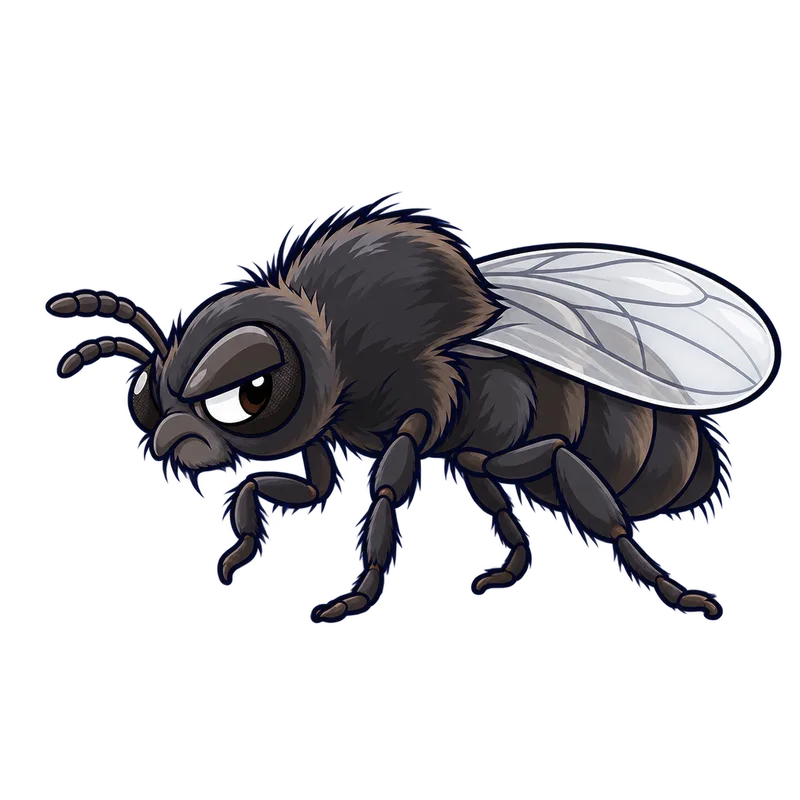
Big black flies suddenly appearing in the house are usually cluster flies waking up from a winter nap inside your walls, or blow flies hatching from a dead animal nearby. The reason they appear depends on whether they are sluggish cluster flies measuring eight to twelve millimeters with golden hairs, or fast metallic blow flies.
What is actually going on
You walk into the living room on a chilly Tuesday in February, and there they are. Half a dozen sluggish, oversized black flies are lazily stumbling across your south-facing window pane, as if they forgot what season it is. It is an odd moment, especially since you have not left a door open or brought home any rotting food.
The short answer is that these large, dark flies are usually cluster flies waking up from a winter nap inside your walls, or they are blow flies hatching out after something small died nearby. They did not just fly in from the summer garden, and they certainly are not interested in your kitchen trash.
Most of the time, the culprits are cluster flies that crawled behind your siding back in September. They spent the autumn looking for a dry, dark place to spend the cold months, packing themselves tight into your attic or wall voids. When a bright winter sun warms up the outside of your house, or when your heater pushes a little extra warmth into the framing, those sleeping flies wake up early. Confused by the sudden heat, they mistake the inside of your living room for the great outdoors and come crawling out through every little gap around your baseboards or light fixtures.
If your sudden visitors are not sluggish and sleepy, but instead loud, fast, and shiny with metallic blue or green bodies, you are looking at a different story entirely. Those are usually carrion flies, meaning a mouse, squirrel, or bird has passed away inside a chimney, drop ceiling, or wall cavity. Female flies caught the scent through a tiny crack, laid eggs, and about one to three weeks later, a whole new generation of flies hatched all at once.
How to tell for sure
Telling them apart usually comes down to a quick look at how they move and what they look like up close. Cluster flies are usually about eight to twelve millimeters long, with a dark gray, non-metallic body and a checkered belly. If you look closely, usually under a magnifying glass, you will see tiny, crinkled golden-yellow hairs on their backs, almost like a dusty velvet coat. When they are stuck on their backs on a window sill, they tend to spin around in circles like a wind-up toy. House flies are smaller, grey with four dark stripes on the back, and much faster.
Metallic blow flies and bottle flies show off shiny blue or green armor, and they announce themselves with a loud, low-pitched buzz that you cannot miss. Flesh flies run a bit bigger, spanning ten to sixteen millimeters, wearing a dull gray coat with three dark stripes on the back and a checkered belly that sometimes flashes a reddish tip. Stable flies might look like standard house flies at a glance, but they sit at a tilted angle and carry a stiff, pointed snout poking right out from under the head for a sharp bite.
What usually comes next
Your first instinct might be to grab a bug spray and empty an entire aerosol can into the attic or behind the drywall, but that usually backfires. Spraying chemicals into a closed wall void to kill hundreds of dormant insects leaves you with a massive pile of rotting protein. That hidden mountain of dead bugs will soon draw in secondary scavengers like larder beetles and carpet beetles, which will gladly chew through your wool sweaters and pantry goods once the flies are gone.
Instead of waging war inside your walls, your best tool is a simple vacuum cleaner attachment to scoop up the sluggish flies as they gather on the warm glass, followed by careful sealing once spring finally takes hold. That means filling exterior gaps with silicone caulk, patching torn window screens, and installing tight door sweeps. Bear in mind that outdoor preventive treatments, such as spraying your lawn with insecticides, usually accomplish nothing against cluster flies because their larvae grow deep in the soil inside earthworms, completely out of reach of surface sprays.
When to get help
Most of the time, dealing with a handful of winter attic flies is just an annoying household chore rather than a true emergency. Even so, you should call a licensed pest control professional if the job calls for upper-story exterior sealing that requires a ladder or scaffolding, or if you need specialized equipment to safely dust sealed wall voids with professional drying powders.
If your sudden swarm turns out to be metallic blow flies feasting on a dead animal tucked deep inside an inaccessible HVAC duct, chimney, or structural void where you cannot reach it, a pro can track down the source. Should you suspect the animal behind the drywall was a bat or another protected creature, local laws often restrict how you handle it, meaning you will need to contact a regional wildlife agency or a licensed nuisance wildlife control operator.