
What repels deer flies?
Deer flies are repelled by applying EPA-registered topical repellents containing DEET, Picaridin, Oil of Lemon Eucalyptus, or IR3535 directly to your exposed skin. Protection also depends on wearing loose-fitting, light-colored clothing treated with permethrin. A DEET concentration between 10% and 30% typically provides 2 to 8 hours of protection.
What is actually going on
You step off the shaded woodland trail into a sunny clearing, expecting a peaceful afternoon hike, and within seconds you are ambushed by small, darting flies that leave sharp, throbbing welts on your neck. You are probably wondering what repels deer flies, especially when standard bug sprays seem to do very little to stop them. Personal protection against deer flies relies on applying Environmental Protection Agency-registered topical repellents containing DEET, Picaridin, Oil of Lemon Eucalyptus, or IR3535 directly to your exposed skin. These active ingredients disrupt the sensory mechanisms the flies use to home in on hosts. But skin repellents are only half the battle. Because deer flies are daytime hunters that rely heavily on sight, you also need to think about your clothing. Wearing loose-fitting, light-colored garments treated with permethrin provides an extra layer of defense that skin applications alone cannot match.
You might wonder why you cannot just spray your yard or treat the standing water nearby to wipe them out at the source. The problem is that deer fly larvae develop across vast, damp natural habitats like marshes, creek margins, and wet forest soils. Treating these expansive areas is practically impossible and ecologically unfeasible. Furthermore, because female deer flies feed using a rapid stabbing and lapping motion, they spend very little time sitting on a host, meaning that poisoning them while they bite is not how personal defense works.
How to tell for sure
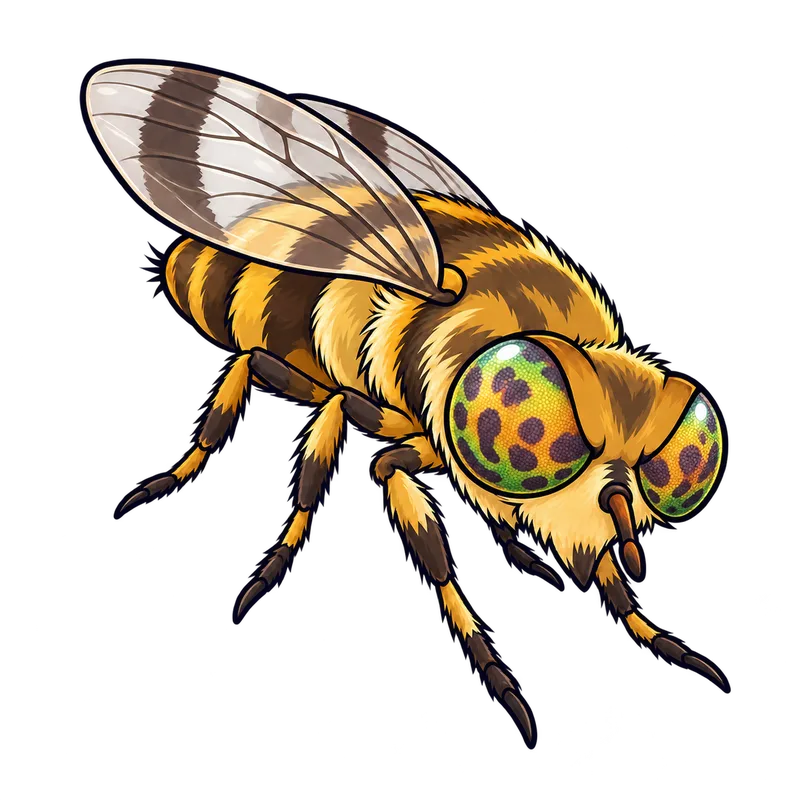
Before you can choose the right defense, you need to make sure you are actually dealing with deer flies rather than mosquitoes, stable flies, or larger horse flies. Adult deer flies usually measure about 6 to 12 mm, or roughly one-quarter to one-half of an inch in length, which makes them noticeably smaller than their bulkier horse fly relatives. Look closely at their wings and eyes if you get a clear view. Deer flies usually feature dark patches or banded patterns across transparent wings, resembling tiny stained-glass windows, while house flies have plain, clear wings. Their eyes are often brilliantly colored with iridescent spots or bands of green and purple.
You usually encounter them on warm, sunny days in late spring and early summer, particularly near wooded wetlands, pastures, and natural water bodies. If you need a closer look at wing pigmentation or eye structure, a basic hand lens or 10x to 30x magnification helps, though confident identification down to a specific species usually requires preserved specimens and technical keys. Never rely on a bite mark or a skin rash to identify the pest, as skin reactions can look identical across different biting insects.
What usually comes next
Now that you know what you are facing, your most practical decision is choosing how to build your protective barrier before heading outdoors. If you prefer a conventional chemical repellent for your skin, choose a DEET concentration between 10% and 30%, which typically provides 2 to 8 hours of protection. Keep in mind that pushing DEET concentrations higher than 30% does not give you better protection, and it can damage synthetic fabrics, plastics, and watch lenses. If you want something odorless that will not harm your gear, Picaridin is a reliable alternative offering similar protection windows. Plant-derived options like Oil of Lemon Eucalyptus or synthetic biopesticides like IR3535 also work well, though you should check pediatric guidelines since some of these alternatives carry age restrictions for young children.
For your clothing, treat your outerwear, long pants, and socks with a permethrin aerosol spray outdoors, and let the garments dry completely before putting them on. Permethrin bonds to fabric fibers to repel and knock down insects that land on your clothes, and it must never be applied directly to human skin. Pair this treated clothing with light-colored, long-sleeved shirts and a hat to minimize your visual appeal to these daytime hunters, who are naturally drawn to dark, moving silhouettes.
When to get help
While most deer fly encounters result in localized pain, puncture wounds, and annoying swelling from their saliva, you need to watch for unusual reactions. If you experience signs of a secondary bacterial skin infection from scratching, or if you develop systemic allergic symptoms such as severe swelling, nausea, dizziness, or difficulty breathing, seek immediate care from a clinician or an urgent care facility.
You should also keep in mind that deer flies are capable of mechanically transmitting disease-causing pathogens, including the bacteria responsible for tularemia. If you suspect an animal health issue or a broader livestock problem related to biting flies, consult the appropriate agricultural extension or public health agency.
Always remember that the product label is the law. Apply all topical repellents and clothing treatments in strict accordance with container instructions, and refer complex landscape barrier applications or severe property-wide pest pressures to a licensed pest management professional.