
How do you get rid of deer flies?
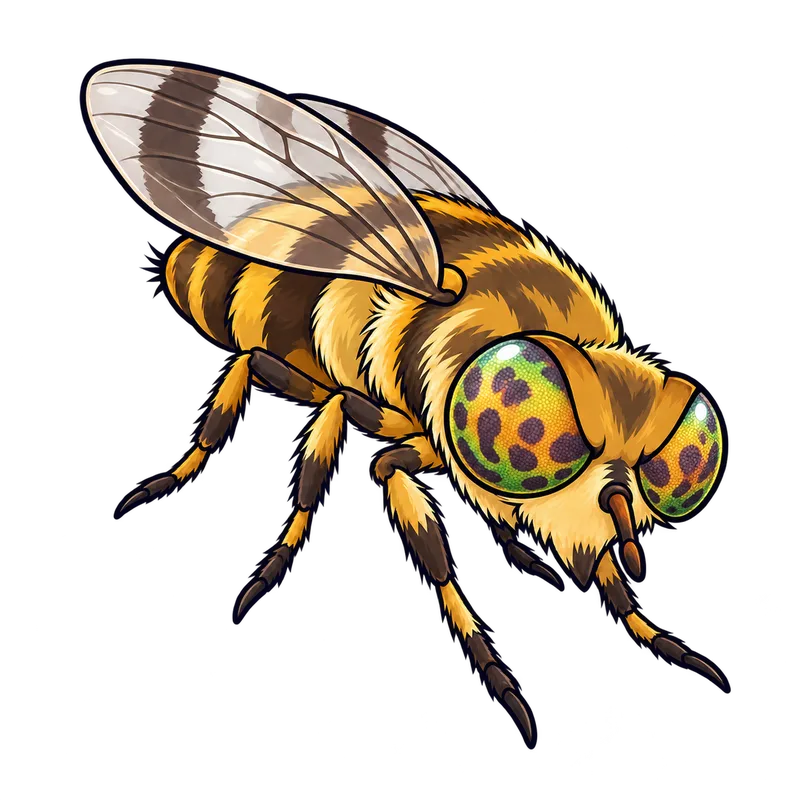
You cannot get rid of deer flies for good because their larvae breed in vast wetlands and wooded waterways that you cannot legally drain or treat with chemicals. Managing deer flies depends entirely on personal defense by putting up physical and chemical barriers. You can protect yourself by wearing light-colored clothes, applying an EPA-registered skin repellent, and treating your clothing with permethrin.
What is actually going on
You are walking down a quiet wooded trail on a warm afternoon, enjoying the green canopy and the summer air. Suddenly, a small insect starts circling your head like a miniature drone with a personal grudge. It hums past your ear, hovers just out of sight above your hat, and refuses to leave you alone no matter how much you wave your hands. When it finally lands, you feel a sharp pinch as if someone jabbed you with a tiny pair of scissors. That is your introduction to the deer fly, and if you are wondering how to get rid of them for good, the blunt answer is that you cannot.
Area-wide eradication of deer flies is practically impossible because of where and how they live. Unlike house flies that breed in a pile of garbage or horse manure in your yard, deer fly larvae grow up in vast wetlands, damp stream banks, and wooded waterways. Their natural habitat covers broad, environmentally sensitive areas that you cannot legally drain, fill, or treat with chemicals. Furthermore, adult female deer flies spend most of their time resting in the surrounding woodland canopy, migrating into your yard or onto hiking trails whenever they are hungry for blood.
Because you cannot eliminate their breeding grounds or spray an entire forest, trying to clear them out of your property with yard foggers is a waste of time and money. Insecticide fogs only offer a brief knockdown of whichever flies happen to be drifting past at that exact second, leaving no lasting barrier against the next wave. Ultraviolet bug zappers are even worse because they mostly fry harmless nocturnal insects while ignoring day-active biting flies entirely.
So what is left if you want to enjoy your own backyard or take a hike without getting shredded? You stop trying to kill every fly in the county and focus entirely on personal defense. Managing deer flies comes down to putting up physical and chemical barriers between their mouthparts and your skin, choosing the right clothes, and making yourself as unappealing a target as possible.
How to tell for sure
Before you bother buying repellents or setting up traps, you need to confirm what is actually buzzing around your head, because treating the wrong pest leads to wasted effort. Deer flies usually measure between 6 and 12 mm in length, which makes them noticeably smaller than their bulkier cousins, the horse flies, but larger than typical house flies. They usually sport a yellow-and-black patterned body and feature distinct dark bands running horizontally across their wings. If you catch one resting nearby, you will usually notice large, brilliant, iridescent eyes that shimmer with metallic green or purple spots.
People often confuse deer flies with horse flies, but horse flies are usually much larger, often growing up to 30 mm long, and typically have clear or solid-colored wings without those characteristic dark crossbands. Another common mix-up involves harmless picture-winged flies or fruit flies, but those insects lack the aggressive, persistent swarming behavior around the head that gives deer flies away.
If you are looking closely at a specimen, the mouthparts tell the real story. Mosquitoes use a thin, flexible needle to draw blood quietly, but a female deer fly possesses a pair of short, scissor-like blades. She does not sip gently. She slashes the skin open to create a pooling wound and then laps up the blood. This cutting action causes an immediate, sharp pain the moment she bites, which usually prompts you to swat at her. Because those bites are so painful and startling, deer flies are frequently interrupted mid-meal, causing them to hop from person to person. That interrupted feeding habit is precisely why they are such efficient carriers of blood-borne pathogens.
What usually comes next
Once you accept that you cannot poison the local wetland to wipe out the population, your primary practical decision is choosing how you will shield your body every time you step outside. Since deer flies rely heavily on visual cues and carbon dioxide to track down hosts, your strategy needs to blind them to your presence and block their access to your skin.
The most reliable path forward is combining an EPA-registered skin repellent with treated clothing. When you pull a dark navy or black shirt out of your drawer for a walk in the woods, you are basically wearing a neon sign that advertises your presence to every biting fly in the vicinity. Biting flies are strongly attracted to dark silhouettes and moving shadows. Swapping those dark colors for light-colored, loose-fitting clothing like whites, tans, and pastels helps you blend into the background and significantly reduces the number of flies that will attempt to land on you. Loose clothing also prevents their short mouthparts from reaching the skin underneath.
To seal the deal, you should treat your outer garments, hats, and boots with a permethrin-based spray before you head out, making sure the fabric dries completely beforehand. Permethrin kills and repels landing insects on contact, acting as an extra layer of armor. For the skin you cannot cover, applying an EPA-registered repellent containing DEET, Picaridin, Oil of Lemon Eucalyptus, or IR3535 rounds out the defense. If you are tired of them circling your head, wearing a dark cap equipped with a commercial sticky patch can also catch a surprising number of host-seeking adults as they zoom in for the top of your skull.
When to get help
Deer fly bites are messy, open wounds that require basic first aid and occasional medical attention depending on how your body reacts. Wash any bite immediately with soap and water to clear out bacteria, and use a cold compress or calamine lotion to soothe the itching. Avoid the temptation to scratch the wound relentlessly, as broken skin invites secondary bacterial infections that turn a simple bug bite into a painful medical issue.
You need to consult a clinician or seek urgent medical care if certain red flags appear. An immediate emergency response is necessary if a bite victim develops signs of an allergic or anaphylactic reaction, which include difficulty breathing, throat swelling, dizziness, widespread hives, or chest tightness. You should also seek professional medical evaluation if localized redness, expanding warmth, pus, or red streaks start spreading outward from the bite site over the following days, as these signal a secondary infection. Furthermore, if you develop flu-like symptoms, a sudden fever, severe headaches, or swollen lymph nodes within two weeks of spending time in an area where deer flies are common, visit a doctor to rule out vector-borne illnesses.
On the environmental and property management side, there are strict limits to what you can handle on your own. If you operate a commercial livestock farm or manage a large rural property where biting flies are tormenting animals, any commercial pesticide application or perimeter barrier treatment must be reviewed and carried out by a licensed pest control operator. Trying to apply restricted-use agricultural chemicals without proper licensing violates federal regulations and pesticide label laws. Similarly, if your property sits right against a protected wetland or wildlife preserve, remember that environmental protection laws strictly prohibit draining, filling, or applying unauthorized larvicides to those bodies of water, leaving personal protection as your only legal and effective option.