
Do house flies have two sets of wings?
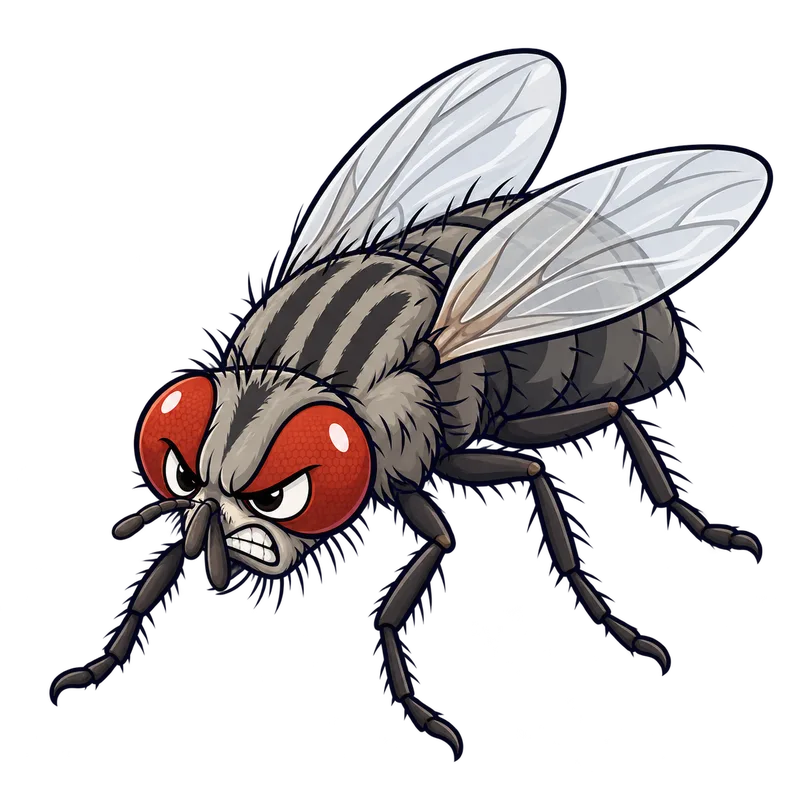
No, house flies do not have two sets of wings. They possess only a single pair of functional flight wings on their thorax, along with tiny balancing organs called halteres where the hindwings used to be.
What is actually going on
You are sitting on the back patio with a cold glass of lemonade, watching a fly zig-zag around your sandwich before it abruptly vanishes upside down onto the porch ceiling. It looks simple enough, just a pair of clear wings buzzing away. But if you were to catch it and look closely under a magnifying glass, you would find a surprising anatomy lesson.
No, house flies do not have two sets of wings. Like all true flies in the scientific order known as Diptera, which literally translates from Greek as two wings, they possess only a single pair of functional flight wings attached to the middle part of their thorax. If you count four wings on a bug buzzing around your kitchen, you are looking at something else entirely, such as a wasp, a bee, or a dragonfly.
So what are those little nubbins sitting right behind the main wings? Those are the hindwings, though they do not look like wings anymore. Through evolution, they have been transformed into tiny, club-shaped balancing organs called halteres. While the front wings provide lift and propulsion, the halteres vibrate rapidly in the opposite direction during flight, acting as biological gyroscopes that detect rotational forces and allow the fly to pull off those fast evasive maneuvers whenever you swing at it with a rolled-up magazine.
Telling a house fly apart from other winged insects usually comes down to checking a few physical details, provided the insect stays still long enough for you to look. A standard house fly measures about 6 to 7 millimeters long, features a dull gray body, and carries four distinct dark stripes running down the top of its back. If you have a good microscope, you can look at the wing venation, where the fourth longitudinal vein takes a sharp, angular upward turn near the outer edge.
People often confuse house flies with biting stable flies because both share that same gray color and the four thoracic stripes. But the mouthparts tell a completely different story. House flies possess soft, sponging mouthparts that cannot pierce skin, meaning they soak up liquids like a tiny sponge. Stable flies carry a rigid, bayonet-like proboscis that projects forward from beneath the head, designed to inflict a sharp, painful bite. If a fly in your home is biting your ankles, it is usually a stable fly or another blood-feeding pest, not a common house fly.
You might also run into cluster flies during the cooler autumn months, gathering by the dozens on sunny windowsills. These look a bit chunkier, usually measuring up to 12 millimeters, and their bodies are covered in crinkled golden-yellow hairs that give them a slightly different texture. Unlike house flies, which breed in garbage and animal waste, cluster fly larvae develop inside outdoor earthworms, and the adults simply use your attic or wall voids as an unheated winter hotel.
How to tell for sure
Once you realize you are dealing with common house flies, the most practical decision you can make is to stop browsing pesticide aisles and start looking at your trash cans. House flies do not breed indoors unless they have access to a reliable larval nursery, which usually means exposed rotting organic matter, wet pet waste, or neglected kitchen garbage. Spraying a space aerosol might knock down a few adult flies today, but a new batch will emerge tomorrow if the breeding source remains untouched.
Sanitation and exclusion form the backbone of sensible fly control. Secure tight-fitting lids on outdoor bins, rinse out recyclables, and make sure your window screens do not have tears or gaps around the frames. If flies are still showing up in droves despite a spotless kitchen, you might be dealing with a hidden issue, such as a deceased rodent trapped inside a wall cavity or a broken drain pipe underneath a concrete floor slab. Addressing that underlying structural vulnerability fixes the root cause far better than any chemical spray ever could.
What usually comes next
There are times when a fly problem stops being a simple nuisance and requires outside intervention. If you notice a sudden, overwhelming cloud of large blow flies or flesh flies appearing indoors, and you cannot find the source, call a professional pest management operator. That sudden swarm usually points to a dead animal carcass hidden deep within a wall void, chimney, or subfloor space where you cannot reach it.
You should also involve professionals if flies persist in commercial food service settings, schools, or healthcare facilities where strict public health codes apply, or when structural treatments like wall void dusts require specialized licensing. On the health side of things, remember that house flies carry numerous pathogens on their hairy feet and bodies, but if you or a family member experiences painful insect bites, persistent skin lesions, or severe localized swelling, point them directly to a primary care clinician or urgent care center. Never attempt to diagnose insect bites or skin reactions on your own.
When to get help
When a severe fly infestation defies standard household cleaning and exclusion, or when the underlying breeding source remains completely inaccessible, it is time to bring in professional support. Commercial facilities and health-sensitive environments always require licensed pest management to comply with public health standards. If bites, rashes, or symptoms of illness arise, consult a medical professional promptly.