
Why are horse flies called horse flies?
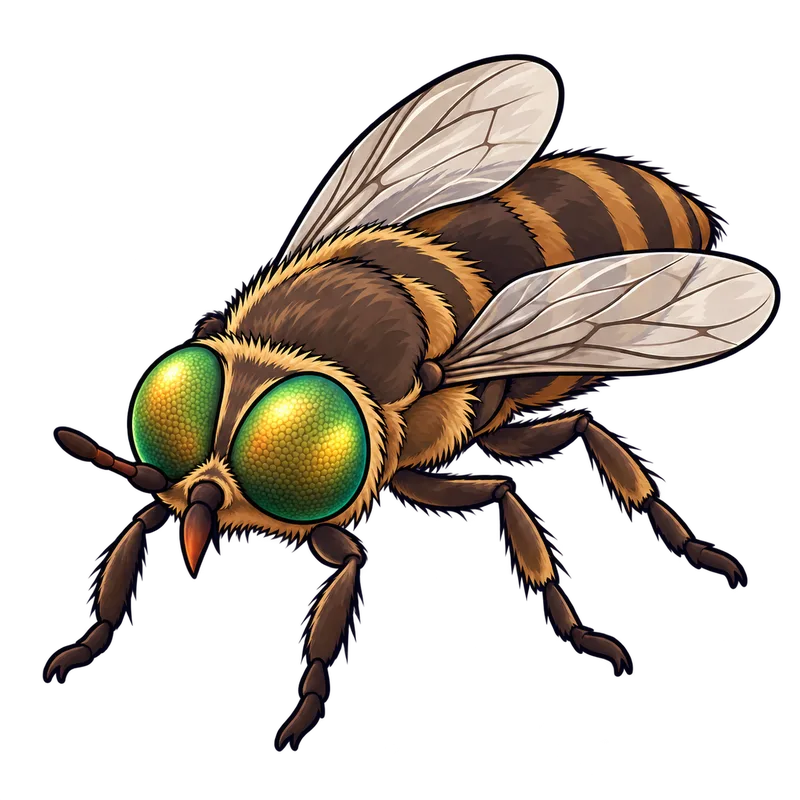
Horse flies are called horse flies because of their primary historical and ecological role as large pests of horses and other large livestock. These insects belong to the family Tabanidae and rely heavily on warm blooded mammals during warm daytime hours.
What is actually going on
Picture a warm, sunny July afternoon near a pasture fence, where a horse suddenly starts stomping its hooves and violently swishing its tail. The culprit is not a tiny buzzing gnat, but a heavy, dark fly nearly an inch long circling the animal flank like a miniature drone. You might wonder why these persistent flyers earned such a specific, livestock-themed title in everyday language.
Horse flies are called horse flies simply because of their primary historical and ecological role as large, aggressive pests of horses and other large livestock. Belonging to the family Tabanidae, these insects rely heavily on domestic and wild mammals during warm daytime hours. While other biting insects target smaller targets or feed on plants, female horse flies focus their attention on large, warm-blooded bodies.
That biological relationship runs deeper than mere annoyance. Female horse flies are anautogenous, meaning they require a protein-rich blood meal to mature their eggs. Because of their large size, fast flight, and attraction to body heat, carbon dioxide plumes, and dark moving silhouettes, they naturally gravitated toward horses, cattle, and working livestock on farms and ranches across generations.
Agricultural communities gave them names that reflected this constant nuisance, including the traditional term gadfly, derived from the verb to gad, which describes cattle running wild to escape bites. Over time, the straightforward association with equines stuck in the English language, creating the common name we use today.
How to tell for sure
Spotting one of these pests usually comes down to size, behavior, and appearance, as they look quite different from ordinary house flies. Typical horse flies in the genus Tabanus are quite large, usually measuring 19 to 32 mm, or roughly 3/4 of an inch to 1 1/4 inches long. They usually feature clear or solidly colored wings and remarkably large, brilliantly patterned eyes that often display iridescent bands of green and purple.
Smaller relatives known as deer flies usually measure 6 to 12 mm, and they usually display dark, smoky band patterns across their wings while buzzing around the heads and necks of hikers in low, moist areas. You will usually notice their presence by sight and sound during bright, sunny daytime hours rather than at dusk or indoors.
You can usually tell them apart from look-alikes by their feeding behavior and mouthparts. Unlike mosquitoes that use a needle-like tube, female horse flies possess bladelike mandibles that slash open skin, creating a pool of blood that they lap up with a modified mouth structure. That slashing action causes immediate, sharp pain rather than an itchy bump that appears hours later.
Male horse flies look somewhat similar but lack these biting mouthparts entirely, usually feeding exclusively on flower nectar, honeydew, and water while posing no threat to humans or animals.
What usually comes next
When you find yourself dealing with active horse flies around a property or during outdoor recreation, your most practical decision usually involves choosing personal physical exclusion over trying to eliminate the population at the source. Broad-scale chemical spraying for larvae is usually impractical and environmentally unfeasible because these immature flies develop across vast natural wetland soils, stream banks, and mud margins where treatments cannot reach.
Instead, focus your daily choices on altering what attracts them to you in the first place. Because female tabanids are visual hunters drawn to large, dark, moving shapes and radiant heat, wearing loose-fitting, light-colored long-sleeved shirts and long pants usually reduces your appeal as a host.
If you choose to use personal repellents, apply EPA-registered products containing active ingredients such as DEET, Picaridin, Oil of Lemon Eucalyptus, or IR3535 to exposed skin strictly as directed by the product label. Treating clothing with permethrin-based repellents can offer an extra layer of deterrence.
Remember that the product label serves as the absolute legal authority governing use, so never mix or apply any chemical in a manner that contradicts those printed instructions.
When to get help
While most horse fly encounters result in temporary pain and localized itching, certain situations require outside intervention. You should seek evaluation from a clinician or urgent care facility if a bite leads to severe localized swelling, such as eyes swollen shut, spreading redness, pus, or signs of a systemic allergic reaction like hives, dizziness, or difficulty breathing.
Do not attempt to diagnose or prescribe treatments for severe physical reactions on your own. Secondary bacterial skin infections can also develop if bite sites are scratched open excessively, requiring medical care.
For livestock owners, the stakes involve herd health as well as comfort. Heavy tabanid infestations can cause severe stress, weight loss, grazing disruption, anemia, and reduced milk yield in dairy herds. Moreover, because these flies are interrupted while feeding by an animal tail swishing, they quickly move to another host, making them efficient mechanical vectors for serious blood-borne pathogens such as equine infectious anemia, anthrax, and tularemia.
If you notice herd-wide distress, a sudden drop in livestock production, or any signs of infectious disease, consult a licensed veterinarian or a university livestock extension specialist immediately.