
What are deer flies?
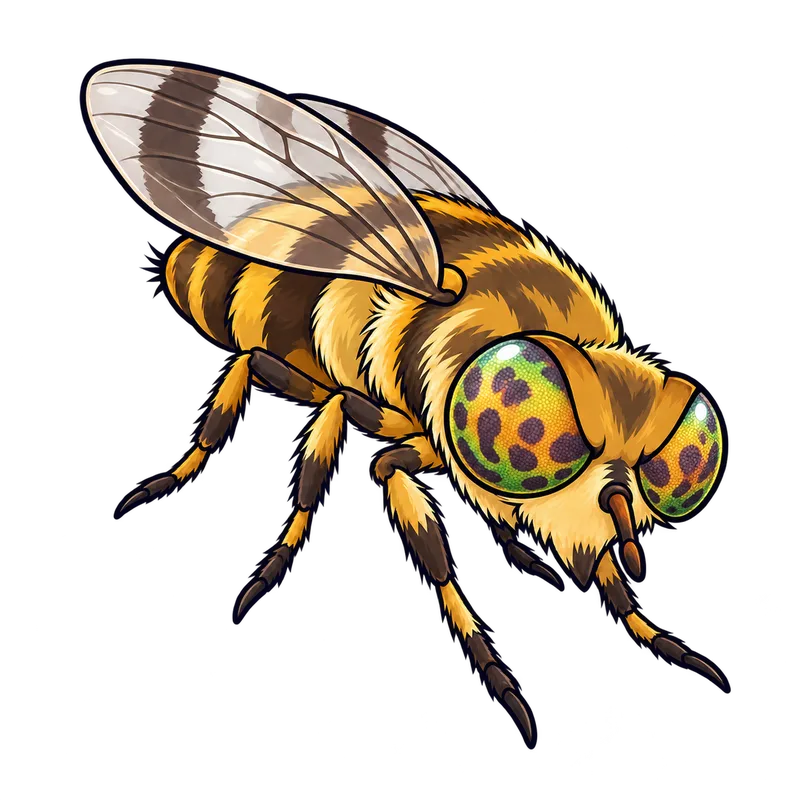
Deer flies are small to medium-sized biting insects measuring roughly 6 to 12 millimeters, featuring dark bands across their wings and iridescent, colorful eyes. Only the female deer flies bite, using bladelike mouthparts to slice the skin and lap up blood during warm, sunny daytime hours.
What is actually going on
You are walking down a quiet wooded trail on a bright July afternoon, swatting half-heartedly at the warm air, when suddenly a sharp, white-hot sting hits the back of your neck. You reach back, smash your hand against your skin, and find a squashed, compact fly with dark bands across its wings and strangely colorful, iridescent eyes. That is your introduction to a deer fly, a small woodland terror that treats a sunny afternoon hike as an open invitation to dinner.
Deer flies are small to medium-sized biting insects belonging to the family Tabanidae, specifically in the genus Chrysops. Unlike mosquitoes that use a delicate, needle-like tube to sip blood quietly, female deer flies carry a pair of tiny, bladelike mouthparts. When they land on you, they do not pierce, they slice. They cut a clean, shallow tear in your skin, pool the blood, and lap it up while injecting saliva packed with anticoagulants to keep the fluid flowing.
Only the females bite. They need a blood meal to develop their eggs, and they hunt by sight and body heat during warm, sunny daytime hours. You rarely find them on cool, overcast, or rainy days, and you certainly will not encounter them at night. Males, meanwhile, keep entirely to themselves, feeding quietly on plant nectar and pollen while posing zero threat to you or your pets.
The real frustration with deer flies comes from how they feed. Because their slicing bite hurts immediately, you react by swatting, which interrupts their meal. Disrupted females simply hop to another spot on your arm, or onto the person walking right next to you, to finish eating. That constant switching between hosts is precisely what makes them efficient carriers of bloodborne pathogens when disease agents are present in local wildlife populations.
How to tell for sure
Spotting a deer fly usually comes down to a few distinct visual giveaways that set them apart from standard household pests. Measuring roughly 6 to 12 millimeters, they are noticeably smaller than their chunky, heavy-bodied cousins the horse flies, which can grow up to 32 millimeters long. If you are comparing them to an ordinary house fly, you will usually notice the deer fly has a stouter build and lacks those familiar gray and black stripes on the thorax.
Look closely at the wings if you manage to catch one resting on a fence post or your car windshield. Deer flies usually feature prominent dark patches, bands, or spots stretching across clear wing membranes, creating a stained-glass appearance. Their eyes are another dead giveaway. Alive, those large eyes usually shine with brilliant patterns of green, bronze, or purple, though those bright colors tend to fade shortly after the insect dies.
People often confuse them with stable flies because both can inflict a painful bite, but stable flies carry their mouthparts forward in a rigid bayonet shape and lack those dark-banded wings. If you are outdoors near damp woods, swamps, or pond edges and a small fly with tinted wing bars buzzes relentlessly around your hat before biting, you are usually dealing with a deer fly rather than anything else.
What usually comes next
When deer flies become a persistent backyard nuisance or turn a hiking trip into a miserable gauntlet, homeowners usually want to know how to spray the property and wipe them out. The practical decision you have to make right now is accepting that you cannot treat or eliminate their breeding grounds. Unlike mosquitoes that breed in a stagnant bucket of water on your patio, deer fly larvae develop in natural wetland mud, stream margins, and woodland bogs over a span of 1 to 3 years. Spraying your residential lawn or neighborhood ditches will usually do nothing because those areas are not where these insects live before hatching.
Instead of chasing an impossible landscape-wide extermination, your most effective move is shifting to personal defense. Wear light-colored, tightly woven clothing with long sleeves, and tuck your trouser legs into your socks so the flies have fewer landing zones on your skin. Apply an EPA-registered insect repellent to your clothes and exposed skin following the product label instructions, keeping in mind that these flies hunt heavily by sight and motion, so repellents discourage biting rather than stopping them from buzzing around your head. If you want to manage resting adults around your yard border, you can apply non-flowering barrier sprays to nearby brush, but always avoid flowering plants to protect bees and other beneficial pollinators.
When to get help
Most deer fly bites result in sharp pain, minor swelling, and localized itching that resolve on their own within a few days, but certain symptoms cross the line into medical territory. If a bite site develops worsening redness, severe swelling, pus, or deep ulceration, or if you develop systemic signs such as unexplained fever, chills, swollen lymph nodes, or shortness of breath, you need to seek immediate medical evaluation from a clinician or an urgent care facility. These insects can mechanically vector bacteria like the ones responsible for tularemia, and open scratch wounds are always vulnerable to secondary bacterial infections.
On the property side, if you are planning large-scale pesticide applications near water bodies or sensitive natural habitats to manage biting fly harborage, pause and bring in a licensed pesticide applicator or a university extension specialist. Regulations regarding water protection, pesticide drift, and non-target wildlife are strict, and getting professional oversight ensures the treatment stays safe, legal, and environmentally responsible.