
Do horse flies lay eggs in humans?
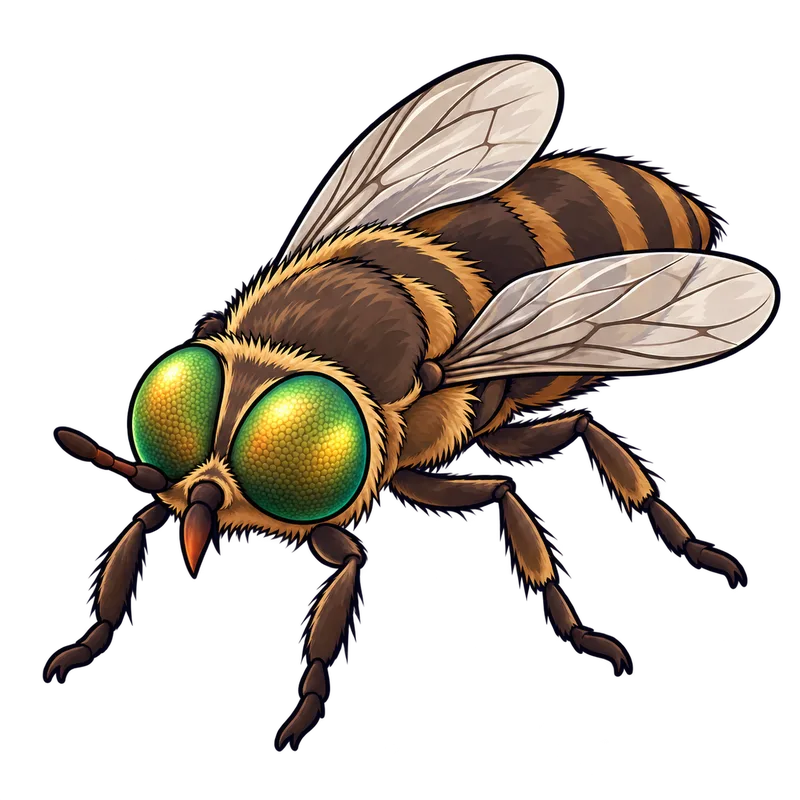
No, female true horse flies do not lay eggs in or on human skin or tissue. When these insects target a mammal, they are only seeking a blood meal to mature their eggs, and instead deposit their offspring on vegetation near water or moist mud.
What is actually going on
You are sitting by the edge of the lake on a warm July afternoon, swatting away at a heavy, iridescent fly that just took a painful chunk out of your ankle. Later that evening, the bite swells into a hot, angry red lump that itches fiercely. Panic sets in as you wonder if that aggressive insect used your skin as a nursery. The short answer is no. Female true horse flies do not lay eggs in or on human skin or tissue.
When a female horse fly targets a mammal, she is purely after a blood meal. She needs the protein in your blood to mature her eggs, but her reproductive plan has nothing to do with your body as a host for her offspring. Instead, once she gets her fill, she leaves you behind and seeks out damp, semi-aquatic environments. She deposits her eggs on vegetation hanging over water, tree stumps, or moist mud near marshes.
Why does everyone whisper about horse flies laying eggs under the skin then? The rumor usually stems from a mix-up with entirely different insects, such as botflies or screwworm flies, which do deposit larvae in living tissue. Furthermore, a horse fly does not pierce you with a delicate needle like a mosquito. She has broad, blade-like mouthparts that act like tiny scissors, slashing open skin capillaries to create a small pool of blood. She injects saliva into the wound to keep the blood flowing while she laps it up.
That severe mechanical tear, combined with your body mounting an immune defense against her foreign saliva, creates an intense localized reaction. You get a large, hard wheal that throbs and swells. It feels so foreign and aggressive that it is easy to see why someone might mistake that deep tissue inflammation for a parasitic infestation.
How to tell for sure
If you are trying to figure out what just bit you out in the garden, looking at the resulting mark on your skin will not help. A skin bite mark, lesion, or photograph can usually never identify a pest species, because human skin tends to react to different insect punctures in very similar ways. You have to look at the insect itself if you want a reliable identification.
True horse flies are robust, swift-flying insects that range from medium to quite large, spanning roughly one-quarter to one and one-quarter inches long. They usually feature massive, brilliantly colored compound eyes that gleam in the sunlight and a stout body. If you happen to catch one and examine it under a simple hand lens, you will spot those rigid, blade-like cutting stylets beneath the head rather than a long, slender mosquito-like proboscis.
You might also mix up horse flies with deer flies, which are smaller pests featuring dark bands across their wings, or with horse botflies. People often assume horse botflies and standard horse flies are the exact same creature, but botflies belong to an entirely different family and do not even bite adult humans. A female botfly glues her tiny eggs directly onto the hair of horses, where the animal eventually licks them and swallows them so the larvae can develop internally.
If you happen to be dealing with an open, neglected, or dirty wound, you might encounter actual maggots, but this is usually the work of opportunistic blow flies or flesh flies rather than anything a horse fly did. Horse fly larvae live exclusively as predators in wet mud and soil, miles away from human living flesh.
What usually comes next
Since chemical control of horse fly larvae is practically impossible due to the vast, dispersed nature of natural wetlands and muddy breeding sites, your best defense is personal protection. When you head out near swamps, wooded streams, or coastal marshes during warm daylight hours, skip the dark clothing. These flies are strongly attracted to dark, moving objects and the carbon dioxide you exhale.
Instead, wear light-colored, tightly woven, long-sleeved shirts and long pants to keep them from reaching your skin. If you prefer using insect repellents, choose a registered product containing DEET, Picaridin, or Oil of Lemon Eucalyptus, and apply it strictly according to the directions on the product label.
If a horse fly already got the better of you, wash the bite area thoroughly with mild soap and clean water to clear away any dirt and bacteria. Press a cold pack or an ice cube wrapped in a cloth against the swelling to calm the pain. Resist the intense urge to scratch the area. Breaking the skin lets common surface bacteria into the wound, which can quickly turn a simple bug bite into a painful secondary bacterial infection.
When to get help
Most horse fly bites resolve on their own after a few days of annoying itching and swelling, but certain signs mean you need to step away from home remedies and seek medical care. Reach out to a licensed clinician, urgent care clinic, or emergency room immediately if you develop symptoms of a systemic allergic reaction, such as wheezing, sudden throat tightness, dizziness, facial swelling, or widespread hives across your body.
You also need professional medical evaluation if the bite shows signs of a secondary bacterial infection. Watch for spreading redness, skin that feels hot to the touch, red streaks tracking away from the bite, throbbing pain, pus drainage, or a fever.
If you or someone you know insists that insects are laying eggs under intact skin despite multiple negative medical evaluations, the situation calls for compassionate care from a dermatologist or medical specialist rather than more pest control products. For actual indoor fly or maggot infestations inside a structure, such as finding unexpected maggots indoors, contact a pest management professional to track down hidden breeding sources like a dead rodent in a wall void.