
What attracts horse flies to humans?
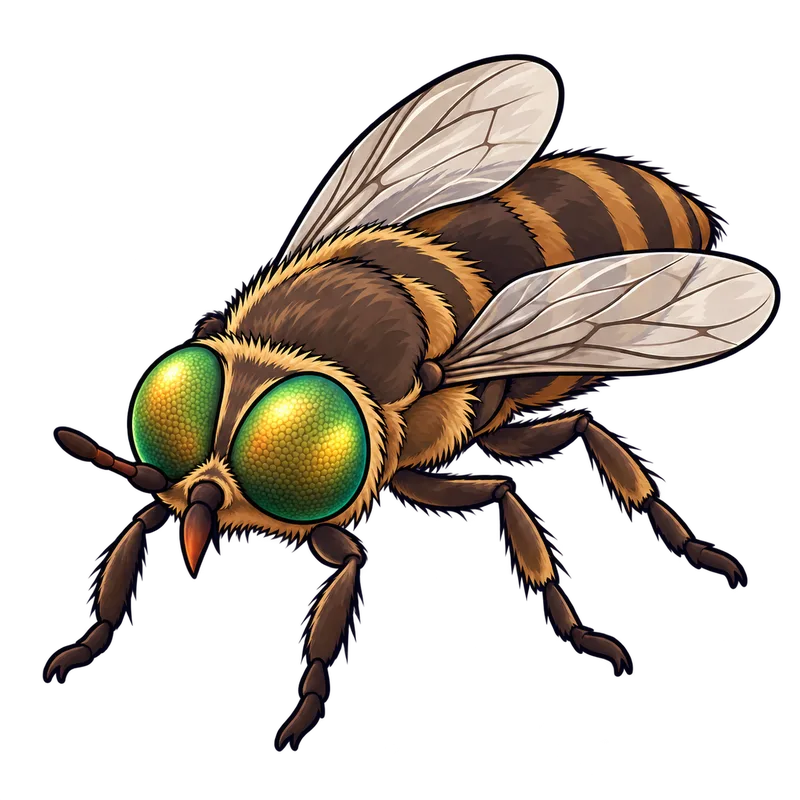
Female horse flies are attracted to humans by exhaled carbon dioxide plumes, body heat, and visual stimuli like movement, polarized light reflections, and large dark silhouettes. Wearing dark colors makes you an especially high-contrast target for these daytime hunters. Only female horse flies bite humans, driven by the need for a blood meal to mature their eggs.
What is actually going on
You are standing by the edge of a quiet woodland pond on a hot July afternoon, wearing a navy-blue t-shirt and enjoying the summer breeze, when suddenly a heavy, stout-bodied fly zeroes in on your shoulder. It feels less like an insect landing and more like a miniature helicopter making an aggressive tactical approach. Why does it seem to have singled you out among the entire landscape? Female horse flies track down human targets using a very specific biological checklist, acting much like heat-seeking thermal radar as they close the distance.
At a distance, these flies do not see you clearly. Instead, they pick up your exhaled carbon dioxide plumes drifting on the air. Once that chemical cue alerts them to a warm-blooded meal in the vicinity, they switch to tracking body heat and visual stimuli. They possess large, highly developed compound eyes that react strongly to movement, polarized light reflections, and large dark silhouettes. That navy-blue shirt you wore for the hike creates a stark, high-contrast target against the natural background, making you far more conspicuous than someone wearing pale, neutral colors.
You might wonder why males never seem to bother you with painful bites during these walks. The male horse fly is entirely harmless to humans, feeding exclusively on plant nectar and pollen, and lacking the mouthparts required to pierce skin. Only the females bite, driven entirely by the biological necessity of securing a protein-rich blood meal to mature their eggs. When a female reaches your skin, she does not slip in a quiet, delicate needle like a mosquito. Instead, she uses sharp, bladelike mouthparts to slash through tissue and lap up the blood that pools in the wound, which explains why the resulting pain is so immediate and intense. When you step out of a lake or walk past a damp marsh, the combination of glistening moisture, body heat, and motion creates an irresistible beacon for these daytime hunters.
How to tell for sure
Horse flies usually belong to the family Tabanidae, easily recognized by their stout bodies, powerful and agile flight, and enormous compound eyes that often cover most of the head. In North America, you generally encounter two main types: larger horse flies in the genus Tabanus and smaller deer flies in the genus Chrysops, which often feature distinctly patterned or banded wings. Deer flies tend to go after your head, neck, and shoulders, while their larger cousins often target your lower extremities.
People frequently confuse them with standard house flies or large mosquitoes, but the physical build gives them away immediately. A mosquito is slender with long, delicate legs and antennae, whereas a tabanid is built like a heavy-duty brawler with short antennae. If you need absolute species-level confirmation, it usually requires a 10x magnification lens and an entomology key, but simply observing the intense daytime aggression, the heavy buzzing, and the immediate sharp pinch on your skin is usually enough to confirm what you are dealing with.
What usually comes next
When you find yourself regularly crossing paths with these biting pests during outdoor work or recreation, your best practical decision is to alter your visual and chemical profile rather than attempting broad-area chemical control. Conventional broad-scale insecticide sprays are largely ineffective against adult horse flies due to their massive flight range and widely dispersed aquatic larval habitats in nearby mud or marshes. Ultraviolet bug zappers also fail to clear them out because these flies are strictly diurnal hunters that do not respond to light traps.
Instead, focus on personal defense by dressing for the environment. Swap out dark athletic shirts for loose-fitting, light-colored clothing that reflects ambient light and reduces visual contrast against the surroundings. Wearing long sleeves and full-length trousers physically obstructs the fly from finding an easy patch of skin. You can also apply an EPA-registered insect repellent containing DEET, Picaridin, Oil of Lemon Eucalyptus, or IR3535 to exposed skin. For an added layer of defense, treat your outer clothing with permethrin, making sure never to apply clothing-only permethrin formulations directly to bare skin.
When to get help
Horse fly bites cause immediate, sharp pain followed by swelling, redness, and intense itching due to the anticoagulant saliva injected during feeding. If you persistently scratch the wound, you run the risk of introducing environmental bacteria like Staphylococcus or Streptococcus, which can easily lead to secondary bacterial dermatitis.
Do not attempt to diagnose skin lesions or prescribe home remedies on your own. If a bite victim exhibits signs of a severe systemic allergic reaction, such as widespread hives, facial swelling, or difficulty breathing, or shows signs of a secondary bacterial infection like expanding redness, severe heat, or purulent discharge, refer them immediately to a qualified clinician, urgent care facility, or poison control center.