
What are blow flies?
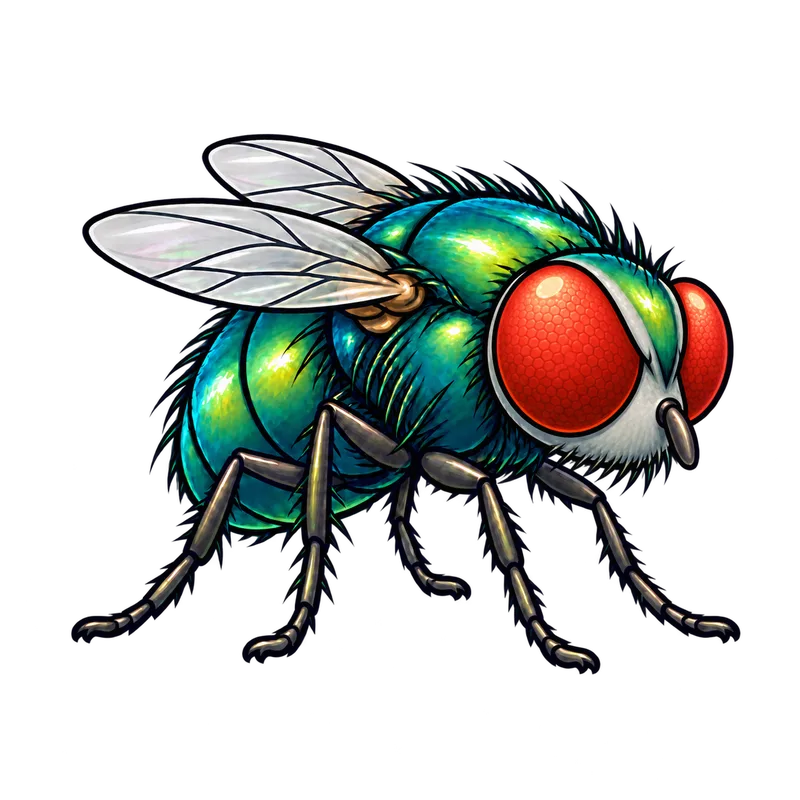
Blow flies are robust, medium to large true flies with shiny metallic blue, green, bronze, or copper bodies that measure between a quarter and a half inch long. They are easily recognized by their loud, low-pitched drone and a tendency to swarm indoors when a dead animal carcass is hidden nearby.
What is actually going on
You walk into the living room after a week away, and the first thing you notice is a heavy, low-pitched drone. A large, shiny insect is batting its head against the closed window glass over and over, sounding less like a bug and more like a trapped bumblebee.
Those are blow flies, and they are robust, medium-to-large true flies recognized by their shiny metallic blue, green, bronze, or copper bodies. They usually measure between a quarter and a half inch long, making them stockier and far noisier than the ordinary house flies you see sitting on a kitchen counter.
When you find a sudden swarm of them indoors, you are almost always dealing with a dead animal carcass hidden somewhere in the building. A mouse, rat, squirrel, or bird has found its way into an attic, a chimney, or a wall void, and nature has done what nature does. Female blow flies smell the decay from a long distance, slip inside through tiny gaps, and lay hundreds of eggs on the remains.
Those eggs hatch into maggots that tear through the tissue in a few days. Once they finish eating, the larvae wander away from the carcass to find a dry place to pupate, which is why you sometimes see legless white grubs dropping from a ceiling light fixture or crawling along a baseboard. The adults that hatch a week or two later immediately fly toward the nearest light source, which is why they are currently throwing themselves against your living room windows.
How to tell for sure
Spotting one of these flies usually comes down to color and sound. If you manage to trap it on a windowpane, look at the body under good light. Blow flies usually show a brilliant, polished metallic luster across the thorax and abdomen, catching the light like a freshly waxed sports car.
People often confuse them with house flies, but house flies are dull gray and usually marked with four distinct black stripes on the back. Blow flies lack those stripes entirely. You might also mistake them for cluster flies, which actually belong to the same family. Cluster flies are dull gray-brown rather than metallic, and they wear a coat of fine, crinkled golden-yellow hairs on their backs. If your indoor flies look dusty and golden rather than shiny, you usually have cluster flies that wintered in your walls instead of flies breeding on a carcass.
Another helpful clue is right in front of their heads. Blow flies possess soft, sponging mouthparts, meaning they do not bite humans. If something has bitten you, it is usually a stable fly or another blood-feeding insect, not a blow fly. Their loud, heavy buzzing is also a dead giveaway. When they fly, they make a distinct, low-pitched drone that is hard to ignore.
What usually comes next
The single most practical decision you face is whether to hunt for the source or wait it out. If you have dozens of metallic flies appearing out of nowhere, do not waste time spraying aerosol foggers into your wall voids or ceiling spaces. Spraying insecticide into a cavity filled with dead flies usually creates a secondary disaster by attracting carpet beetles or other pests that feed on the dried remains.
Instead, your job is to find the breeding source and remove it. Check your attic, crawlspace, chimney flues, and drop ceilings for a dead rodent or bird. If you can safely reach the carcass, bag it tightly and throw it in an outdoor trash bin. Once the protein source is gone, the life cycle breaks, and the remaining adults will disappear within a couple of weeks as they starve or die trying to escape through the glass. If the carcass is wedged deep inside a wall void where you cannot reach it, your best move is to seal up any cracks around baseboards or light fixtures temporarily and wait out the emergence while vacuuming up the adults as they appear at the windows.
When to get help
Sometimes the problem sits beyond the reach of a weekend fix. You should call a wildlife removal specialist or a pest control operator when a dead animal carcass is stuck deep inside a chimney, a commercial ventilation shaft, or an inaccessible wall cavity where cutting into drywall is required to extract it.
If you run a food-handling facility, a restaurant, or a commercial building, an indoor blow fly outbreak demands professional intervention to identify structural entry points and protect health standards. On the animal health side, if you keep livestock or pets and notice flies swarming around open skin folds, urine-soaked fur, or wounds, call a veterinarian immediately to treat for myiasis, which is the infestation of living tissue by maggots.
Finally, while adult blow flies are primarily mechanical vectors that transfer bacteria from filth to food via their feet and mouthparts, accidental ingestion of fly eggs or larvae from unwashed food can occasionally cause intestinal distress. If anyone in your household experiences severe gastric illness after a heavy infestation, consult a clinician or contact your regional poison control center for guidance.