
Why are blow flies in the house?
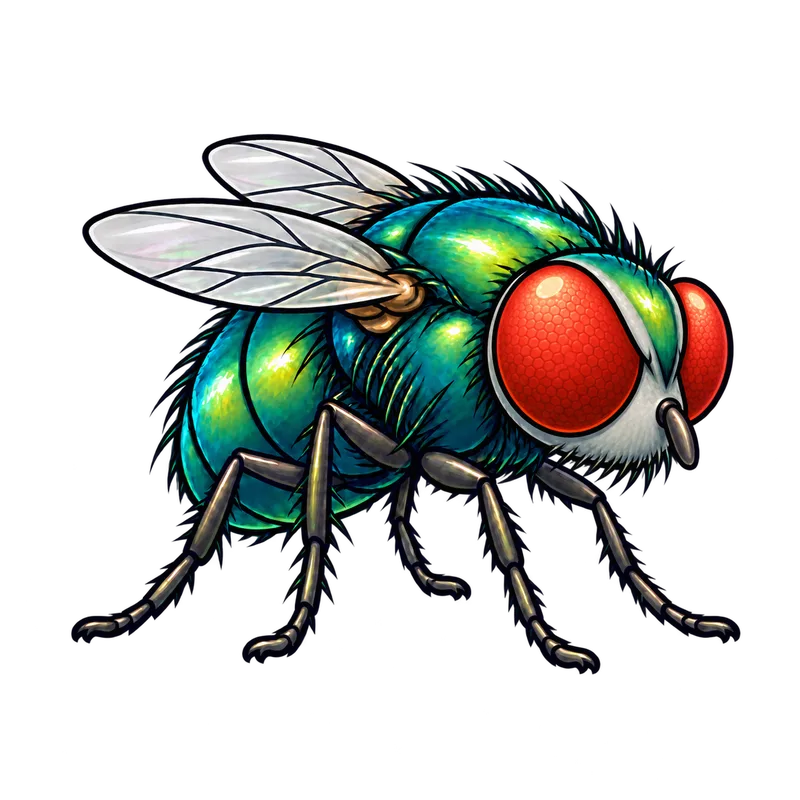
Blow flies are in the house because an adult female was drawn inside by the smell of decaying organic waste to lay eggs on a hidden dead animal carcass. Depending on the season, they can also enter your living space when unseasonably warm weather or central heating wakes up dormant insects sleeping in wall gaps.
What is actually going on
You walk into the living room on a quiet Tuesday afternoon and notice something strange. Half a dozen large, shiny green flies are buzzing against the front window, banging themselves repeatedly against the glass with a heavy, low-pitched drone. Your house is clean, the kitchen sink is empty, and the doors have been shut all morning. So where on earth did they come from, and why are they trapped in your room?
If you are seeing a sudden group of large metallic flies inside the house, you are almost certainly dealing with blow flies. An adult female was drawn inside by the smell of decaying organic waste to lay eggs on a dead animal carcass hidden somewhere out of sight. That hidden source is usually a mouse, rat, bird, or squirrel that crawled into an attic, a chimney, a crawlspace, or a wall void and died.
People often assume that finding flies indoors means there is a hidden trash pile or an unsanitary kitchen. But blow flies do not care about a dirty counter or a drop of soda on the floor. They are specially adapted decomposers. A single mouse hidden behind drywall can yield over one hundred adult flies in a few weeks. The female lays her eggs directly on the carcass, the resulting maggots feed for a couple of days, and then those larvae crawl away from the food source to find a dry, dark spot to transform into adults.
There is also a seasonal version of this puzzle. In late summer and autumn, certain blow fly species look for dry shelter to ride out the cold months. They creep into roof voids, attics, and wall gaps, going dormant for the winter. When a sudden stretch of unseasonably warm weather hits or your central heating kicks on, those sleeping insects wake up disoriented. They crawl out of baseboards and light fixtures, heading straight for the nearest sunny window, which explains why you might find sluggish blue or black flies indoors when snow is still on the ground.
How to tell for sure
Before you start tearing open drywall or buying traps, you need to confirm what you are actually looking at. Not every bug with wings is a blow fly, and confusing them means you might treat the wrong problem entirely. True blow flies usually measure between one-quarter and one-half of an inch long. They are hard to miss because of their appearance and sound.
Look closely at the body. Blow flies usually have a brilliant metallic sheen, gleaming in shades of emerald green, bronze, steel blue, or dark black. Their eyes are large and reddish orange, and their flight sounds like a miniature electric razor buzzing against the glass. This sets them apart from the common house fly, which is a dull, nonmetallic gray with four dark stripes across its back, or the flesh fly, which sports a checkered gray-and-black abdomen.
You also want to rule out cluster flies, which look similar at a glance but live entirely different lives. Cluster flies belong to the same broader family, but they never breed on garbage or dead animals. Their young feed only on earthworms out in the dirt of your yard. If the insects buzzing on your glass are a dull grayish-brown, fuzzy with golden-yellow hairs, and move like they are moving through molasses, you are looking at cluster flies wanting a warm winter nap. They tell you nothing about a dead mouse in the drywall, and they usually call for a completely different fix.
What usually comes next
When you face a sudden hatch of blow flies, your biggest choice is whether to track down the carcass or just ride it out. The urge is to grab a bug bomb for the attic or spray every baseboard in the hallway. Resist that urge. If you poison a massive cluster of insects trapped inside a wall void, you leave behind piles of organic waste that quickly draw a secondary wave of carpet beetles, larder beetles, or scavenging mice.
You simply must find the source. If new flies keep appearing in waves day after day, a dead animal is rotting somewhere inside the building frame. Put on thick gloves, grab a bright flashlight, and check quiet spots like the attic corners, crawlspaces, or chimney chases for the carcass. Once you throw that source away, the new insects stop showing up. If the smell and the bugs come from deep inside a finished wall you cannot open up, your only real option is to trap the adults as they emerge and wait for the life cycle to burn out.
When to get help
Most blow fly troubles start with a common outdoor pest that you can fix with basic cleanup, but some messes need a professional touch. Call in a licensed pest expert if the dead creature sits deep inside ductwork or structural framing where you have to cut open the house to reach it. You also want backup if the bugs keep coming for more than three weeks, which usually means multiple hidden carcasses or an ongoing entry point you have not found.
Keep clear health and safety limits in mind while you work. If you ever find that a living pet or human tissue has maggots in it, put down the household cleaners and seek medical or veterinary help right away. Stop your search immediately if poking around an attic or chimney reveals living wildlife like bats, raccoons, or protected birds. Many of those creatures have strict legal protections, meaning you need to call a licensed wildlife removal service or your local state agency to handle the situation properly.