
What is the life cycle of a blow fly?
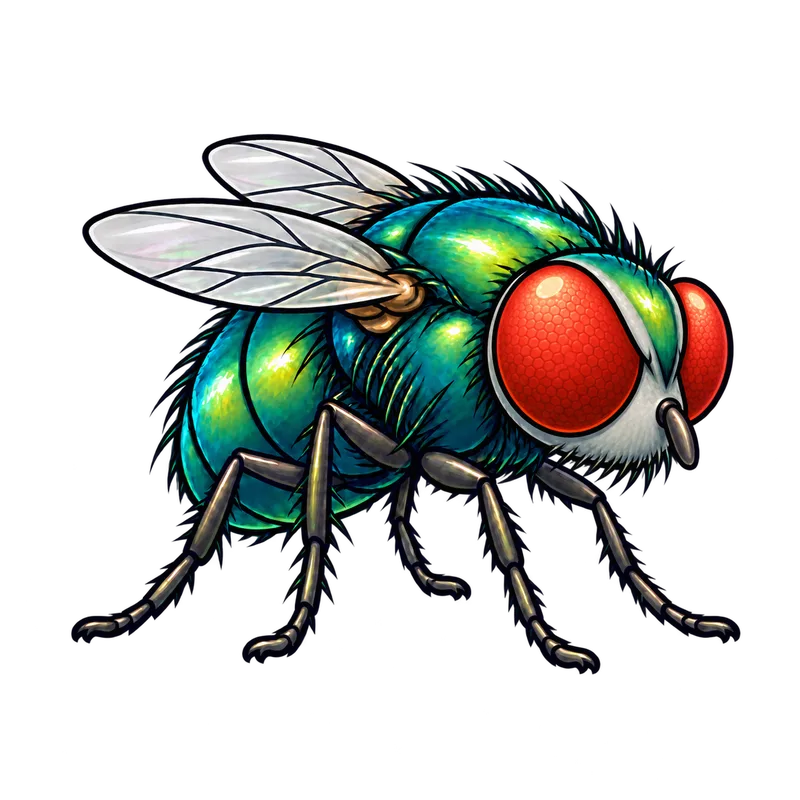
The blow fly goes through a complete four-stage life cycle consisting of an egg, a larva or maggot, a pupa inside a protective shell, and an adult. Under warm conditions, that transformation takes anywhere from 10 to 25 days.
What is actually going on
Imagine you are sitting in the living room on a quiet Tuesday afternoon, and suddenly you hear it. That loud, heavy, low-pitched buzzing echoes against the glass of the front window. You look over, and a large fly with a polished metallic green shell is banging its head repeatedly against the sunlit pane. Where did it come from, and how did it get to be that big so fast?
The short answer is that the blow fly goes through a complete four-stage life cycle consisting of an egg, a larva or maggot, a pupa inside a protective shell, and an adult. Under warm conditions, that whole transformation from a tiny egg to a buzzing adult takes anywhere from 10 to 25 days. Everything starts when a fertilized female blow fly smells something organic and decaying. She is drawn to volatile odors rising from a dead mouse in a wall void, an open garbage bin, or animal waste in the yard. She lands on the substrate and deposits her cream-colored eggs in batches, sometimes laying up to 600 eggs over her lifetime. In warm weather, those eggs hatch in just 24 to 48 hours into small, legless maggots.
Those tiny maggots waste no time eating. They gorge themselves on the protein-rich material day and night, passing through three growth stages and reaching about three-quarters of an inch long in just a couple of days. Once they finish feeding, they hit a wandering phase. They crawl away from the wet food source, often dropping down from a ceiling light fixture or creeping across a basement floor to find a dry, dark spot like the top layer of soil or a structural crevice to pupate. Inside that hardened, barrel-shaped brown shell called a puparium, the insect reorganizes its entire body over the next 10 to 14 days. When the adult is ready, it uses a special inflatable sac on its head to pop open the cap of the puparium and emerge. It pumps up its wings, flies off, and the cycle starts all over again.
How to tell for sure
Spotting a blow fly usually comes down to looking for that unmistakable glossy finish. Adult blow flies measure between a quarter and a half inch long and usually feature robust bodies that shine with a metallic blue, green, bronze, or copper luster, paired with prominent orange or red eyes. People often confuse them with house flies, but house flies have dull, non-metallic gray bodies marked with four distinct dark stripes on the thorax. Blow flies also differ noticeably from cluster flies, which look like they are wearing a crinkly golden wool coat over a dark gray, non-metallic abdomen. If you see a sluggish fly with golden hairs on its back resting in your attic during the autumn, you are usually looking at a cluster fly, whose larvae live underground as parasites of earthworms rather than feeding on garbage or dead animals.
If you happen to spot maggots, the surroundings usually tell the whole story. Real blow fly maggots are pale, worm-like cylinders that taper down to a tiny feeding hook at the front end. When you suddenly find hundreds of them crawling around indoors, it almost always means a hidden animal carcass is nearby, like a mouse that died inside a wall or a bird that fell down the chimney. You might wonder why these insects pick such foul places to raise their young, but their entire biology relies on decaying protein to feed the next generation.
What usually comes next
When you face an indoor blow fly issue, your main practical choice is whether to hunt down the source or just wait for the cycle to run its course. Some homeowners try to fix the problem by emptying cans of bug spray into their wall voids, but that trick usually backfires. Pumping chemicals into a hidden cavity kills the adult flies and wandering maggots right there, leaving behind a massive pile of dead bugs that quickly attracts secondary pests like carpet beetles and larder beetles to your walls.
Instead, you need to track down and get rid of the actual organic breeding source. If you have flies tapping against your windows or maggots wandering across your floor, check your attic, crawlspaces, chimney, and wall cavities for a dead rodent or bird. Once you physically remove the carcass and clean up the spot, the food supply is gone, and the infestation naturally dies down within a few days because these flies simply cannot finish their life cycle without moist protein.
When to get help
There are times when a basic household fly problem turns into something you should not handle on your own. If an indoor blow fly outbreak comes from a dead animal stuck in your house that happens to be a protected bird, bat, or other regulated wildlife species, you need to contact your local wildlife agency before disturbing the remains, since specific legal rules often apply to handling protected animals.
You should also bring in a professional pest control applicator if fixing the problem means tearing open walls, applying heavy treatments, or using specialized removal methods inside hard-to-reach cavities or ductwork. On top of that, if you or a pet suffers from myiasis, which is the invasion of living tissue or open wounds by fly larvae, or if anyone experiences sudden stomach trouble after accidentally swallowing larvae, you must seek help from a doctor, an urgent care center, or your local poison control authority immediately.