
How do you get rid of blow flies?
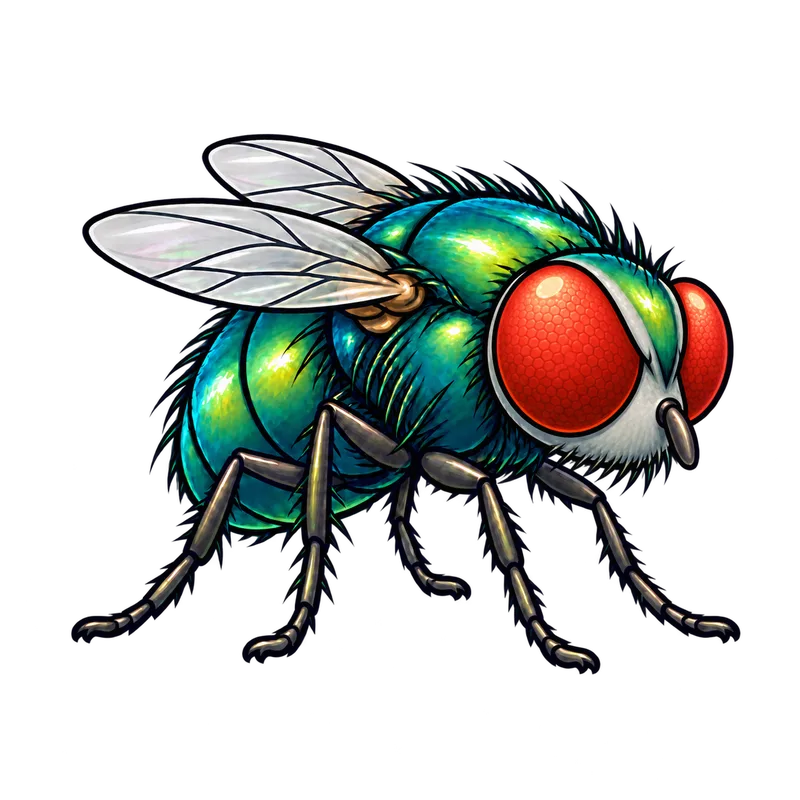
To get rid of blow flies, you must find and physically remove the decaying carcass or organic waste source that is attracting them. Spraying chemical aerosols only provides temporary relief because new adults will keep emerging until the underlying protein source is gone. Once you remove that source or let it dry up, the infestation stops on its own.
What is actually going on
You walk into the spare guest room on a warm July afternoon and hear that unmistakable, heavy buzzing against the windowpane. You look closer and spot half a dozen large, metallic blue or green flies bouncing off the glass. They are not ordinary house flies. They are blow flies, and their sudden indoor appearance almost always signals one uncomfortable reality: something organic has died nearby. A mouse made it into the wall void in late June, a bird slipped down the chimney flue, or a pet left waste uncollected too long in the yard.
Getting rid of blow flies is not a matter of buying the right spray or hanging a scented trap from the ceiling. You have to find and physically remove the breeding source, which is usually a decaying carcass or concentrated organic waste. Blow flies are drawn to rotting animal protein with surgical precision. A female can smell a dead rodent from a considerable distance, lay hundreds of eggs on it, and kick off a cycle where larvae feed, mature in days, and then scatter to pupate in hidden corners of your home.
If you spray chemical aerosols without removing that underlying carcass, you are only treating the symptom. The adults you kill today will be replaced by a fresh batch emerging tomorrow. Once the protein source is gone or completely dried up, the infestation stops on its own. Until then, any control measure is just temporary crowd control.
How to tell for sure
Before you start tearing down drywall or scrubbing garbage cans, you need to confirm you are actually dealing with blow flies rather than other common indoor pests. Blow flies are usually stout, medium-to-large insects measuring between a quarter of an inch and half an inch long. They stand out because of their brilliant, shiny metallic coloration, which typically gleams in shades of blue, green, copper, or bronze.
You can usually tell them apart from house flies and flesh flies by looking closely at their bodies. House flies are dull gray with four dark stripes running down their back, while flesh flies are also dull gray with three stripes and a checkered abdomen. If the fly buzzing on your window has a solid, polished emerald or sapphire sheen and a low-pitched, noisy buzz, you are usually looking at a blow fly.
You also want to rule out cluster flies, which look similar at a glance because they belong to the same family. Cluster flies are dull grayish-brown instead of metallic, and they have tiny, crinkled golden hairs on their thorax. If you have cluster flies, you are usually seeing them try to overwinter in attics during the cooler months, and searching for a dead animal inside your walls will be a waste of time because their larvae usually develop outdoors in soil earthworms.
What usually comes next
Your main practical decision is to launch an immediate, systematic search for the hidden breeding site rather than spending money on generic traps. Walk through your house and sniff out any unusual, heavy odors in hallways, closets, or near ceiling fixtures. Check your attic, crawlspace, chimney, and any accessible wall voids for dead rodents, birds, or squirrels. If a carcass is hidden deep within a structural cavity where you cannot reach it without tearing down the wall, your strategy shifts. You will need to seal baseboard gaps and light fixture openings to keep the wandering maggots and emerging adults out of your living space while nature runs its course over one to three weeks.
If you find the source is outdoors, your decision is about sanitation and exclusion. You need to inspect your trash management habits. Outdoor garbage bins and commercial dumpsters should be lined with plastic bags, washed regularly to remove grease buildup, kept tightly closed, and ideally positioned at least fifty feet away from your entry doors. If you have dogs, pick up yard waste weekly and seal it in bags before disposal.
You can use a vacuum cleaner or a standard fly swatter to deal with the active adults you see indoors right now. If you choose to use an indoor aerosol space spray containing pyrethrins for temporary knockdown, remember that it only kills the flies currently in the air. Standard commercial fly baits you buy at the hardware store usually fail here because they are formulated to attract house flies with sweet compounds, whereas blow flies only care about rotting meat and animal protein.
When to get help
There are times when handling blow flies yourself crosses the line into risks you should not manage alone. If you suspect that a trapped bird, bat, or protected wildlife species has died inside your chimney or wall void, local and federal wildlife laws often govern how those remains can be handled. You should contact a local wildlife control professional or municipal agency before disturbing the area.
If you or a pet has experienced a situation where blow flies have deposited eggs on open wounds, blood, or feces-soaked hair, that is a medical and veterinary emergency known as myiasis. Tissue infestation requires immediate attention from a licensed physician, urgent care clinic, or veterinarian, as fly larvae can cause serious tissue damage.
Finally, call in a licensed pest control professional if the breeding source is located in an inaccessible structural void, commercial slaughterhouse, or food processing facility that requires specialized extraction, structural modification, or restricted-use pesticide applications. Trying to force your way through complex building structures or misapplying industrial-grade insecticides can expose your household to unnecessary chemical risks.