
Why are cluster flies suddenly appearing in the house?
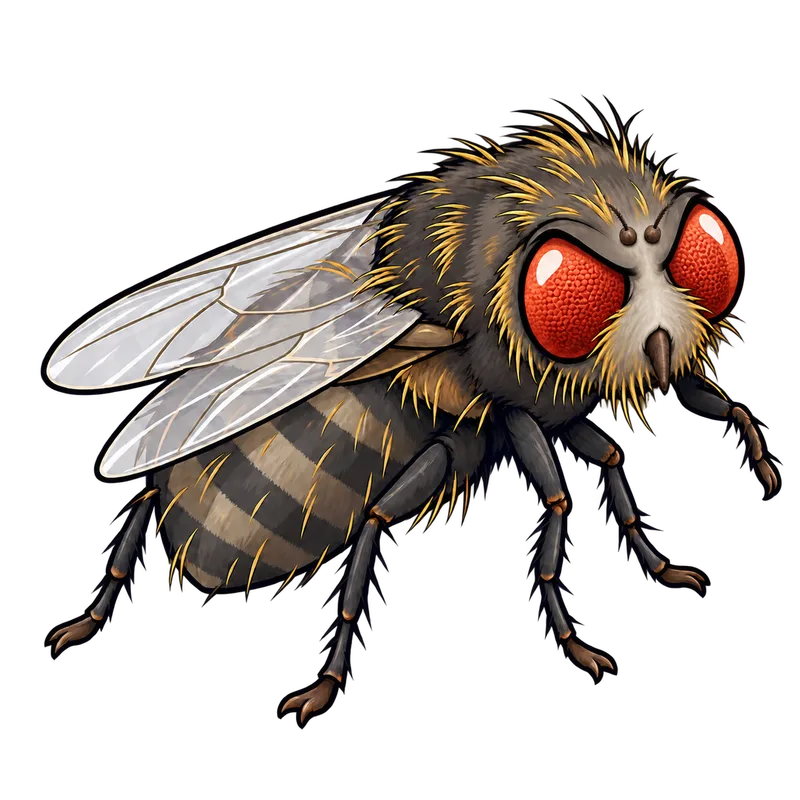
Cluster flies are suddenly appearing in the house because they are trying to hibernate for the winter, and your home acts like a heated cave. When winter sunshine or indoor heating warms up the wall cavities, these dormant, three-eighths to one-half of an inch long gray insects wake up prematurely and crawl through gaps into living spaces.
What is actually going on
Picture a crisp Saturday afternoon in late October. You are walking through the living room, and you notice a slow, clumsy fly buzzing lazily against the south-facing window pane. Ten minutes later, you spot another one on the windowsill, and then a third. They are not darting around like the house flies you remember from July. Instead, these bugs are spinning in circles, bumping into the glass with an audible thud, and falling onto their backs like dizzy acrobats. You did not leave the doors open, and there is no rotting food in the trash. So where on earth did they come from, and why are there so many of them all of a sudden?
Cluster flies are suddenly appearing in the house because they are trying to hibernate for the winter, and your home acts like a giant, heated cave. During the spring and summer months, these insects live completely outdoors in lawns, fields, and pastures. Their lifecycle is tied to a rather gross but useful service: the females lay eggs in the soil, and the hatching larvae burrow inside living earthworms to feed. Once the warm weather winds down and autumn days grow shorter, the final generation of adult flies experiences a biological pause known as reproductive diapause. Their metabolism slows right down, and they instinctively search for dry, dark cavities to survive the cold months ahead.
Impelled by thermal cues, thousands of these flies gather on the sun-warmed exterior walls of buildings, particularly siding facing south and west where the afternoon sun beats down. They squeeze through impossibly narrow structural gaps, sliding overlaps, and attic vents, packing themselves into loose, dormant masses inside upper wall voids and roof spaces. They do not want to bother you, and they certainly are not looking for your pantry. They just want to sleep.
The trouble starts when a stray beam of winter sunshine warms up the outside wall, or when your indoor heating system pushes warmth into the wall cavities. The dormant flies wake up prematurely, completely disoriented by the artificial microclimate. Because they follow light and temperature gradients, they crawl out through recessed light fixtures, electrical outlets, window pulleys, and baseboard gaps, spilling straight into your living spaces instead of heading back outside.
How to tell for sure
Before you start tearing apart your trim or worrying about a public health crisis, you need to confirm what kind of insect you are dealing with. Cluster flies usually measure about three-eighths to one-half of an inch long, making them slightly bulkier than a standard house fly. They are dull gray or dark grayish-brown, with a checkered pattern on the abdomen that lacks any metallic shine.
The absolute giveaway sits right on the middle segment of the body. If you look closely under a bright light or a magnifying glass, you will usually see a dense mat of short, crinkled, golden-yellow hairs covering the thorax. When they are at rest on a window sill, their wings overlap flat over their backs rather than resting at an angle like house fly wings do. Another odd trait is their scent. If you catch one and crush it, it typically gives off a faint aroma that reminds people of buckwheat honey or a sickly sweet syrup.
You can usually tell them apart from common pests by their movement alone. House flies are quick, agile, and dart away at the slightest shadow. Cluster flies are sluggish, clumsy, and seem half-asleep. If you are finding small metallic blue or green flies, or fast insects swarming around your kitchen garbage, you are probably dealing with blow flies or scavenger flies, which usually points to a dead rodent hidden somewhere in the walls rather than an overwintering cluster fly.
What usually comes next
When you are facing a sudden invasion of clumsy attic flies, you usually have to choose between trying to fix the house or just dealing with the current visitors, because you cannot do both at once while the weather is cold. The most sensible practical decision you can make right now is to rely entirely on mechanical removal for the insects currently inside, while saving any structural sealing work for the proper seasonal window.
For the flies wandering around your living room, reach for the vacuum cleaner hose attachment. It is the cleanest, safest way to round them up without splashing chemical sprays across your interior surfaces or crushing them on the drywall. Once you finish vacuuming, empty the canister or bag immediately into an outdoor trash bin so the heat from the vacuum motor does not revive stunned insects that managed to crawl back out. If you have an attic or a storage room where they are congregating in larger numbers, turning off the lights and using a sticky glue trap near a light source can catch plenty of them without any fuss.
Do not make the mistake of setting off aerosol bug bombs or spraying liquid insecticides inside your attics or wall voids to kill the dormant piles of flies. Leaving thousands of dead insects stacked up inside your walls creates an unintended feast for secondary scavengers like larder beetles and carpet beetles. Those secondary pests will eventually multiply on the carcasses and chew their way into your closets to ruin woolens, natural fibers, and stored dry goods. Let the flies be, vacuum up the ones that wander into the living areas, and plan to seal the exterior cracks with high-grade silicone caulk next summer before the autumn migration begins again.
When to get help
Cluster flies are essentially harmless roommates. They do not bite or sting humans, they cannot transmit infectious diseases, and they will not chew through your drywall or structural framing. From an editorial risk perspective, they rate very low. However, certain situations warrant calling in outside expertise rather than handling the issue on your own.
Call a licensed pest control operator if you notice small, hairy brown larvae or active beetles appearing near your baseboards or closets after a fly infestation, which signals that larder beetles have moved in to feed on the hidden carcasses. You should also bring in a professional if you need to treat high exterior eaves and soffits on a multi-story home or if you require specialized pneumatic dusting equipment to treat wall voids safely.
If the flies in your home are accompanied by a foul odor and sudden swarms of shiny metallic blow flies or large flesh flies with white maggots dropping from light fixtures, stop thinking about cluster flies entirely. That usually points to a dead animal, such as a rodent or a bird, trapped inside the wall or chimney. In that specific scenario, the physical carcass must be located and removed by someone equipped to open up the wall structure.