
Horse flies vs deer flies: what habitat clues help?
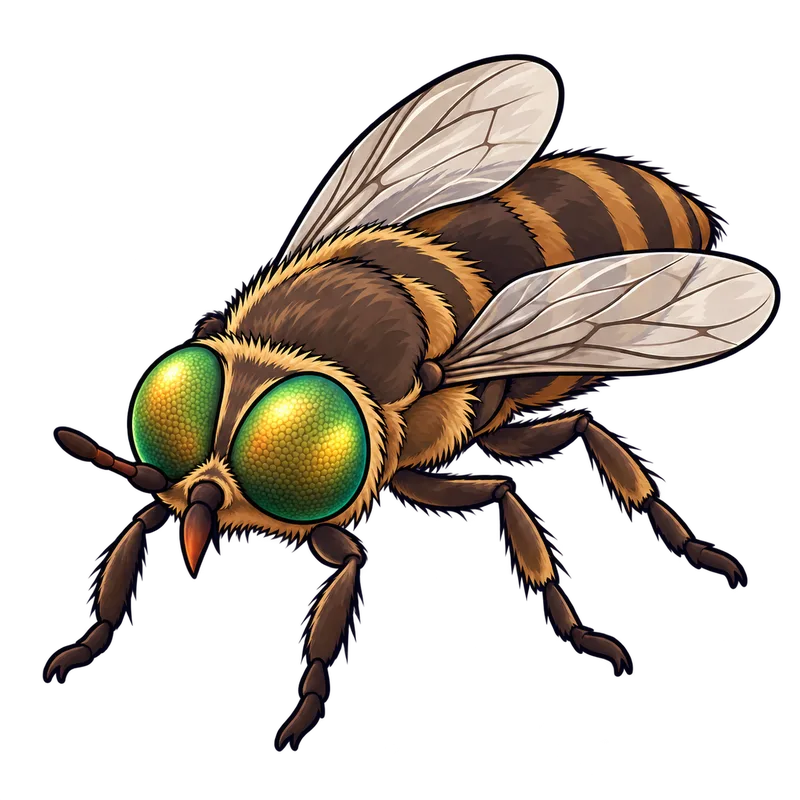
Deer flies and horse flies give away their identity through their choice of outdoor surroundings. Deer flies prefer damp, shaded woods, forested stream corridors, and wetland edges. Horse flies prefer open, sun-baked landscapes like pastures, livestock facilities, and large swamp borders.
What is actually going on
Picture yourself walking down a shaded dirt trail near a creek on a warm July afternoon. Suddenly, a small, dark-winged insect starts buzzing persistently in tight circles around your head, darting at your hair and neck with relentless focus. That annoying little aerial acrobat is a deer fly. Now, contrast that with standing out in the blazing sun by an open cattle pasture or a large marsh. Instead of a hovering, buzzing pest near your head, a massive, heavy-bodied fly the size of a bumblebee swoops in silently and hits your leg or back with the force of a falling pebble. That is a horse fly.
People often lump these two biters together because both belong to the same family of true flies and both females need a blood meal to develop their eggs. But they occupy entirely different corners of the natural world, and their preferences for habitat give away their identity long before they bite. Deer flies prefer damp, shaded woods, forested stream corridors, and wetland edges. Horse flies prefer open, sun-baked landscapes like pastures, livestock facilities, and large swamp borders.
Why do their habitats matter so much? Because it explains where you will run into them and why you will never get rid of them by emptying a stagnant bucket of water in your backyard. Both insects start life as legless, predatory maggots crawling through saturated natural mud and wetland soil, not in your birdbath or clogged gutters. When you see them as adults, they are strong fliers that have traveled considerable distances from those off-site wetlands.
How to tell for sure
If you manage to swat one or get a close look before it bites, wing patterns and body size usually provide the easiest clues. Deer flies are much smaller, usually measuring about one-quarter to one-half of an inch long, roughly the size of a honeybee. Their wings are the dead giveaway because they display distinct, smoky dark bands or mottled patches across a clear background. Horse flies are significantly larger, usually ranging from three-quarters of an inch to well over an inch long, with some species reaching nearly the size of your thumb. Their wings are typically clear, uniformly smoky, or solidly black, without the transverse dark bands of the deer fly.
You might wonder why they hurt so much compared to a mosquito. Mosquitoes use a delicate, needle-like tube that slips into your skin with minimal warning. Tabanids operate more like tiny landscape architects with miniature scissors. Female horse flies and deer flies use bladelike mouthparts to slice open the skin, creating a pool of blood that they lap up. That physical cutting action, combined with their saliva, causes an immediate, sharp pain that feels remarkably like a paper cut.
Remember that male horse flies and deer flies do not bite at all. They spend their short lives quietly visiting flowers for nectar and pollen, leaving the bloodthirsty hunting entirely to the females. When you are outside, you can usually assume any biting tabanid you encounter is female, and you can usually expect her to hunt during hot, sunny daylight hours, though some woodland deer flies prefer shaded or overcast conditions.
What usually comes next
When you head out into places known for biting flies, physical defense beats hoping a casual spray will solve the problem every time. Because these insects spot you visually by tracking dark and moving shapes, you can generally make yourself a less appealing target by wearing light-colored, tightly woven shirts with long sleeves and matching long pants. Thin fabrics will not always stop them either, since their mouthparts are robust enough to slice right through cheap clothing, so choosing thicker materials makes a real difference.
If your walk takes you through wooded wetlands where deer flies love to swarm the head and neck, wearing a wide-brimmed hat or a protective head covering keeps them from tangling in your hair. Insect repellents registered with the environmental protection agency containing active ingredients specifically labeled for biting flies can offer a layer of defense on exposed skin, but do not expect miracles. Because these flies hunt primarily by sight, heat, and carbon dioxide rather than subtle chemical cues alone, standard repellents often provide much shorter protection times against them than they do against mosquitoes.
If you happen to manage a farm or keep livestock, heavy fly pressure creates serious stress for animals, leading to interrupted grazing, weight loss, and reduced milk production. Managing this kind of persistent pressure on a property scale usually falls outside the scope of simple home remedies, requiring a systematic approach to livestock management and regional environmental control.
When to get help
A horse fly or deer fly bite is mostly a painful annoyance, but it can occasionally turn into something more serious. The immediate sharp pain and localized swelling are normal reactions, but scratching open the wound with unwashed hands can introduce bacteria and lead to a secondary skin infection. If you notice redness spreading, increased warmth, or pus around the bite site over the following days, it is time to consult a clinician.
More concerning are systemic allergic reactions. If someone experiences widespread hives, facial swelling, dizziness, or difficulty breathing after being bitten, seek immediate medical evaluation at an urgent care center or emergency room. These insects can also act as mechanical vectors for animal and human pathogens like anthrax and tularemia, though such disease transmission remains relatively rare.
For large-scale agricultural operations or communities dealing with severe outbreaks across expansive wetlands, spraying individual yards will not make a dent in the population. Decisions regarding regional wetland management, water level manipulation, or extensive chemical applications to livestock belong exclusively to licensed pesticide applicators, municipal vector control agencies, or livestock extension specialists who understand the true scale of the habitat involved.