
Why are spotted-wing drosophila found in strawberries?
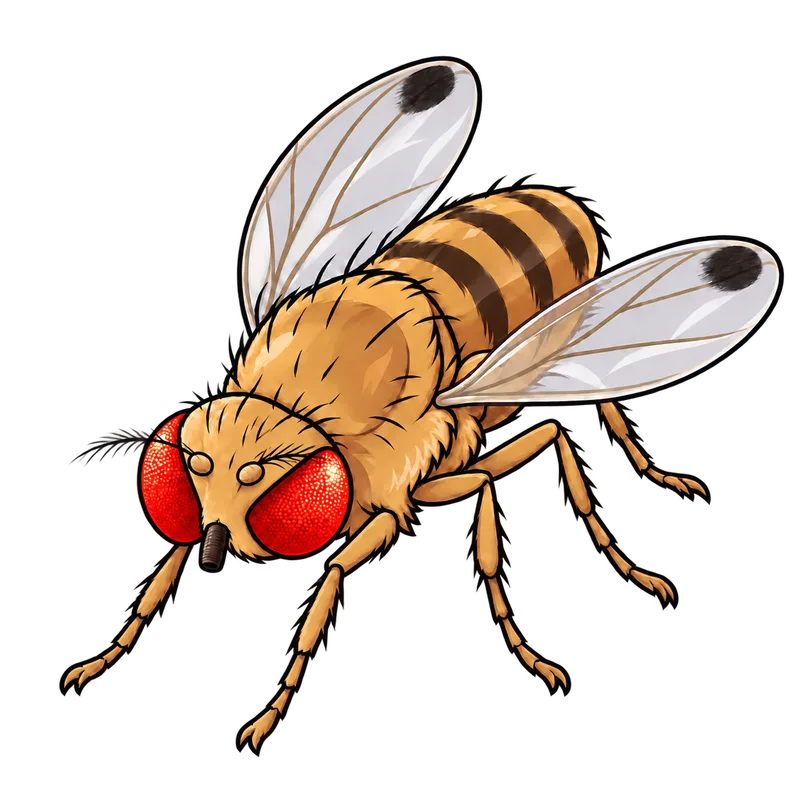
Spotted-wing drosophila are found in strawberries because their serrated ovipositor lets them pierce healthy, unblemished fruit and lay eggs directly inside the living flesh. Whether the crop suffers heavy damage depends on the harvest season, as spring strawberries often mature before fly populations peak, while fall berries ripen when fly numbers are highest.
What is actually going on
You walk out to the garden with a colander in hand, ready to pick a bowl of bright red strawberries for breakfast, and you spot a few small flies hovering around the ripest fruit. You figure they are just ordinary kitchen fruit flies that wandered outdoors, and you pick the berries anyway. Later that afternoon, you notice soft spots on the fruit, and a closer look reveals that something is wrong.
The biology of this pest explains why traditional garden expectations fail. Most backyard gardeners assume fruit flies are harmless scavengers that only arrive when something has already gone bad on the kitchen counter or under the bushes. When spotted-wing drosophila arrived from Asia, they brought an anatomical toolset that changed the rules for soft fruit production. Their serrated ovipositor acts like a microscopic steak knife, letting them target healthy, unblemished berries at the exact moment growers want to harvest them. Strawberries rank high on the list of favorite hosts because of their sugar content and skin firmness. As a strawberry ripens and softens on the vine, the physical force required to pierce its surface drops sharply. The fly senses this shift, targets the firmest and best-looking berries in the patch, and deposits eggs directly into the living flesh. Because a single female can lay hundreds of eggs over her lifetime and complete a generation in as little as eight days under warm conditions, a minor presence can turn into an overwhelming infestation in the middle of the fruiting season. This behavior also changes depending on the calendar and the weather. Spring-harvested June-bearing strawberries in northern climates often escape heavy damage simply because the overwintering adult flies are scarce early in the year, letting the crop mature before populations peak. Day-neutral and fall-bearing strawberries face a different reality, as they ripen during the heat of late summer when fly numbers are highest. Hot, dry weather above eighty-eight degrees slows them down, but mild, humid conditions accelerate their reproduction.
How to tell for sure
Identification must precede control, and you can spot many of the clues with the naked eye or a simple hand lens. Adult flies measure about one-sixteenth to one-eighth of an inch long with red eyes and tan bodies, but you usually have to look closer to separate them from harmless lookalikes. To confirm what you are dealing with, male spotted-wing drosophila usually display a single dark, distinct spot near the leading edge of the tip of each wing. About fifteen percent of males have faint spots or lack them entirely, so inspect their front legs under a hand lens for two dark, horizontal, comb-like rows of bristles. Female flies lack wing spots and require magnification to see the prominent, dark brown, saw-toothed egg-laying structure at the tip of the abdomen. You can also inspect ripening strawberries for tiny pin-prick marks, skin wrinkling, or leaking juice where eggs were inserted. If you want to check harvested fruit for internal larvae, a salt-water flotation test is the standard field method. Mix one-quarter cup of table salt into four cups of warm water, place a cup or two of freshly picked and lightly crushed strawberries into the solution, and let it sit for ten to fifteen minutes. The mild salt irritant prompts any internal maggots to leave the pulp and float to the surface for counting. Visual inspection alone cannot distinguish these maggots from native species, so raising them to adulthood or running laboratory tests is required for absolute confirmation at the larval stage.
What usually comes next
When monitoring traps catch even a single adult fly while fruit is ripening, it is time to make a practical decision about intervention. Waiting to see visible damage usually means the infestation is already out of hand. Management starts with cultural practices that reduce the pressure before resorting to other controls. Pick ripe strawberries thoroughly every single day or two to remove the opportunity for egg-laying. Collect all overripe, dropped, or damaged berries, seal them in airtight plastic bags, and dispose of them properly instead of throwing them into an open compost pile where flies can finish their life cycle. Pruning dense foliage and clearing weeds around the patch increases sunlight and airflow, creating a drier microclimate that the flies dislike. Physical exclusion is another reliable choice for small gardens. Installing fine mesh insect netting over crop rows before the adult flies arrive keeps them away from the fruit entirely, provided the edges are anchored flush to the ground. For harvested fruit, immediate cold storage at thirty-four to thirty-eight degrees Fahrenheit for at least twelve hours halts larval development and kills younger life stages. If you choose to use pesticide sprays, remember that foliar chemicals only target adult flies on contact and cannot cure fruit that already holds internal larvae, and always follow product label directions and pre-harvest intervals strictly.
When to get help
There are moments when a pest problem steps outside the boundaries of DIY gardening and requires professional support. If you are managing a commercial berry operation or facing a large-scale planting where day-neutral varieties are suffering total crop loss, consult a university extension entomologist or a licensed agricultural advisor. Pesticide safety demands professional oversight when dealing with restricted-use formulations or complex chemical rotation schedules designed to prevent resistance across multiple insect generations. Furthermore, drosophilid flies possess sponging mouthparts and do not bite or sting humans or animals. If anyone working in the garden experiences insect bites, skin rashes, or allergic reactions, never attribute those symptoms to fruit flies. Direct the individual immediately to a qualified healthcare provider, an urgent care clinic, or a regional poison control center for proper medical diagnosis.