
How do Canadian homeowners identify black fly season locally?
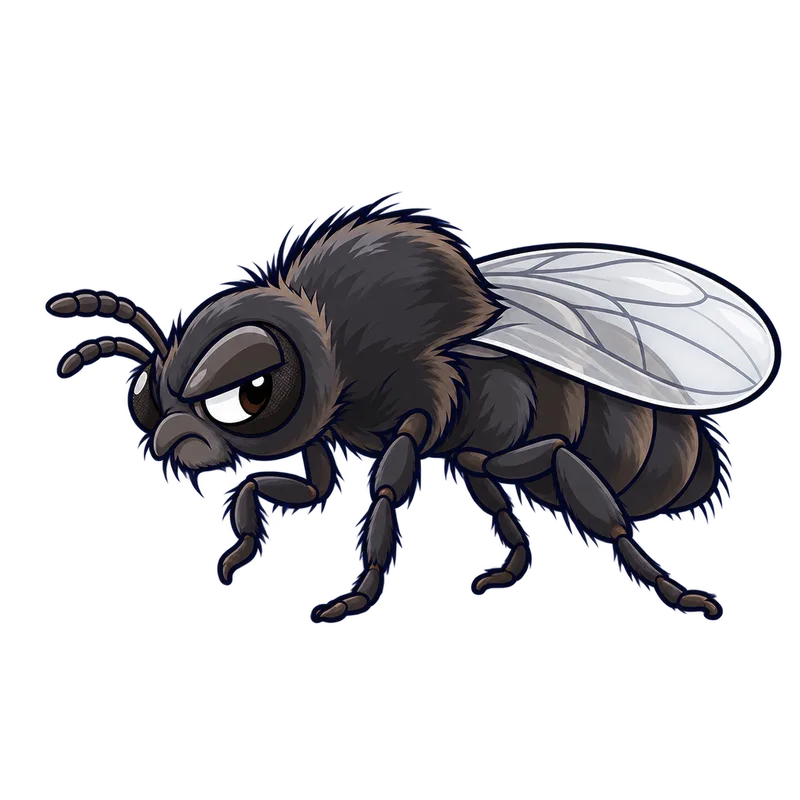
Canadian homeowners can identify black fly season locally by noticing small, dark, and stocky insects measuring one-sixteenth to one-half of an inch long swarming near rushing streams in late spring or early summer. This activity depends on the presence of clean, fast-flowing water where females lay their eggs, with adult insects emerging between May and June.
What is actually going on
You step out onto the front porch with your morning coffee, and before you even make it to the bottom step, a cloud of tiny, aggressive insects is swarming around your head. They are not mosquitoes, and they are definitely not house flies. They are small, dark, and remarkably persistent, zooming right for your eyes, ears, and hairline. If you live anywhere near a rushing stream or a clear river in Canada, you already know what time of year it is without looking at the calendar. It is late spring or early summer, which means black fly season has arrived in full force.
People often assume these pests hatch out of the stagnant puddles left behind by spring rains in the backyard. It is a logical guess, but it is completely wrong. Black flies have strict standards for their early life stages. The females lay eggs exclusively in fast-flowing, clean, oxygen-rich running water. Their larvae cannot survive in still ponds or birdbaths. Instead, they anchor themselves to submerged rocks and debris in swift rivers and streams, filtering passing nutrients out of the current. Once they transform into adults between May and June, they take to the air and can travel fifteen miles or more from their natal streams to find a host.
That explains why turning over old buckets or draining low spots in your yard does nothing to stop the swarm. Your local black flies are commuters, arriving from waterways miles away. They feed strictly during daylight hours, and their aggression often surges right before a rainstorm when the humidity climbs and the barometric pressure drops. If you notice a sudden spike in biting activity on a calm, overcast afternoon, a thunderstorm is usually not far behind.
How to tell for sure
If you want to know for certain whether you are dealing with black flies or another small nuisance insect, you need to look at their physical shape. Adult black flies usually measure anywhere from one-sixteenth to one-half of an inch long. They have dark gray, brown, or solid black bodies that look surprisingly stocky. If you grab a standard ten-power hand lens and look closely at one, you will notice a dramatically arched or humped thorax, which is the middle section of the body. That distinct hump is why older agricultural literature occasionally refers to them as buffalo gnats. Their wings are short, clear, and unspotted, unlike the patterned wings of biting midges.
The bite itself usually provides the second confirmation, though not in the way you might expect. Mosquitoes pierce your skin with a fine needle-like straw, but female black flies use short, blade-like mouthparts to slice open the host skin and lap up the resulting pool of blood. Because their saliva contains a mild local anesthetic and an anticoagulant, you generally feel nothing when the bite actually happens. You might just notice a tiny trickle of blood on your skin.
The trouble usually hits about thirty to sixty minutes afterward. As the numbing agent fades and your immune system wakes up to those salivary proteins, the spot turns into an intensely itchy, swollen welt that can hang around for several days. That delayed reaction catches plenty of folks off guard. You figure you escaped without a scratch because nothing stung when it happened, only to find yourself tearing at your skin an hour later.
What usually comes next
Once you confirm that black flies are out and about, your smartest move is adjusting your outdoor routine instead of trying to douse your yard in chemicals. Since these bugs breed in public waterways and travel significant distances, you cannot spray your lawn into submission. Instead, focus on personal barriers. When you head outside for gardening or hiking, put on light-colored, tightly woven clothing. Black flies love crawling through small gaps, so tuck your pant legs into your socks and button your shirt cuffs securely.
You can also rely on Health Canada-registered bug sprays containing active ingredients proven to work against biting flies, making sure to apply them strictly following the product label. If you are working in a thick patch near a stream or out in the woods, a fine-mesh head net or a bug jacket generally pays for itself immediately. Timing your chores makes a difference too. Try to dodge yard work during peak daytime swarming hours, especially on warm, humid days when the breeze dies down.
When to get help
For most people, a few black fly bites just mean annoying itching that clears up on its own after a few days. Still, there are moments when you need to step back and get professional advice. If you scratch those welts too hard, you can break the skin and let bacteria in, leading to open sores or a secondary skin infection like cellulitis.
Some people deal with much stronger immune reactions, sometimes called black fly fever, which can bring on heavy swelling, a low-grade fever, nausea, or significant facial puffiness where the eyes swell shut. If anyone in your household develops severe localized swelling, spreading redness, a fever, or any signs of a brewing infection, it is time to consult a physician, an urgent care clinic, or your local health authority. Keep in mind that large-scale control of black fly populations in public rivers and streams always belongs to licensed pest management professionals and municipal vector control agencies, who use specialized biological treatments that private homeowners cannot legally or practically apply to natural waterways.