
How do you get rid of fruit flies in the kitchen?
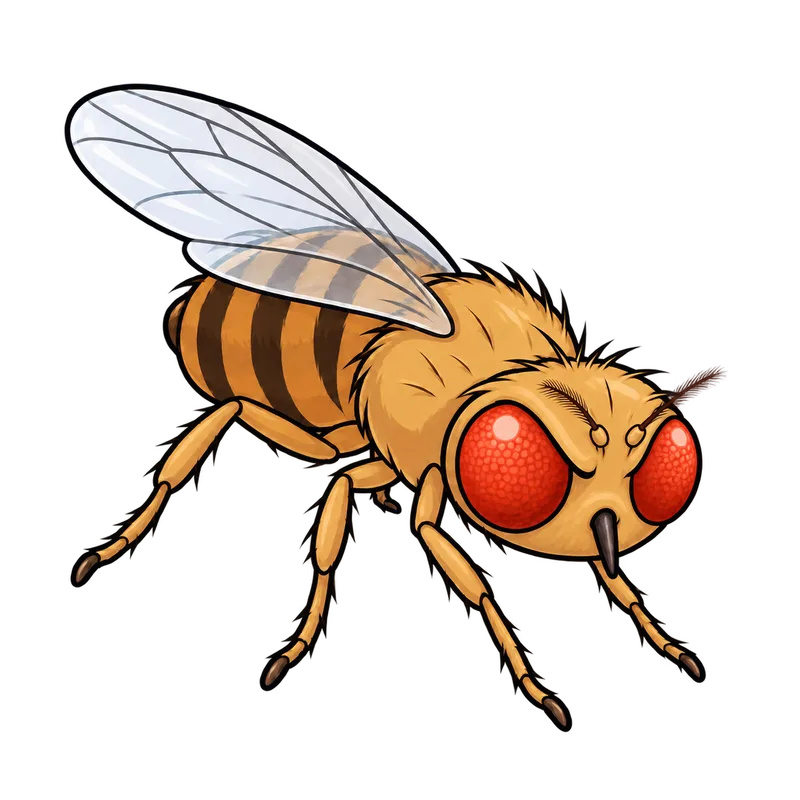
You get rid of fruit flies in the kitchen by finding and throwing out whatever they are breeding in, because traps and sprays only catch the adults you can see. The whole cycle from egg to flying adult takes barely a week to ten days in a warm kitchen. After clearing out the hidden nursery, you can use a jar of apple cider vinegar with a drop of dish soap to catch any remaining stragglers.
What is actually going on
Picture a Saturday morning. You walk into the kitchen, coffee in hand, and there they are: a small cloud of tiny flies hovering over the fruit bowl like they pay rent there. You swat a few, feel briefly victorious, and by Sunday there are twice as many. That is not bad luck. That is math.
Here is the short answer: you get rid of fruit flies by finding and throwing out whatever they are breeding in, because that is the only thing that actually works. Traps catch the adults you can see. Sprays kill the adults you can see. But the real problem is a hidden nursery somewhere, and until you find it, new flies keep hatching faster than you can kill them. A single female can lay around 500 eggs, and in a warm kitchen the whole cycle from egg to flying adult takes barely a week to ten days. That forgotten banana at the bottom of the bowl is not just attracting flies. It is manufacturing them.
So the actual job is a bit of detective work. Check every piece of produce sitting out, especially anything soft, bruised or past its prime. Look in the pantry for that bag of potatoes or onions you bought with good intentions and forgot about, because one liquefying potato in a dark corner is a five star resort for fruit fly larvae. Rinse out the recycling bin, since the film of beer or soda left in an unrinsed can is plenty. Wash the trash can itself, including the bottom under the bag where juice collects. And do not skip the sink drain, the garbage disposal, the damp sponge and the mop that never quite dries. People tend to clean the fruit bowl and stop there, which is a bit like locking the front door and leaving the kitchen window open.
Once the breeding spots are gone, traps earn their keep. A small jar with an inch or two of apple cider vinegar or red wine, covered with plastic wrap poked with a few small holes, works well. The trick most people miss: add a drop or two of dish soap. Plain vinegar has enough surface tension that a fly can land on it, drink and leave, like walking across a tiny trampoline. The soap breaks that tension, so the fly sinks the moment it touches down.
How to tell for sure
Before you commit to the fruit fly plan, take a second to confirm you actually have fruit flies, because several small kitchen flies look alike at a glance and they do not respond to the same treatment. A vinegar trap aimed at the wrong insect is just a jar of vinegar.
True fruit flies are tiny, about an eighth of an inch, with a tan body, a striped abdomen and, if you look closely, red eyes. They hover and drift around fermenting things: the fruit bowl, the wine glass from last night, the trash. That lazy hovering near something sweet is usually the giveaway.
Two common impostors cause most of the confusion. Drain flies look fuzzy, almost like tiny moths, with wings held like a little tent over the body, and they tend to sit on the wall near the sink rather than hover over food. Phorid flies, sometimes called humpback flies because of their rounded thorax, have dark eyes instead of red and a strange habit of running across the counter in quick jerky bursts instead of flying. If your flies scuttle more than they fly, that is usually a phorid, and they usually mean something more serious is rotting somewhere, like a disposal caked with gunk or, in stubborn cases, a plumbing problem.
If you suspect the drain is the nursery, there is a simple test. Put a strip of clear packing tape, sticky side down, over half the drain opening overnight. Do not cover the whole thing or you block the airflow the flies follow. If flies are stuck to the tape in the morning, the drain is confirmed as a breeding site.
One reassurance worth stating plainly: fruit flies do not bite. They have no mouthparts for it. If something in your home is actually biting you, that is a different insect entirely, and no amount of vinegar traps will address it.
What usually comes next
So you have confirmed fruit flies and cleared out the obvious sources. The one real decision left is what to do about the drain, because that is where most campaigns stall out. And this is where a popular belief needs a gentle correction: pouring bleach or boiling water down there does not work. The stuff the flies are breeding in is a gelatinous film of organic gunk stuck to the inside of the pipe, and liquid running down the middle of the pipe sails right past it. Think of pouring water over a greasy plate without scrubbing. The grease stays.
What works is mechanical. Scrub the inside of the drain and the disposal with a long, stiff brush to physically strip that film off, flush with hot water, then follow up with an enzymatic or microbial drain cleaner used exactly as its label directs. Those products digest the remaining organic layer instead of just rinsing past it.
While the cleanup does its work, keep a trap or two running near the problem area for a week or so to catch the adults already out and about. For the longer term, the boring habits are the ones that pay off: refrigerate ripe fruit instead of leaving it out, take the trash out before it ferments, rinse cans and bottles before recycling, let sponges and mops dry fully, and make sure window screens are intact and tight fitting. None of this is glamorous. All of it is why some kitchens get fruit flies every August and others never do.
One thing to expect: even after a thorough cleanup, you may spot a few stragglers for several days. Those are the last pupae hatching out. If the numbers shrink steadily, you are winning. If a week passes and the population looks unchanged, there is a breeding source you have not found yet, and it is time to look again, more suspiciously, at the less obvious spots.
When to get help
Most kitchen fruit fly problems are a weekend project, not a crisis. A few situations genuinely call for backup, though.
If the flies keep coming despite serious cleaning, and especially if they are the scuttling, humpbacked phorid type showing up around floor drains or cracks in a slab floor, that can point to a broken sewer line or a leaking pipe under the house. That is not a cleaning problem. It needs a licensed plumber, and possibly a pest control professional, to find and fix the source.
If you run any kind of food business, even a small one, persistent flies are a health code issue, and a licensed pest control operator should handle the inspection and any treatment. Same advice for anyone tempted to reach for insecticide sprays: fruit flies are a poor target for chemicals anyway, and any product use has to follow its label exactly.
On the health side, fruit flies are mostly a contamination nuisance. They walk from garbage and drains onto your counters and food, carrying bacteria on their feet and bodies, which is a good reason to toss anything they have been swarming on and to wipe down prep surfaces. If anyone in the house has symptoms you are worried about, or if something is actually biting or causing a skin reaction, do not try to match it to a bug from a photo. That is a conversation for a doctor or poison control, not a fruit fly article.
For everyone else: find the source, scrub the drain, soap the vinegar, and give it a week. The flies are persistent, but they are not smarter than you.