
Why are cluster flies in the house?
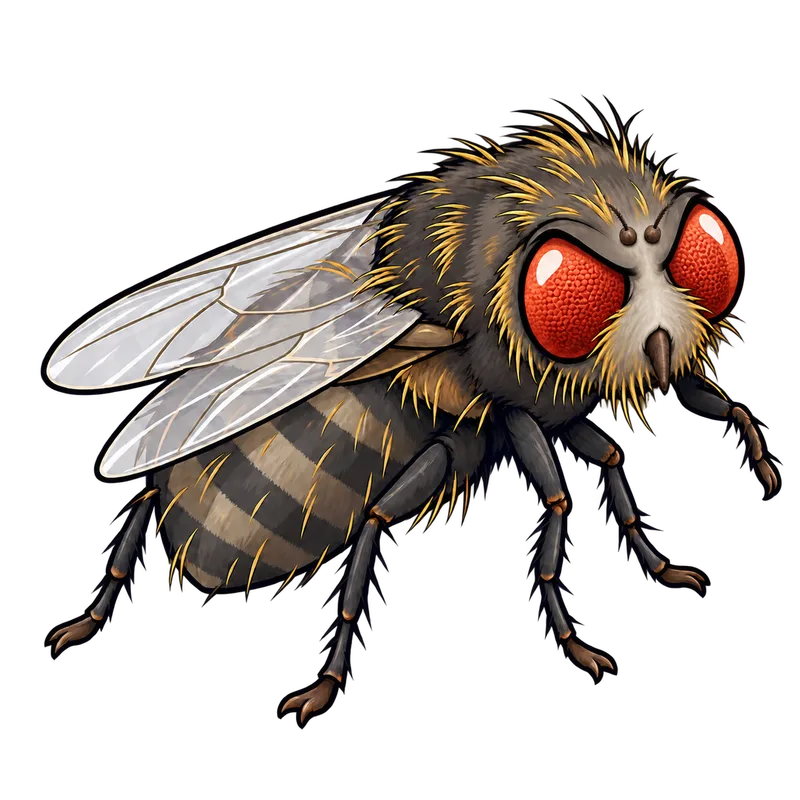
Cluster flies are in the house because they moved in during late summer and autumn to spend the winter sleeping inside your warm walls. When indoor heating warms up the house in winter, it tricks the resting insects into thinking spring has arrived early, causing them to wake up groggy and wander into your living space.
What is actually going on
Picture a gray January afternoon. The furnace kicks on, the house warms up, and suddenly there is a big, slow fly bumping against the kitchen window. Then another one on the bathroom mirror. You did not leave any food out, the trash is empty, and yet here they are, drifting around like sleepy balloons.
Here is the short answer: those flies are not living in your house. They are sleeping in it. Cluster flies move into buildings in late summer and autumn, squeezing through gaps around windows, siding, soffits and vents, then settling into wall voids and attics to spend the winter in a kind of suspended animation. Entomologists call it diapause, which just means the whole system shuts down: no feeding, no mating, no egg laying, nothing. They are using your walls the way a bear uses a cave.
So why do they show up in January, or on some random warm February afternoon? Because your heating warms the inside of the walls, and that warmth tricks the flies into thinking spring came early. They wake up groggy and follow the light, which unfortunately points into your living room instead of outside. That is why you find them around windows, lamp shades and ceiling fixtures, moving slowly and letting you swat them with embarrassing ease. They are not invading. They are lost.
One thing is worth clearing up right away, because it changes how you should react: cluster flies have nothing to do with filth. The common house fly breeds in garbage and manure, so people reasonably assume any fly indoors means something is rotting somewhere. Cluster flies spend their summer in a completely different line of work. Their larvae develop as parasites inside living earthworms, out in lawns, pastures and damp soil. That is also why homes near irrigated lawns, fields, rivers or creeks tend to get the worst of it. More earthworms nearby means more cluster flies looking for a winter rental.
How to tell for sure
Before you do anything, make sure you actually have cluster flies and not house flies or blow flies, because the fix is completely different for each. None of this requires special equipment, just a close look and a little patience.
Size is the first clue. A cluster fly runs about 3/8 to 1/2 inch long, visibly chunkier than the common house fly. The body is dark gray with a checkered, silvery pattern on the abdomen and a dull, dusty look, almost like it was rolled in pollen. It does not have the shiny metallic green or blue you see on blow flies, so if your fly looks like a jewel, you are dealing with something else.
The giveaway feature sits on the thorax, the middle section where the wings attach. Cluster flies carry a mat of short, crinkled golden-yellow hairs there. In good light you can often see this with the naked eye, and a cheap 10x hand lens makes it obvious. Older flies sometimes lose some of that fuzz, so check more than one if you can.
Watch how the wings sit when the fly is resting. Cluster flies fold their wings flat over the back so they overlap, while house flies hold theirs out in more of a shallow V. And if you swat one and catch a faint, sickly sweet smell, something like buckwheat honey, that is a classic cluster fly calling card. They also tend to leave small dark spots on window panes.
Behavior tells you plenty too. Cluster flies usually appear in groups, gather around windows and fly slowly with a lazy, drifting pattern. House flies are quick and dart around food. If your flies show up in cool weather, hang around upstairs windows and seem half asleep, the identification is usually safe. If they are buzzing the fruit bowl in July, you have a different problem entirely.
What usually comes next
So here is the real question in front of you: do you chase the flies already in the house, or do you stop next autumn's crowd from moving in? Honestly, the second one is where your effort pays off. The only fix that lasts is keeping them out before they arrive.
For the ones currently headbutting your windows, a vacuum cleaner with a hose attachment is your best friend. Suck them up, empty the canister or bag outside right away, and get on with your day. A fly swatter takes care of the stragglers. If they are gathering in numbers up in a dark attic, a UV light trap with a sticky board will quietly collect them while you do something more interesting. None of this is glamorous, but it works, and it saves you from the one move that reliably backfires: setting off a bug bomb or fogger in the attic. Do that and you end up with piles of dead flies sealed inside the walls, and dead flies are dinner for carpet beetles and larder beetles. Congratulations, you have traded a sleepy fly for a beetle problem.
The work that counts happens in late summer, before the flies even think about your house. Somewhere around mid-August to mid-September, take a slow walk around the place and seal the entry points: caulk the gaps around window and door frames, siding joints, soffits, fascia, and the spots where pipes and wires come through the wall. Fix torn screens and fit fine insect screening over attic and soffit vents. Give the upper stories and the south and west sides extra attention, because that is where the flies like to sunbathe on warm autumn afternoons before slipping inside.
You might be tempted to spray the lawn instead, since that is where they breed. Save your money. Treating grass to kill earthworms or fly larvae does nothing useful, it roughs up your soil, and the flies can drift in from a neighbor's pasture hundreds of yards away without ever touching your yard. Same logic applies to a spring exterior spray. Flies on the outside of the house in spring are on their way out, not in, so spraying then does exactly nothing for next fall.
When to get help
The reassuring part first: cluster flies are about as harmless as an insect gets. They do not bite, they do not sting, they do not spread disease and they do not chew on your house. Nobody needs a doctor over a cluster fly. If a fly problem ever shows up alongside bites, rashes or illness, that is a different pest and a different conversation, and it deserves a call to a clinician.
That said, there are times when a licensed pest control professional earns the fee. If your house is tall and the entry points sit up at the eaves and roofline, sealing them safely can take ladders, rigging or experience you may not have. The same goes for applying insecticide dusts inside wall voids, which needs injection equipment, and for the late-summer exterior barrier treatments pros apply to upper walls and soffits. Those products carry label directions that have to be followed exactly, and some formulations are restricted to licensed applicators in the first place.
Call sooner rather than later if you start spotting small hairy beetles or their bristly larvae near baseboards or up in the attic. That usually means a forgotten mass of dead flies is feeding a second infestation, and a pro can track down the void and clean it out properly. Otherwise, caulk, screens, a vacuum and a little patience in late summer will handle the whole thing. The flies are just looking for a warm place to nap. Your only job is to stop offering one.